Destroyers: The Evolution of Naval Surface Combatants
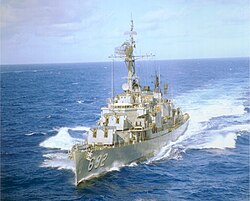
In the complex architecture of naval warfare, the destroyer serves as a versatile, fast, and maneuverable warship. Designed for long endurance, these vessels are primarily intended to escort larger fleet assets—such as aircraft carriers or convoys—and defend them against a diverse array of threats. From their humble beginnings as hunters of small boats to their current status as the global standard for surface combatants, destroyers have undergone a radical transformation in size, power, and purpose.
Originally conceived in the late 19th century, these ships were first known as "torpedo boat destroyers" (TBDs). By the onset of World War I, nearly all navies had shortened the term to simply "destroyer." While early models were light vessels with limited independent operational capacity, modern iterations have evolved into massive platforms capable of independent global operations.
Key Facts
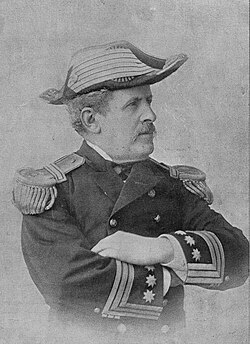
- Inventor: Fernando Villaamil is credited with the destroyer concept in 1887.
- Primary Role: Escorting larger vessels and defending against general naval threats.
- Evolution: Transitioned from small "torpedo boat destroyers" to massive guided-missile platforms.
- Modern Status: The current global standard for surface combatants, often replacing the roles of cruisers and battleships.
- Size Increase: US Navy destroyers grew from roughly 2,200 tons (Allen M. Sumner class) to up to 9,600 tons (Arleigh Burke class).
Origins and Early Designs
The birth of the destroyer was a direct response to the invention of the self-propelled torpedo in the 1860s. This technology allowed small, inexpensive torpedo boats to threaten massive capital ships near enemy coasts. To counter this, navies sought a vessel that was fast enough to intercept these boats but sturdy enough to operate at sea.
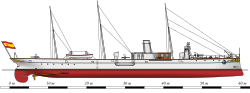
Fernando Villaamil provided the specifications for the Destructor, marking the conceptual beginning of the class in 1887. Early attempts to fill this role included the HMS Swift (1884), which carried quick-firing guns to engage torpedo boats, and the German aviso Greif (1886), designed specifically as a "torpedo hunter" (Torpedojäger).
The Torpedo Gunboat Era
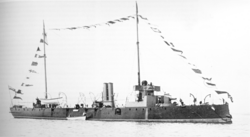
Before the formal designation of the destroyer, the Royal Navy developed several torpedo gunboat classes, such as the Grasshopper and Dryad. Interestingly, these ships sometimes exceeded their primary role; in 1891, a Chilean Almirante Lynch-class torpedo gunboat successfully sank the ironclad Blanco Encalada using torpedoes.
The Development of the Destroyer Class
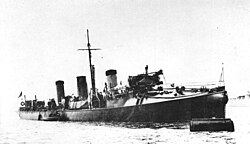
The formal transition to the destroyer class occurred in the late 19th century. The HMS Havock (1894) was the first ship formally designated as a destroyer. By the turn of the century, other nations followed: France launched the Durandal class in 1899, and the United States commissioned the USS Bainbridge (Destroyer No. 1) in 1902.
Technological Leaps: The Steam Turbine
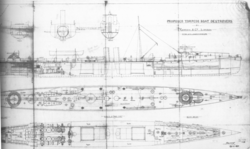
A pivotal moment in destroyer evolution was the introduction of the steam turbine. Following a demonstration by the Turbinia in 1897, the Royal Navy produced the HMS Viper in 1899, the first turbine-powered warship, which reached a staggering 34 knots. By 1910, turbines became the standard for all high-speed naval vessels.
Combat Roles in the World Wars
World War I
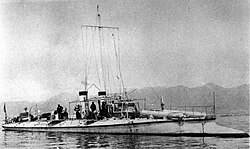
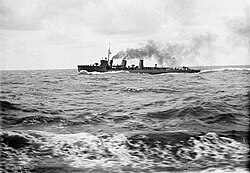
During the First World War, destroyers were utilized for screening fleets, patrolling hostile coasts, and harassing enemy torpedo craft. With the rise of unrestricted submarine warfare in 1917, their role shifted heavily toward antisubmarine patrol and merchant convoy escort.
The Interwar Period and World War II
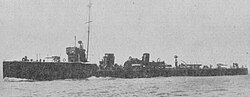
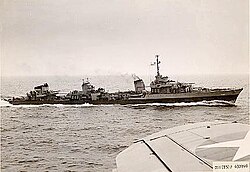
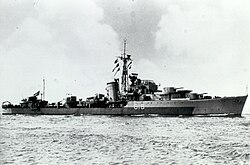
Between the wars, destroyers grew in firepower. Romania's Mărăști and Mărășești were among the most powerful of the 1920s, retaining armament similar to scout cruisers. France pushed the boundaries of speed with the Le Fantasque class, which achieved 45 knots—a record for any steamship destroyer.
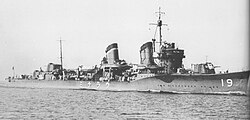
During World War II, different naval philosophies emerged. The US and UK focused on smaller, more numerous ships like the Benson and A-I classes, while Germany and Japan built larger vessels. The US Fletcher class became a staple of the Pacific theater, while the British Tribal class emphasized heavier gun armament.
The Modern Era: Guided-Missile Destroyers
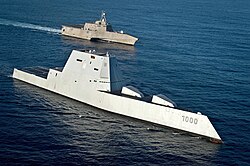
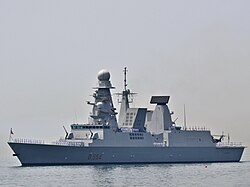
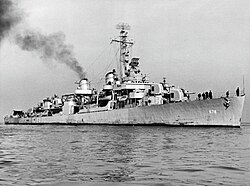
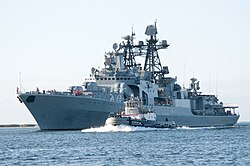
Post-World War II, the advent of guided missiles fundamentally changed the destroyer. These ships took over the surface-combatant roles previously held by battleships and cruisers. Modern destroyers are now capable of independent operations and can carry nuclear-tipped cruise missiles.
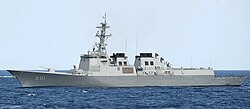
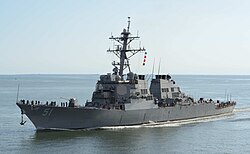
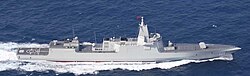
The US Navy's Arleigh Burke class exemplifies this shift, with a displacement of 9,200 tons and an armament of over 90 missiles. Similarly, the Chinese Type 055 is so large and heavily armed that the US Department of Defense classifies it as a cruiser, despite China's designation of it as a destroyer.
Summary of Destroyer Evolution
| Era | Primary Role | Key Technology | Typical Scale |
|---|---|---|---|
| Late 19th Century | Hunting torpedo boats | Reciprocating steam engines | 50–300 tons |
| World War I & II | Convoy escort / ASW | Steam turbines / Heavy guns | 1,000–3,000 tons |
| Modern Era | Multi-mission / Fleet defense | Guided missiles / Aegis systems | 7,000–10,000 tons |
Preservation and Legacy
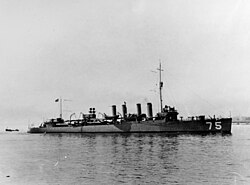
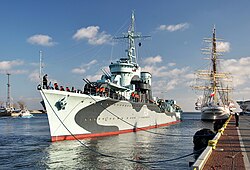
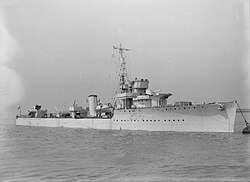
Many historic destroyers are preserved as museum ships to educate the public on naval history. Notable examples include the USS The Sullivans in New York, the HMS Cavalier in the UK, and the ORP Błyskawica in Poland.
Frequently Asked Questions
What is the difference between a destroyer and a cruiser?
Historically, cruisers were larger and designed for independent raiding, while destroyers were smaller escorts. In the modern era, the line has blurred; many guided-missile destroyers are larger and more powerful than WWII-era cruisers, leading to classification disputes over ships like the Chinese Type 055.
Who invented the destroyer?
Fernando Villaamil is credited with inventing the destroyer concept in 1887 through his specifications for the Destructor.
Why were they originally called "torpedo boat destroyers"?
They were specifically designed to protect larger warships from the threat of small, fast torpedo boats, which could sink massive ships with a single torpedo.
What is the fastest destroyer class ever built?
The French Le Fantasque class holds the record, achieving speeds of 45 knots (83 km/h).
Are destroyers still used today?
Yes, they are currently the global standard for surface combatants, used by most major navies for air defense, anti-submarine warfare, and land-attack missions.