USS Colorado: The Legacy of a Civil War Steam Frigate
The USS Colorado was a significant vessel in the 19th-century United States Navy, serving as a powerful three-masted steam screw frigate. As the fifth ship in the Franklin-class—a group of frigates named after American rivers—the Colorado was named in honor of the Colorado River. Throughout its active service between 1858 and 1876, the ship played vital roles in major conflicts and international diplomatic missions.
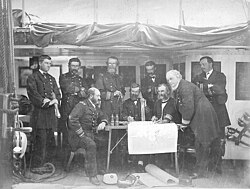
Key Facts
- Type: Steam screw frigate
- Class: Franklin-class
- Primary Conflict: American Civil War (1861–1865)
- Notable Engagement: Second Battle of Fort Fisher
- Fate: Burned and sank in August 1885 during scrapping
Construction and Early Service
The construction of the USS Colorado began at the Norfolk Navy Yard in Portsmouth, Virginia, where it was laid down in 1856. Sponsored by Miss N. S. Dornin, the ship was launched on 19 June 1856. Following its completion, the vessel was commissioned on 13 March 1858 under the command of Captain W. H. Gardner.
Its initial deployment saw the ship cruising in Cuban waters from the Boston Navy Yard to deter British cruiser searches. This period of service concluded on 6 August 1858, when the ship was placed in ordinary—a naval term meaning the ship was decommissioned and placed in reserve status.
Service During the American Civil War
The outbreak of the American Civil War necessitated the recommissioning of the Colorado on 3 June 1861. It joined the Gulf Blockading Squadron, serving as the flagship for Commodore William Marvine. During this time, the ship was involved in several key operations, including the capture of the schooner Judah and the steamer Calhoun.
The Challenge of the Mississippi River
While the Colorado was a formidable force, it faced physical limitations during the campaign to capture New Orleans in April 1862. Due to its deep draft (the vertical distance between the waterline and the bottom of the hull), the ship could not cross the Mississippi River bar. To support the fleet, the crew removed nineteen guns and one howitzer from the Colorado to be used by other vessels in the engagement.
The Battle of Fort Fisher
One of the most notable moments in the ship's history occurred during the Second Battle of Fort Fisher between 13 and 15 January 1865. As a wooden vessel, the Colorado was positioned in a protected line outside the armored monitors. Despite this, Confederate fire struck the ship six times, resulting in one death and two injuries.
During the battle, Lieutenant George Dewey demonstrated exceptional tactical skill. Under his direction, the Colorado moved to silence specific Confederate defensive works in just 15 minutes. This action was famously described by The New York Times as "the most beautiful duel of the war." Dewey's performance during this engagement contributed to his rise in rank, eventually leading to his fame during the Spanish-American War.
Post-War Operations and International Missions
Following the Civil War, the USS Colorado transitioned from combat to diplomatic and strategic roles. In 1865, it served as the flagship for the European Squadron, patrolling the waters of England, Portugal, Spain, and the Mediterranean.
The Asiatic Squadron and the Korean Expedition
In 1870, the ship joined the Asiatic Squadron as the flagship for Rear Admiral John Rodgers. The squadron's mission was to support American interests in China, Japan, and Korea. In 1871, the Colorado was involved in the Sinmiyangyo, a punitive expedition against Korean forts on the Salee River following an unprovoked attack on American ships.
Technical Specifications and Armament
The armament of the USS Colorado evolved significantly throughout its service life to meet changing combat requirements.
| Feature/Era | Details/Armament |
|---|---|
| Displacement | 3,425 long tons |
| Dimensions | 263 ft 8 in (Length) | 52 ft 6 in (Beam) |
| Propulsion | Steam engine and three masts |
| Armament (Original) | 2 × 10 in guns, 28 × 9 in guns, 14 × 8 in guns |
| Armament (1864) | 1 × 150-pounder rifle, 1 × 11 in smoothbore, 46 × 9 in smoothbore, 4 × 12-pounder howitzers |
| Armament (1871) | 2 × 100-pounder rifles, 1 × 11 in smoothbore, 42 × 9 in smoothbore, 8 × howitzers |
Final Years and Fate
After serving with the North Atlantic Squadron, the Colorado was decommissioned in 1876 and spent several years as a receiving ship at the New York Navy Yard. In February 1885, the vessel was sold to a private company for scrapping.
The ship's end was dramatic. On 21 August 1885, while being broken up off Plum Beach, Long Island, a fire broke out on the forward deck. The flames spread rapidly, consuming the Colorado and several other decommissioned Navy ships nearby. The fire burned the vessels to the waterline, causing them to sink.
Frequently Asked Questions
What type of ship was the USS Colorado?
The USS Colorado was a steam screw frigate, meaning it utilized both a steam engine and traditional sails (on three masts) for propulsion.
Why couldn't the USS Colorado participate in the capture of New Orleans?
The ship had a draft that was too deep to safely cross the Mississippi River bar, preventing it from entering the river during that specific operation.
Who was the famous officer who served on the USS Colorado?
Lieutenant George Dewey served on the ship and demonstrated significant tactical ability during the Battle of Fort Fisher, a move that contributed to his later fame as a Commodore.
How did the USS Colorado end its service?
The ship was sold for scrap in 1885, but while being dismantled, a fire broke out that caused the vessel to burn to the waterline and sink.
What was the purpose of the Asiatic Squadron?
The squadron operated to support American efforts to establish trade and influence in China, Japan, and Korea, rivaling the interests of France, Russia, and the United Kingdom.