Dessau: A Hub of Bauhaus Modernism and Anhalt History
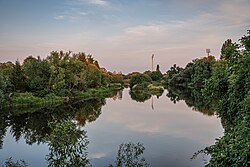
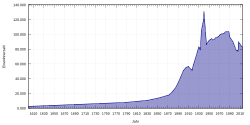
Located at the scenic confluence of the Mulde and Elbe rivers in the federal state of Saxony-Anhalt, Dessau is a city where deep aristocratic roots meet the cutting edge of 20th-century modernism. Once an independent city until 2007, it now serves as a primary district of Dessau-Roßlau. With a population of 67,747 as of December 2020, Dessau is renowned for its lush greenery, historic palaces, and its pivotal role in the global architectural movement known as the Bauhaus.
Key Facts
- Location: Saxony-Anhalt, Germany, at the junction of the Mulde and Elbe rivers.
- UNESCO Heritage: Home to the Bauhaus sites and the Garden Kingdom of Dessau-Wörlitz.
- Historical Status: Former capital of the Principality of Anhalt-Dessau and the Free State of Anhalt.
- Industrial Legacy: Birthplace of metal aircraft construction via Hugo Junkers.
- Geography: Situated on a floodplain, making it prone to yearly flooding.
Geography and Environment
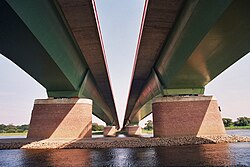
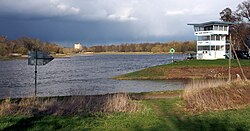
Dessau is characterized by its position on a floodplain, which brings both natural beauty and the challenge of annual floods. The most severe of these occurred in 2002, significantly impacting the Waldersee district. To the south, the city borders the wooded Mosigkauer Heide, while its highest point is the Scherbelberg, a 110-meter-high former rubbish dump in the southwest.
The city is celebrated as one of Germany's greenest urban areas, thanks to an abundance of integrated parks and palace grounds.
A Journey Through History
First mentioned in 1213, Dessau rose to prominence in 1570 with the founding of the Principality of Anhalt. It served as the capital for various iterations of the Anhalt states, including the mini-state of Anhalt-Dessau after a split in 1603. By 1863, the Duchy of Anhalt was reunited, and from 1918 to 1945, Dessau remained the capital of the Free State of Anhalt.
The Bauhaus Era
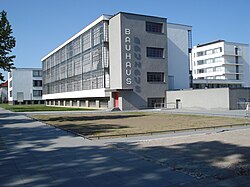
Dessau is globally famous as the second home of the Bauhaus school. After being forced to close in Weimar, the school moved to Dessau in 1925. Under the leadership of Walter Gropius and featuring lecturers like Paul Klee and Wassily Kandinsky, the school redefined modern art and architecture. However, the rise of Nazi influence in the city council led to its closure in 1932, with the school finally shutting down in Bernau bei Berlin in 1933.
War and Reconstruction
The city suffered catastrophic damage during Allied air raids on March 7, 1945, shortly before American occupation. During the East German (GDR) era, Dessau was rebuilt using Plattenbau (standardized concrete slab architecture) and evolved into a major industrial center. Since the reunification of Germany in 1990, there has been a concerted effort to restore the city's historic landmarks.
Architectural and Cultural Sights
Castles and the Garden Kingdom
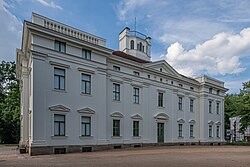
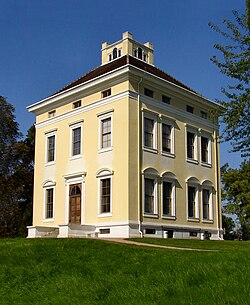
The Garden Kingdom of Dessau-Wörlitz is a UNESCO World Heritage Site and a masterpiece of 18th-century Enlightenment landscape design in the English style. Other notable estates include the Georgium, Kühnau, Mosigkau, and Luisium palaces.
Modernist Landmarks
Beyond the iconic Bauhaus school building, the city features several modernist gems:
- Dessau-Törten Estate: A residential project designed by Walter Gropius (1926–1928).
- Stahlhaus (Steel House): An innovative structure by Georg Muche and Richard Paulick.
- Kornhaus: A restaurant overlooking the Elbe designed by Carl Fieger.
Religious and Civic Buildings
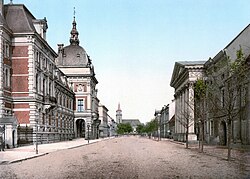
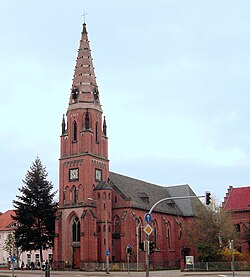
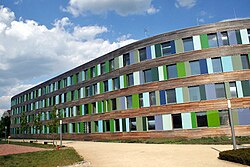
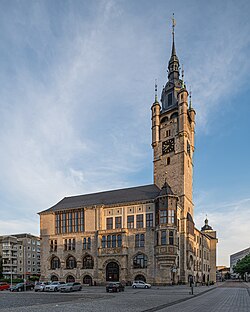
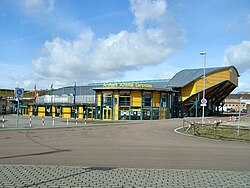
The city's skyline is dotted with churches, most notably the Propsteikirche St. Peter and Paul. Civic pride is centered around the Town Hall, constructed in 1901, and the Umweltbundesamt (UBA), the German Environment Agency, which occupies the former Wörlitzer Bahnhof.
Transport and Infrastructure
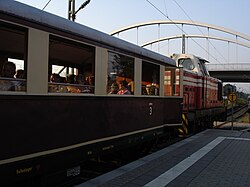
Dessau is well-connected via a tramway network operated by the Dessauer Verkehrsgesellschaft (DVG) and a comprehensive railway system. The Dessau Hauptbahnhof links the city to major hubs like Berlin, Leipzig, and Magdeburg. Notably, the Dessau-Bitterfeld line became the first fully electrified long-distance railway in Germany in 1911.
For air travel, the Dessau airfield (ICAO: EDAD) supports charter flights. It is located adjacent to the Hugo Junkers Technical Museum, honoring the engineer who created the first all-metal airplane.
Sports and Recreation
Dessau boasts a vibrant sporting culture with approximately 80 clubs. While football, handball, and volleyball are traditional favorites, the city also supports niche activities like skydiving and speedskating. Key facilities include the Paul-Greifzu-Stadion (22,000 capacity) and the Anhalt Arena.
Notable Figures
Dessau has been the birthplace or home to many influential figures across various fields:
- Philosophy: Moses Mendelssohn, the father of Haskalah.
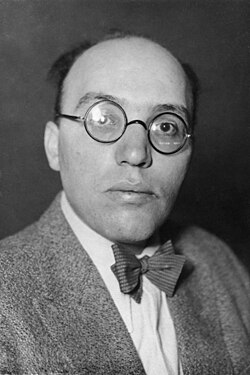
- Music: Composer Kurt Weill and pianist Wilhelm Karl Rust.
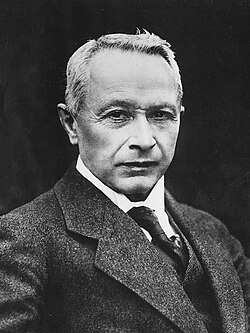
- Science: Hugo Junkers (aviation pioneer) and Hans von Ohain (jet engine designer).
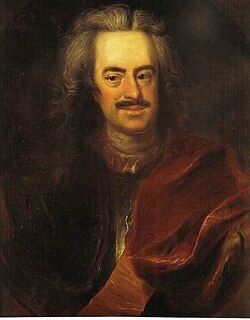
- Aristocracy: Leopold I, Prince of Anhalt-Dessau, a renowned Prussian field marshal.
| Category | Details |
|---|---|
| Population (2020) | 67,747 |
| Total Area | 182.81 km² |
| Elevation | 61 m |
| Key Industries | Industrial center, Education, Tourism |
| Major Rivers | Mulde and Elbe |
Frequently Asked Questions
Why is Dessau famous for the Bauhaus?
Dessau was the second location of the Bauhaus school (1925–1932), where Walter Gropius designed the iconic school building and other modernist structures that fundamentally changed 20th-century architecture and design.
What is the Garden Kingdom of Dessau-Wörlitz?
It is a UNESCO World Heritage Site featuring a vast landscape garden designed in the 18th century. It reflects the Age of Enlightenment and is a prime example of the English landscape style.
Who was Hugo Junkers?
Hugo Junkers was a pioneering German engineer and airplane designer based in Dessau who constructed the first all-metal aircraft and founded Junkers & Co.
How is the city's transport system structured?
Dessau utilizes a combination of three tram lines, various bus routes, and a main railway station (Hauptbahnhof) with connections to Berlin, Leipzig, and Halle.
What happened to Dessau during World War II?
The city was almost entirely destroyed by Allied air raids on March 7, 1945, and was subsequently rebuilt during the GDR era using concrete slab architecture known as Plattenbau.