Dendrobium Orchids: Horticulture, Medicine, and Cultural Significance
The Dendrobium genus, abbreviated as Den. by the Royal Horticultural Society, represents one of the most diverse and beloved groups of orchids in the world. From their role as prized collector's items to their application in traditional medicine and their status as national symbols, these plants bridge the gap between botanical science and cultural heritage.
Key Facts
- Air Purification: Many species can filter toluene and xylene from the air.
- Longevity: Flowers of Dendrobium stratiotes can remain fresh for up to nine months.
- Medicinal Value: D. nobile is one of the 50 fundamental herbs in traditional Chinese medicine.
- Global Emblems: Various species serve as official floral emblems for regions in Thailand, Japan, India, Indonesia, and Australia.
- Horticultural Prestige: The Dendrobium Berry gx grex has earned the Royal Horticultural Society's Award of Garden Merit.
Horticultural Excellence and Breeding
Dendrobiums are in high demand among orchid collectors, leading to the development of numerous varieties and hybrids. A prime example is the noble dendrobium (Den. nobile), which originated in the Himalayas. Through extensive breeding, horticulturalists have significantly expanded the color range of the original species.
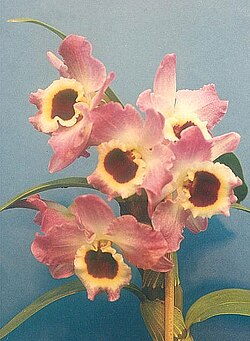
Beyond aesthetics, the genus is noted for its resilience and utility. Some species are valued for their ability to remove volatile organic compounds, specifically toluene and xylene, from the environment. The diversity of the genus is further highlighted by the registration of cultivars named after prominent institutions and individuals, including Margaret Thatcher, Joseph Schooling, Yip Pin Xiu, Bae Yong-joon, Ismail Sabri Yaakob, and Iriana Jokowi, as well as the SCCCI 100th Anniversary cultivar.
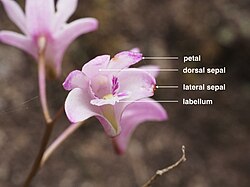
Medicinal and Edible Uses
Beyond the greenhouse, certain Dendrobium species are cultivated for their therapeutic properties. In traditional Chinese medicine, D. nobile is recognized as a fundamental herb, known by the names shí hú (石斛) or shí hú lán (石斛兰).
In Australia, the Indigenous People of Queensland utilized Dendrobium canaliculatum, which they called yamberin. According to records from the 1889 text The Useful Native Plants of Australia, the bulbous stems of this plant are edible once the old leaves have been removed.
Cultural Impact and Symbolism
The striking beauty of Dendrobiums has made them enduring symbols in art and government. Many species serve as official floral emblems for various regions:
- Dendrobium formosum (beautiful giant-flowered dendrobium): Emblem of Ranong Province, Thailand.
- Dendrobium 'Kim il Sung' (Kimilsungia): Emblem of North Korea.
- Dendrobium moniliforme (Sekikoku): Emblem of Matsushima, Miyagi, Japan.
- Dendrobium nobile (noble dendrobium): Emblem of Sikkim, India.
- Dendrobium bigibbum (Cooktown orchid/anggrek larat): Emblem of Queensland, Australia, and Maluku province, Indonesia.
- Dendrobium utile (anggrek serat): Emblem of South East Sulawesi, Indonesia.
The genus has also appeared on official currency and postage. The Cooktown orchid was featured on Australian stamps in 1968 and 1998. Additionally, the Singapore Orchid Series currency notes (1967–1976) depicted several greges (hybrid groups) on their obverse side, including Dendrobium Marjorie Ho (S$10), Dendrobium Shangri-La (S$500), and Dendrobium Kimiyo Kondo (S$1000).
In popular culture, the golden-bow dendrobium (D. chrysotoxum), often called the fried-egg orchid, is featured in the fictional world of detective Nero Wolfe, specifically appearing in The Final Deduction.
Summary of Notable Dendrobium Species
| Species/Cultivar | Common Name/Alias | Primary Significance |
|---|---|---|
| D. nobile | Noble Dendrobium | Traditional Chinese medicine; emblem of Sikkim |
| D. bigibbum | Cooktown Orchid | Emblem of Queensland and Maluku; featured on stamps |
| D. stratiotes | - | Flowers remain fresh for nine months |
| D. canaliculatum | Yamberin | Edible stems (Indigenous Queensland use) |
| D. chrysotoxum | Fried-egg Orchid | Featured in Nero Wolfe fiction |
Frequently Asked Questions
Can Dendrobium orchids improve indoor air quality?
Yes, many species within the Dendrobium genus are known to filter toluene and xylene from the air, making them beneficial for indoor environments.
Which Dendrobium species is used in traditional medicine?
Dendrobium nobile is one of the 50 fundamental herbs used in traditional Chinese medicine, where it is referred to as shí hú or shí hú lán.
Are any parts of the Dendrobium orchid edible?
Yes, the bulbous stems of Dendrobium canaliculatum (known as yamberin) are edible after the old leaves are removed, as recorded by the Indigenous People of Queensland.
How long do Dendrobium flowers last?
While longevity varies by species, the flowers of Dendrobium stratiotes are particularly notable for remaining fresh for up to nine months.
Which countries use Dendrobiums as official emblems?
Dendrobiums serve as emblems in several countries and regions, including North Korea, Thailand, Japan, India, Indonesia, and Australia.