Thistle: Botany, Ecology, and Cultural Symbolism
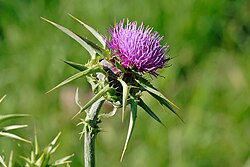
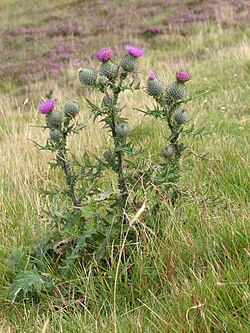
The thistle is a common name for a diverse group of flowering plants, most of which belong to the Asteraceae family. These plants are instantly recognizable by their sharp spikes on the leaf margins and, in some species, across the stems and flat leaf surfaces. These prickles serve as a natural defense mechanism, protecting the plant from herbivores.
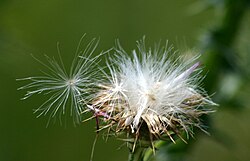
Structurally, thistles typically feature an involucre—a cup- or urn-shaped structure that supports the flower head. Once the flower ripens, it produces a feathery pappus known as thistle-down, which allows the seeds to be dispersed efficiently by the wind.
Key Facts
- Family: Primarily Asteraceae, though the term is sometimes applied to other families like Chenopodiaceae and Papaveraceae.
- Defense: Sharp prickles protect the plant from being eaten by animals.
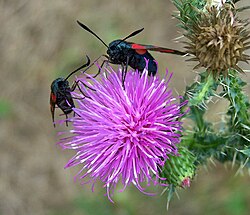
- Ecological Role: High nectar producers that support bumblebees, hummingbirds, and various butterfly species.
- Symbolism: The national floral emblem of Scotland and a key symbol of the Lorraine region in France.
- Economic Impact: While often viewed as invasive weeds, they are vital for honey production and wildlife restoration.
Taxonomy and Classification
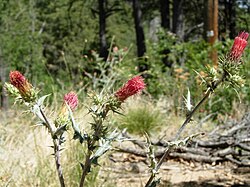
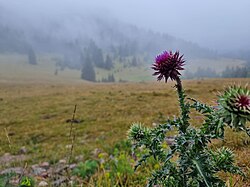
While "thistle" is a general term, it most precisely refers to plants within the tribe Cardueae (also known as Cynareae), specifically the genera Carduus, Cirsium, and Onopordum. However, the name is frequently used for other plants that share similar prickly characteristics.
Asteraceae Genera
Many genera within the Asteraceae family are commonly called thistles, including:
- Cirsium: Includes the Spear thistle and Melancholy thistle.
- Carduus: Includes the Musk thistle.
- Silybum: Includes Milk thistle and St. Mary's thistle.
- Cynara: Includes the Artichoke and Cardoon.
- Onopordum: Includes the Cotton thistle (Scots thistle).
Non-Asteraceae "Thistles"
Some plants outside the Asteraceae family are also referred to as thistles, such as the Russian thistle (Salsola) from the Chenopodiaceae family, the Purple Prickly Poppy (Argemone mexicana) from the Papaveraceae family, and certain species of Eryngium (Apiaceae).
Ecology and Environmental Impact
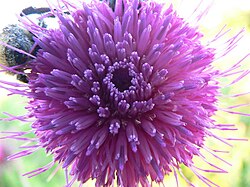
Thistles play a critical role in supporting biodiversity. They are highly valued by pollinators due to their significant nectar production. For example, the Bull thistle has been ranked as a top producer of nectar sugar in British studies.
Many butterfly species, including the monarch, skippers, tiger swallowtails, and various fritillaries, rely on thistles for nectar. The monarch butterfly specifically utilizes large-flowered species like the Tall thistle (Cirsium altissimum) during its migration. Additionally, goldfinches frequently feed on thistle seeds.
Management and Control
Because some species, such as Cirsium vulgare, are invasive in regions like North America, biological control agents are sometimes used. These include Trichosirocalus weevils and thistle tortoise beetles, the latter of which damage the plant by skeletonizing the leaves. However, there is a risk that introduced weevils may attack native thistle species rather than just the invasive targets.
Human Uses and Economic Significance
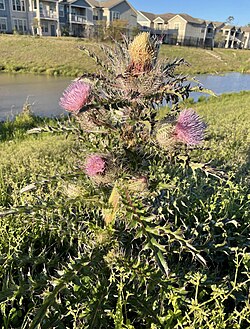
The economic impact of thistles is varied. In agriculture, they are often considered troublesome weeds that compete with crops and interfere with livestock grazing. Conversely, they are prized by beekeepers as sources for luxury monofloral honey.
Culinary Use
In the Beira region of Portugal, thistle flowers are used as rennet (an enzyme used to curdle milk) in the production of Serra da Estrela, a highly regarded sheep's milk cheese.
Cultural Symbolism
The Scottish Thistle
The thistle has been Scotland's national emblem since the reign of King Alexander III. Legend suggests that a barefoot Norse invader stepped on a thistle, crying out in pain and alerting the Scottish army to the ambush. This event is often linked to the Battle of Largs in 1263.
The symbol appears on Scottish coinage, the regimental badge of the Scots Guards, and the insignia of the Order of the Thistle. The motto Nemo me impune lacessit ("No one provokes me with impunity") reflects the plant's prickly nature.
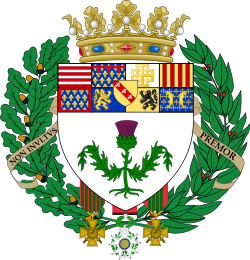
The Thistle of Lorraine
In northeastern France, the Cotton thistle (Onopordum acanthium) is a symbol of Lorraine. Originally a Christian symbol representing the Virgin Mary, it was adopted by René of Anjou and later René II, Duke of Lorraine. It became a popular symbol during the Battle of Nancy in 1477. The regional motto, Qui s'y frotte s'y pique ("who touches it, pricks oneself"), mirrors the sentiment of the Scottish motto.
Summary of Common Thistle Types
| Genus | Common Name Examples | Key Feature/Use |
|---|---|---|
| Cirsium | Spear, Melancholy, Tall thistle | High nectar; important for Monarch migration |
| Silybum | Milk thistle, St. Mary's thistle | Known for medicinal associations |
| Onopordum | Cotton thistle, Scots thistle | Symbol of Scotland and Lorraine |
| Cynara | Artichoke, Cardoon | Edible varieties |
| Salsola | Russian thistle (Tumbleweed) | Non-Asteraceae; wind-dispersed |
Frequently Asked Questions
Why are thistles considered beneficial despite being called weeds?
Thistles are vital nectar sources for pollinators, including bumblebees and various butterfly species. Organizations like the Xerces Society advocate for native thistles because they support wildlife habitat and biodiversity.
What is thistle-down?
Thistle-down is the feathery pappus attached to a ripe thistle seed, which allows the seed to be carried by the wind for dispersal.
How is the thistle used in food production?
Beyond edible varieties like the artichoke, thistle flowers are used in Portugal as a natural coagulant (rennet) to make Serra da Estrela sheep's milk cheese.
Which thistle is the actual national emblem of Scotland?
While the Cotton thistle (Onopordum acanthium) is often used in modern imagery, the Spear thistle (Cirsium vulgare) is a more likely candidate for the original legend as it is native to Scotland.
How do thistles protect themselves from animals?
Thistles evolve sharp spikes or prickles on their leaf margins, stems, and leaf surfaces to deter herbivores from eating them.