Declaration of the Rights of the Child: A History of Global Child Welfare
The Declaration of the Rights of the Child, often referred to as the Geneva Declaration, stands as a landmark in the history of human rights. It was the first document of its kind to be approved by an inter-governmental institution, establishing a global precedent for the protection and nurturing of children regardless of their background.
Drafted by Eglantyne Jebb and first published by the International Save the Children Union in Geneva on February 23, 1923, the document sought to codify the basic needs of children. Its adoption marked a shift in how the international community viewed the vulnerability and inherent rights of the youth.
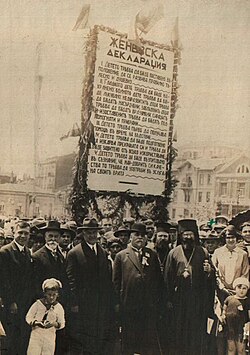
Key Facts
- Origin: Drafted by Eglantyne Jebb and published in 1923.
- First Adoption: Endorsed by the League of Nations General Assembly on November 26, 1924.
- UN Evolution: Expanded by the United Nations in 1948 and 1959.
- Legacy: Formed the basis for the 1989 Convention on the Rights of the Child.
- Commemoration: November 20 is recognized as Universal Children's Day.
The 1924 Geneva Declaration
When the League of Nations adopted the document as the World Child Welfare Charter in 1924, it focused on five core principles designed to ensure a child's normal development, both materially and spiritually. These principles mandated that:
- Hungry children must be fed, sick children nursed, and those who are backward helped.
- Orphans and waifs must be sheltered and succoured (assisted).
- Children must be the first to receive relief during times of distress.
- Children must be protected from exploitation and placed in positions to earn a livelihood.
- Children should be raised with the understanding that their talents should serve their fellow human beings.
The impact of this declaration was immediate and practical. Heads of State and Government pledged to integrate these principles into their own domestic laws. In France, for example, the declaration was ordered to be displayed in every school to ensure visibility and adherence.
Evolution Under the United Nations
Following the establishment of the United Nations (UN), the international community sought to modernize and expand these protections. In 1946, the UN resolved to adopt an expanded version of the original document. This process involved various governments, leading to a seven-point version in 1948.
On November 20, 1959, the UN General Assembly adopted a more comprehensive Declaration of the Rights of the Child. While it maintained the structure of the 1924 original, it expanded the core principles to ten. A resolution proposed by the delegation of Afghanistan urged governments to recognize, publicize, and strive for the acceptance of these rights. This specific date, November 20, was subsequently adopted as Universal Children's Day.
Transition to the 1989 Convention
The progression of child rights culminated in the Convention on the Rights of the Child. Adopted by the UN General Assembly on November 20, 1989, via resolution 44/25, this document moved beyond a declaration of principles to a formal treaty. It opened for signature and ratification, eventually entering into force on September 2, 1990.
Summary of Child Rights Documents
| Year | Document | Governing Body | Key Feature |
|---|---|---|---|
| 1924 | Geneva Declaration | League of Nations | First inter-governmental human rights document for children. |
| 1959 | Declaration of the Rights of the Child | United Nations | Expanded to ten principles; established Universal Children's Day. |
| 1989 | Convention on the Rights of the Child | United Nations | Legally binding treaty for signatory nations. |
Frequently Asked Questions
Who originally drafted the Declaration of the Rights of the Child?
The document was drafted by Eglantyne Jebb and published by the International Save the Children Union in 1923.
Why is November 20 significant?
November 20 is celebrated as Universal Children's Day because it is the anniversary of the UN General Assembly's adoption of the Declaration of the Rights of the Child in 1959.
What was the first inter-governmental human rights document for children?
The 1924 Geneva Declaration, endorsed by the League of Nations General Assembly as the World Child Welfare Charter, was the first.
How does the 1989 Convention differ from the earlier Declarations?
While the earlier documents were declarations of principles, the 1989 Convention on the Rights of the Child is a formal treaty that allows for signature, ratification, and accession by member states.
What were the primary goals of the original 1924 text?
The original text focused on providing the material and spiritual means for normal development, ensuring relief in times of distress, protecting children from exploitation, and encouraging the use of talents for the service of others.