David Wills: The Legal Mind Behind the Gettysburg National Cemetery
While history often remembers the great generals and presidents of the American Civil War, the logistical and legal foundations of our national memory were often laid by dedicated citizens. David Wills was one such individual—a distinguished lawyer, educator, and public servant whose home and vision became inextricably linked to one of the most significant moments in American history.
Early Life and Academic Foundations
Born in Menallen Township, Adams County, Pennsylvania, David Wills spent his early years on the farm of his father, James Wills. His trajectory shifted at age 13 when he pursued higher education, entering Pennsylvania College (known today as Gettysburg College) in 1846. He graduated with high honors in 1851, marking the beginning of a lifelong commitment to academia and law.
Wills' early professional life was characterized by a diverse range of roles. He spent one year as the principal of the Academy at Cahaba, Alabama, before returning to Pennsylvania to study law under the Honorable Thaddeus Stevens in Lancaster. By 1854, he was officially admitted to the Bar of Pennsylvania.
A Career of Public Service and Leadership
Upon establishing his law office in Gettysburg in 1853, Wills quickly became a pillar of the local community. His leadership extended across several sectors of public life:
- Local Government: He served as the Burgess (the chief executive officer) of the Borough of Gettysburg.
- Education: He was elected as the first County Superintendent of Schools for Adams County, where he was responsible for organizing the region's new school system.
- Finance: From 1854 to 1860, he served as a director of the Bank of Gettysburg.
- Judiciary: In 1874, he reached a professional pinnacle when he was appointed President Judge of the 42nd Judicial District, overseeing both Adams and Fulton Counties.
Wills also dedicated significant time to institutional governance, serving as a trustee for Wilson College in Chambersburg, the Dickinson School of Law in Carlisle, and spending over twenty years as a trustee for Pennsylvania College.
The Civil War and the Battle of Gettysburg
The American Civil War reached a violent crescendo at Wills' own doorstep from July 1–3, 1863. During the Confederate occupation of Gettysburg, Wills witnessed the brutality of war firsthand, observing Confederate soldiers use axes to break into the store of one of his tenants. As the battle raged, his home became a sanctuary for local citizens who huddled in his cellar for protection.
In the aftermath of the conflict, Wills recognized the need for a dignified resting place for the fallen. He proposed the creation of the Soldiers' National Cemetery to Governor Andrew Gregg Curtin. Governor Curtin appointed Wills as the agent of the Commonwealth of Pennsylvania to organize the cemetery and manage its interests.
This mission was not without conflict; Wills faced competition from a rival lawyer, David McConaughy, who had already begun purchasing land on Cemetery Hill with the intent of preserving it for the Federal government rather than the commonwealth.
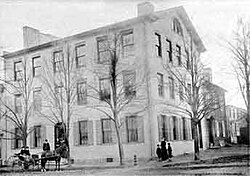
The legacy of the Wills home is further cemented by its connection to President Abraham Lincoln. On November 18, 1863, Lincoln used the David Wills House to write the final draft of the Gettysburg Address, which he had originally composed in Washington, D.C. Today, the house operates as a historic museum, having been renovated and reopened to the public in February 2009.
Key Facts
- Education: Graduated with high honors from Pennsylvania College in 1851.
- Legal Training: Studied under Hon. Thaddeus Stevens; admitted to the Pennsylvania Bar in 1854.
- Public Office: Served as Burgess of Gettysburg and first County Superintendent of Schools for Adams County.
- Judicial Role: Appointed President Judge of the 42nd Judicial District in 1874.
- Historical Contribution: Proposed the Soldiers' National Cemetery and hosted Abraham Lincoln for the final drafting of the Gettysburg Address.
Summary of David Wills' Professional Roles
| Field | Role/Position | Institution/Location |
|---|---|---|
| Education | Principal | Academy at Cahaba, Alabama |
| Law | Attorney/President Judge | Gettysburg / 42nd Judicial District |
| Government | Burgess | Borough of Gettysburg |
| Education | County Superintendent of Schools | Adams County |
| Finance | Director | Bank of Gettysburg |
| Governance | Trustee | Pennsylvania College, Wilson College, Dickinson School of Law |
Frequently Asked Questions
What was David Wills' role in the creation of the Soldiers' National Cemetery?
David Wills suggested the idea of the cemetery to Governor Andrew Gregg Curtin immediately following the Battle of Gettysburg. He was subsequently appointed as the agent of the Commonwealth of Pennsylvania to organize and oversee the cemetery's interests.
How is the David Wills House connected to Abraham Lincoln?
The David Wills House is the location where President Abraham Lincoln wrote the final draft of the Gettysburg Address on November 18, 1863.
Where did David Wills study law?
David Wills studied law in the office of the Honorable Thaddeus Stevens in Lancaster, Pennsylvania, before being admitted to the Bar in 1854.
What happened to the David Wills House over time?
The house now serves as a historic house museum. It underwent renovation and was reopened to the public in February 2009.
Did David Wills hold any judicial positions?
Yes, in 1874, David Wills was appointed as the President Judge of the 42nd Judicial District, which encompassed Adams and Fulton Counties.