Dance Charts History: The Evolution of Billboard's Electronic Music Rankings
The landscape of dance music has shifted dramatically over the last five decades, moving from the underground energy of disco to the global dominance of electronic dance music (EDM). Tracking this evolution is the history of the dance charts, primarily curated by Billboard, which have adapted their methodologies to reflect how people consume music—transitioning from club play and 12-inch vinyl sales to digital streaming and radio airplay.
From the early days of the 1970s to the sophisticated data tracking of the 2020s, these charts have crowned the icons of the dance floor and documented the rise of genres that defined entire eras.
Key Facts
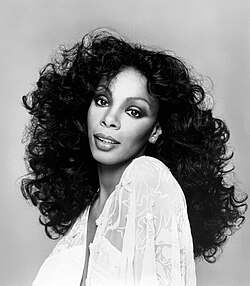
- Donna Summer was the most successful dance artist of the 1970s with seven number-one hits.
- Madonna is the first artist to achieve 50 number-ones on a single Billboard chart (Dance Club Songs).
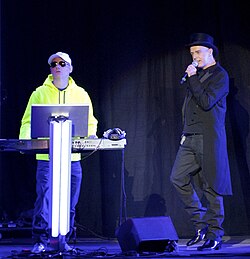
- Pet Shop Boys hold the record as the most successful group on the Dance Club Songs chart.
- Rihanna's album Anti is the only album to produce eight number-one singles on the Dance Club Songs chart.
- Marshmello and Bastille's "Happier" holds the record for the longest run at number one on the Hot Dance/Electronic Songs chart (69 weeks).
The Disco Era and Early Foundations (1974–1984)
The formal tracking of dance music began in 1974 when Billboard launched the Disco Action chart. The first number-one single was "Never Can Say Goodbye" by Gloria Gaynor. During this period, the industry experimented with how to measure success, with Record World also compiling national club play data in 1975.
By 1976, the National Disco Action Top 30 was premiered, seeing the Bee Gees take the first top spot with "You Should Be Dancing." The late 70s were dominated by Donna Summer, who secured seven number-ones during the decade, cementing her status as the era's premier dance artist.
As the 1980s began, the charts evolved into the Disco Top 80 and later the Hot Dance/Disco. This era saw the emergence of pop icons in the dance space; Michael Jackson's Thriller LP cuts set a long-standing record by remaining atop the chart for 11 weeks in 1983, while Madonna scored her first number-one with "Holiday" / "Lucky Star" that same year.
Diversification: Sales and Club Play (1985–2002)
In 1985, Billboard made a pivotal move by splitting the Hot Dance/Disco chart into two distinct categories: the 12-inch Singles Sales chart and the Club Play chart. This allowed the industry to distinguish between what DJs were playing in clubs and what fans were buying in stores.
Throughout the late 80s and 90s, the charts reflected a broadening of the genre. Artists like Janet Jackson, Whitney Houston, and Mariah Carey became staples of the Club Play chart. In 1992, the sales chart expanded to include cassette tapes and CD maxi-singles, renamed as the Hot Dance Music Maxi-Singles Sales.
The late 90s and early 2000s saw massive endurance hits. Brandy and Monica's "The Boy Is Mine" spent 21 weeks at number one on the Maxi-Singles Sales chart in 1998, and Madonna's "Music" dominated both sales and club play in 2000.
The Digital Shift and Airplay (2003–2012)
The early 2000s introduced the Hot Dance Radio Airplay chart (launched in 2003) to track the most-played songs on dance radio. Beyoncé's "Crazy In Love" made history as the first dance airplay number one.

This era marked the rise of the superstar DJ. David Guetta began his dominance in 2004 with "The World Is Mine," eventually charting a record 21 dance airplay number ones.

By 2009, the Club Play chart was renamed Hot Dance Club Songs. The Pet Shop Boys extended their record as the most successful group on this chart during this time.
The Modern Era: Electronic and Pop Integration (2013–Present)
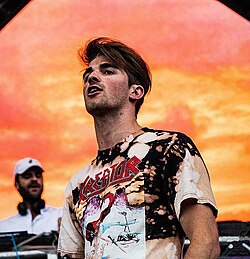
In 2013, Billboard launched the Hot Dance/Electronic Songs chart, a comprehensive ranking based on downloads, radio airplay, streaming, and club play. This chart became the primary metric for the EDM explosion. The Chainsmokers emerged as a powerhouse here, securing a record six number-ones since 2014.
Rihanna also achieved a unique milestone with her 2016 album Anti, which is the only album to produce eight number-ones on the Dance Club Songs chart.

The COVID-19 pandemic caused a significant disruption in 2020; because nightclubs were forced to close, the Dance Club Songs chart became defunct after March 28, ending a 44-year run. However, the Hot Dance/Electronic Songs chart continued to thrive, seeing massive runs from artists like Elton John, Dua Lipa, and David Guetta.
Most recently, in January 2025, Billboard revamped its system. The Hot Dance/Electronic Songs chart now focuses exclusively on songs by DJs and producers. To accommodate other artists, the Hot Dance/Pop Songs chart was created for dance-centric tracks by artists not rooted in the dance genre, with Tate McRae's "It's OK I'm OK" as the first number one.
| Year | Event/Chart Change | Key Artist/Song |
|---|---|---|
| 1974 | Launch of Disco Action chart | Gloria Gaynor |
| 1985 | Split into 12-inch Sales and Club Play | Patti LaBelle / Harold Faltermeyer |
| 2003 | Launch of Hot Dance Radio Airplay | Beyoncé |
| 2013 | Launch of Hot Dance/Electronic Songs | will.i.am & Britney Spears |
| 2020 | Dance Club Songs chart defunct | Madonna (50th #1) |
| 2025 | Launch of Hot Dance/Pop Songs | Tate McRae |
Frequently Asked Questions
Who is the most successful artist in the history of the Dance Club Songs chart?
Madonna is the most successful, becoming the first act to score 50 number-one hits on a single Billboard chart.
Which album holds the record for the most number-one dance singles?
Rihanna's 2016 album Anti is the only album to produce eight number-ones on the Dance Club Songs chart.
What is the longest-running number-one song on the Hot Dance/Electronic Songs chart?
"Happier" by Marshmello and Bastille holds the record with a 69-week run at number one.
Why was the Dance Club Songs chart discontinued in 2020?
The chart became defunct after March 28, 2020, because the COVID-19 pandemic caused nightclubs to close, making it impossible to track club play.
What is the difference between the Hot Dance/Electronic and Hot Dance/Pop charts?
As of 2025, the Hot Dance/Electronic chart is reserved for songs primarily recorded by DJs or producers, while the Hot Dance/Pop chart is for dance-centric songs by artists not rooted in the dance genre.