Daimler-Motoren-Gesellschaft: The Engineering Legacy of DMG
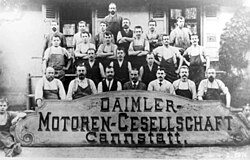
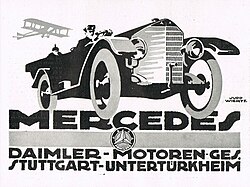
The Daimler-Motoren-Gesellschaft (DMG), also known as the Daimler Motors Corporation, was a cornerstone of early automotive engineering. Operating from 1890 to 1926, this German powerhouse transitioned from a specialized engine manufacturer into a global symbol of luxury and performance. Founded by the visionary duo Gottlieb Daimler and Wilhelm Maybach, DMG laid the technical foundations for what would eventually become the Mercedes-Benz brand.
The company's journey was marked by rapid innovation, devastating setbacks, and strategic expansions across Germany and abroad, ultimately merging with its chief rival to survive the economic turmoil of the 1920s.
Key Facts
- Founded: 1890 by Gottlieb Daimler and Wilhelm Maybach.
- Headquarters: Originally Cannstatt, later moving to Stuttgart-Untertürkheim and Berlin.
- Key Innovation: The Phoenix engine, featuring the first vertical parallel four-cylinder layout for automobiles.
- Brand Evolution: Adopted the "Mercedes" trademark in 1902.
- Fate: Merged with Benz & Cie. in 1926 to form Daimler-Benz.
- Iconic Symbol: The three-pointed star, representing land, water, and air.
Foundations at Seelberg
After leaving Nikolaus Otto's Deutz AG Gasmotorenfabrik, Gottlieb Daimler and Wilhelm Maybach established DMG in 1890. Their initial goal was the production of small, high-speed engines based on stationary engine technology. Their first operational base was a former precious metal foundry in Seelberg Hill, Cannstatt.
While the company's financiers initially favored the stable profits of stationary engines and motorboats, Daimler and Maybach pushed for the development of the automobile. This tension was so great that the founders briefly left the company before being persuaded to return in 1896 by Frederick Simms.
The early product lineup evolved quickly: the first Daimler car appeared in 1892, followed by a two-cylinder vis-à-vis in 1895, and the 1897 front-engined open tourer powered by the Phoenix engine.
The Phoenix Engine (1894)
The Phoenix engine was a technical milestone. It introduced four cylinders placed vertically and parallel—a first for automobile engines—and utilized camshaft-operated exhaust valves and a spray-nozzle carburetor patented by Maybach in 1893.
The Rise of the Mercedes Brand
The shift toward automobile dominance was triggered by the influence of Emil Jellinek, an Austrian merchant who demanded a safer, more modern car. Based on Maybach's designs, the Mercedes 35 hp stunned the motorsport world in 1901. This success led DMG to officially adopt "Mercedes" as its automobile trademark in 1902.

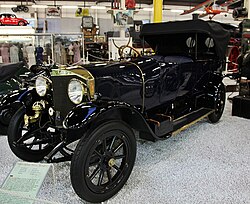
The Model 60 became the most famous early example, capable of reaching 120 km/h (75 mph). Its prestige was so high that other manufacturers, including FIAT and Ariel, sought to copy its design. This commercial boom saw the workforce explode from 821 employees in 1903 to 2,200 by 1904.
Industrial Expansion and Infrastructure
DMG expanded its footprint to optimize production and diversify its offerings:
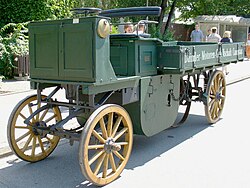
- Berlin-Marienfelde: Opened in 1902, this site initially focused on marine engines before expanding into trucks (1905) and fire trucks (1907).
- Untertürkheim: Following a catastrophic fire in Cannstatt in 1903 that destroyed 93 cars and the historic Reitwagen (the first motorcycle), DMG moved its headquarters here. The site became a fully integrated hub for everything from foundries to final assembly.
- Sindelfingen: Established in 1915 to meet the demands of World War I, producing military vehicles and aircraft engines.
Global Reach and Licensing
DMG was one of the first automobile multinationals. It established a subsidiary in Austria (Austro-Daimler) and entered licensing agreements in the US and UK. In the United States, Gottlieb Daimler partnered with piano maker William Steinway to build engines and cars in New York City.
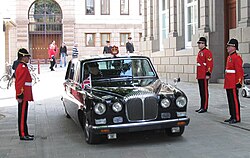
In the United Kingdom, Frederick Simms obtained the rights to Daimler patents, leading to the formation of The Daimler Motor Company Limited in Coventry. While this British entity shared the name, it eventually followed a separate corporate path, later becoming part of Jaguar.
The Three-Pointed Star and the 1926 Merger
The iconic three-pointed star was suggested by Gottlieb's sons, Paul and Adolf, to symbolize the company's reach across land, water, and air. It debuted in 1910 and was later registered in its familiar circular form by Daimler-Benz in 1937.
The 1920s brought severe economic crisis to Germany. Hyperinflation and strikes forced DMG to diversify into bicycles and typewriters to survive. To ensure mutual survival, DMG and its rival, Benz & Cie., signed an Agreement of Mutual Interest in 1924, eventually merging on June 28, 1926, to form Daimler-Benz AG. The new company combined the Mercedes brand with the name of Karl Benz, creating the legendary Mercedes-Benz trademark.
Summary of DMG Evolution
| Year | Event/Model | Significance |
|---|---|---|
| 1890 | Foundation of DMG | Established by Daimler and Maybach in Cannstatt. |
| 1894 | Phoenix Engine | First vertical parallel four-cylinder auto engine. |
| 1901 | Mercedes 35 hp | Shifted company focus toward high-performance cars. |
| 1902 | Mercedes Trademark | Official adoption of the Mercedes brand name. |
| 1903 | Cannstatt Fire | Forced relocation of headquarters to Untertürkheim. |
| 1926 | Merger with Benz & Cie. | Formation of Daimler-Benz and the Mercedes-Benz brand. |
Frequently Asked Questions
Who founded the Daimler-Motoren-Gesellschaft?
DMG was founded in 1890 by Gottlieb Daimler and Wilhelm Maybach, two engineers who had previously worked for Nikolaus Otto.
What was the significance of the Phoenix engine?
The Phoenix engine was revolutionary because it was the first automobile engine to feature four cylinders placed vertically and parallel, significantly improving performance.
How did the Mercedes brand name originate?
The name came from Mercédès, the daughter of Emil Jellinek. Jellinek worked with Maybach to develop a race car that met his specific requirements for safety and modernity, leading to the Mercedes 35 hp.
Why did DMG merge with Benz & Cie.?
The merger in 1926 was a result of the severe German economic crisis of the 1920s. Both companies faced inflation and financial instability, making a merger necessary for their survival.
What does the three-pointed star represent?
The three-pointed star symbolizes the company's ambition and capability to produce engines for three different domains: land, water, and air.