University of Stuttgart: A Legacy of Engineering and Research Excellence
The University of Stuttgart (German: Universität Stuttgart) is a prestigious public research university located in the heart of Baden-Württemberg, Germany. Founded in 1829, it stands as one of Germany's oldest and most influential technical institutions. Known for its rigorous academic standards and deep ties to industry, the university is a cornerstone of European engineering and scientific innovation.
As a member of TU9—an elite association of the nine oldest and most distinguished technical universities in Germany—the University of Stuttgart blends a rich historical foundation with cutting-edge research. From its roots as a technical college to its current status as a comprehensive research university, it continues to shape the global landscape of technology and science.
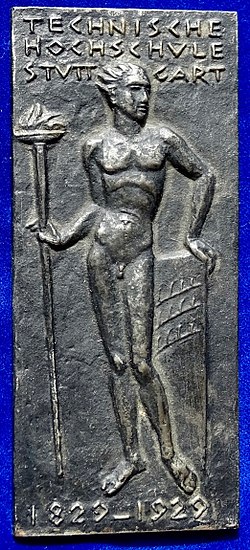
Key Facts
- Established: 1829 by William I of Württemberg.
- Type: Public research university.
- Affiliations: TU9, German Universities Excellence Initiative, PEGASUS, EUA, and TIME.
- Student Body: 19,097 students (including 13,136 undergraduates and 7,309 postgraduates).
- Academic Structure: Organized into 10 specialized faculties.
- Annual Budget: EUR 662 million.
Historical Evolution
The institution's journey began in 1829, though Stuttgart had earlier educational landmarks like the Karlsschule (1770–1794). It is important to note that while the University of Hohenheim is the oldest existing university in the city, it remains a separate entity from the University of Stuttgart.
By 1876, reflecting the era's growing emphasis on technical sciences, the institution was renamed Technische Hochschule Stuttgart (Stuttgart Institute of Technology). A major milestone occurred in 1900 when the university was granted the authority to award doctoral degrees in technical disciplines. In 1967, the institution officially became the Universität Stuttgart, a transition that allowed for the expansion into social sciences, history, and the history of science and technology.
Campus and Organization
The university operates across an urban and suburban landscape, splitting its focus between two primary locations. The city center campus remains the hub for the humanities, social sciences, and architecture. Meanwhile, the suburb of Stuttgart-Vaihingen houses the majority of technical subjects, including computer science and various engineering disciplines.
The university is structured into 10 distinct faculties:
- Architecture and Urban Planning
- Civil and Environmental Engineering
- Chemistry
- Energy, Process, and Bio-Engineering
- Computer Science, Electrical Engineering and Information Technology
- Aerospace Engineering and Geodesy
- Engineering Design, Production Engineering and Automotive Engineering
- Mathematics and Physics
- Humanities
- Management, Economics and Social Sciences
Beyond traditional classrooms, the university fosters innovation through partnerships with the Fraunhofer institutes and the German Aerospace Center. It is also a founding member of Arena2036 (a flexible research factory) and Startup Autobahn.
Academic Reputation and Rankings
The University of Stuttgart is consistently recognized for its excellence, particularly in the realm of engineering. It maintains a strong presence in both national and global rankings, reflecting its status as a top-tier research hub.
| Ranking Body | Global Position | National Position (Germany) | Year/Category |
|---|---|---|---|
| QS World | 310 | 18 | 2026 (Overall) |
| THE World | 251-300 | 25-31 | 2024 (Overall) |
| ARWU World | 301-400 | 20-24 | 2023 (Overall) |
| QS Engineering & Tech | 167 | 6 | 2023 (Subject) |
| THE Engineering | 101-125 | 5-7 | 2023 (Subject) |
Notable Alumni
The university's impact is evident in the achievements of its alumni, who have led revolutions in industry, science, and the arts. Notable figures include:
- Gottlieb Daimler: Co-founder of Mercedes-Benz and inventor of the automobile.
- Wilhelm Maybach: Renowned automobile designer and engineer.
- Gerhard Ertl: 2007 Nobel Prize Laureate in Chemistry.
- Horst Störmer: Nobel Prize winner in Physics.
- Martin Winterkorn: Former CEO of Volkswagen AG.
- Michael Macht: Former CEO of Porsche AG.
Frequently Asked Questions
What is TU9 and why is it important?
TU9 is an incorporated society of the nine oldest and most prestigious technical universities in Germany. Membership signifies a commitment to high-level engineering education and research excellence.
Where are the different faculties located?
The university is split between two locations: the city center campus hosts humanities, social sciences, and architecture, while the Vaihingen campus focuses on technical subjects like computer science and engineering.
Who founded the University of Stuttgart?
The university was founded in 1829 by William I of Württemberg.
Is the University of Stuttgart the same as the University of Hohenheim?
No. While both are located in Stuttgart and occasionally collaborate, the University of Hohenheim is a separate institution and is the oldest still existing university in the city.
What are the university's strongest subjects?
The university is globally recognized for its Engineering and Technology programs, frequently ranking within the top 10 in Germany for these disciplines.