Dactyly: The Science of Digit Arrangement in Tetrapods
In the study of biology, dactyly refers to the specific arrangement of digits—fingers and toes—on the hands, feet, or wings of tetrapod animals. Derived from the Ancient Greek word dáktylos, meaning "finger," dactyly describes a wide spectrum of anatomical configurations that have evolved to suit diverse environments, from the depths of the ocean to the canopy of rainforests.
Key Facts
- Pentadactyly is the condition of having five digits per limb, common in reptiles and humans.
- Digit reduction is an evolutionary process where species lose digits over time, such as modern horses (monodactyly).
- Polydactyly refers to having more digits than usual, seen in domestic cats and early stem-tetrapods.
- Syndactyly occurs when two or more digits are fused together.
- Avian dactyly varies significantly by species to support perching, climbing, or swimming.
Standard Digit Configurations
The number of digits on a limb is often a defining characteristic of a species' evolutionary lineage. While many believe all tetrapods descend from a five-digit ancestor, paleontologist Stephen Jay Gould noted that early tetrapods often exhibited polydactyly, suggesting that digit reduction and specialization are key evolutionary drivers.
Pentadactyly (Five Digits)
Pentadactyly is the presence of five digits on each limb. This is the standard for reptiles and humans. Interestingly, some animals fit this category through specific adaptations; for example, dogs have tetradactylous paws but are considered pentadactyls due to the presence of the dewclaw. Cats are both pentadactyl and tetradactyl, as they possess dewclaws on their front limbs but not their hind limbs.
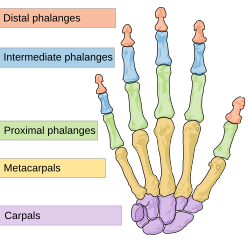
Tetradactyly and Tridactyly (Four and Three Digits)
Tetradactyly describes limbs with four digits, a common trait among many amphibians, birds, and theropod dinosaurs. Tridactyly refers to three digits, found in the rhinoceros and ancestral horses like Protohippus and Hipparion (members of the Perissodactyla order). Certain birds, such as quail, bustards, and emus, also exhibit tridactyly.
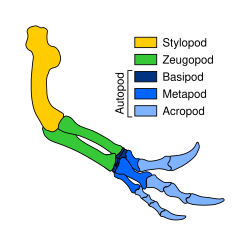
Didactyly and Monodactyly (Two and One Digits)
Didactyly (or bidactyly) is the condition of having two digits. This is seen in ostriches, the two-toed sloth (Choloepus didactylus), and cloven-hoofed mammals such as cattle, sheep, and deer (Artiodactyla). Monodactyly is the presence of a single digit, most notably in modern equids (horses). While some studies suggest the horse's frog may be a remnant of other digits, they are functionally monodactyl. This is also seen in sthenurine kangaroos.
Dactyly as a Congenital Condition
In humans and some domestic animals, variations in digit number or form can occur as congenital defects rather than evolutionary traits.
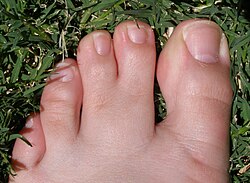
- Syndactyly: A condition where digits are fused together. While normal for siamangs and certain marsupials like kangaroos, it is an abnormality in humans.
- Polydactyly: Having extra digits. This is common in domestic cats and was present in early aquatic stem-tetrapods like Acanthostega gunnari.
- Oligodactyly: Having fewer than the normal number of digits (not caused by amputation). A specific form is ectrodactyly (split-hand malformation), where central digits are missing.
- Clinodactyly: The curvature of a digit, typically the little finger curving toward the ring finger. This is sometimes associated with genetic syndromes such as Down or Turner syndrome.
Specialized Arrangements in Birds and Chameleons
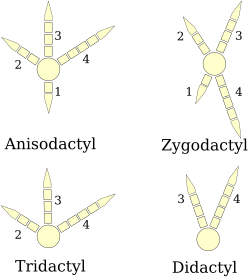
Birds have evolved highly specialized toe arrangements to facilitate different lifestyles.
| Type | Configuration | Example Species |
|---|---|---|
| Anisodactyly | Three toes forward, one back | Songbirds, Eagles, Hawks |
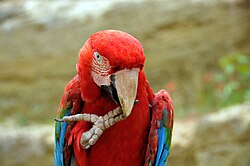
| Zygodactyly | Two toes forward, two back | Parrots, Woodpeckers, Cuckoos |
| Heterodactyly | Digits 3 & 4 forward, 1 & 2 back | Trogons |
| Pamprodactyly | All four toes point forward | Swifts, Mousebirds |
| Syndactyly | Fused toes (usually 3rd and 4th) | Belted Kingfisher |
Chameleons possess a unique arrangement that does not strictly fit the standard definitions of zygodactyly or didactyly. Their digits are organized into opposing bundles (two on one side, three on the other) to create a pincer-like grip for grasping branches.
Adaptations in Aquatic Tetrapods
Animals that returned to the sea often underwent convergent evolution, where unrelated species evolve similar traits. In many aquatic vertebrates, digits are encased in a single flipper of soft tissue. While some species experience digit reduction (such as baleen whales), others exhibit hyperphalangy—an increase in the number of phalanx bones within the digits.
Frequently Asked Questions
What is the difference between polydactyly and pentadactyly?
Pentadactyly is the state of having exactly five digits per limb, which is the standard for many tetrapods. Polydactyly is the condition of having more than the usual number of digits.
Is a horse truly monodactyl?
Modern horses are functionally monodactyl, meaning they support their weight on one digit. However, some scientific studies suggest the presence of remnants of other digits, which complicates the strict definition.
What is zygodactyly in birds?
Zygodactyly is a toe arrangement where two toes face forward and two face backward. This is an adaptation primarily used by arboreal species, such as parrots and woodpeckers, to help them climb.
What is ectrodactyly?
Ectrodactyly, also known as split-hand malformation, is a form of oligodactyly characterized by the congenital absence of one or more central digits of the hands or feet.
How does dactyly differ in chameleons compared to other animals?
Unlike zygodactyl animals, chameleons organize their digits into two opposing bundles (a group of two and a group of three) to act as a pincer for gripping branches.