Dactyly: The Evolution and Arrangement of Digits in Tetrapods
In the study of biology, dactyly refers to the specific arrangement of digits—fingers and toes—on the limbs or wings of tetrapod animals. Derived from the Ancient Greek word dáktylos, meaning "finger," dactyly describes a wide spectrum of anatomical configurations that have evolved to suit diverse environments, from the depths of the ocean to the canopy of rainforests.
Key Facts
- Pentadactyly is the condition of having five digits per limb, common in reptiles and humans.
- Digit reduction is an evolutionary process where species lose digits over time, such as modern horses (monodactyly).
- Polydactyly refers to having more digits than usual, seen in early stem-tetrapods and some domestic cats.
- Syndactyly occurs when two or more digits are fused together, a normal trait in kangaroos but an abnormality in humans.
- Bird feet exhibit specialized arrangements like zygodactyly (two toes forward, two back) for climbing.
Standard Digit Arrangements
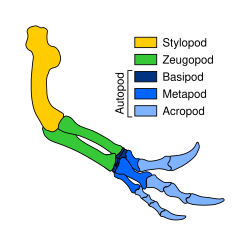
Most modern tetrapods are believed to have descended from an ancestor with a five-digit limb. While Stephen Jay Gould challenged this in 1991 by noting polydactyly in early tetrapods, the five-digit model remains a primary reference for understanding digit specialization.
Pentadactyly (Five Digits)
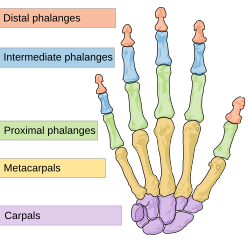
Pentadactyly is the presence of five digits on each limb. This is the standard for reptiles and humans. Interestingly, some animals fit this category through specific adaptations; for example, dogs have tetradactylous paws but are considered pentadactyls due to the presence of the dewclaw. Cats exhibit a mix, being pentadactyl on their front limbs and tetradactyl on their hind limbs.
Tetradactyly and Tridactyly (Four and Three Digits)
Tetradactyly describes limbs with four digits, a common trait among many amphibians, birds, and theropod dinosaurs. Tridactyly refers to three digits, found in rhinoceroses and ancestral horses like Protohippus and Hipparion (members of the Perissodactyla order), as well as certain birds such as quail, bustards, and emus.
Didactyly and Monodactyly (Two and One Digits)
Didactyly (or bidactyly) is the condition of having two digits. This is seen in cloven-hoofed mammals (Artiodactyla) like cattle, sheep, and deer, as well as ostriches and the two-toed sloth (Choloepus didactylus). In humans, didactyly is an abnormality where only the thumb and fifth finger (or big and little toes) remain.
Monodactyly is the presence of a single digit, most notably in modern equids (horses). While some studies suggest the horse's frog may be a remnant of other digits, they are functionally monodactyl. This is also seen in sthenurine kangaroos and the pterosaur Nyctosaurus, which retained only its wing finger.
Dactyly as a Congenital Defect
In humans, deviations from the five-digit norm are often classified as medical conditions:
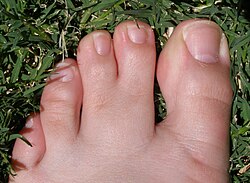
- Syndactyly: The fusion of two or more digits. While normal for siamangs and kangaroos, it is an unusual condition in humans.
- Polydactyly: Having extra digits. This is common in domestic cats and was present in early aquatic stem-tetrapods like Acanthostega gunnari.
- Oligodactyly: Having too few digits (not caused by amputation). A specific form is ectrodactyly (split-hand malformation), the congenital absence of central digits.
- Clinodactyly: The curvature of a digit, typically the little finger curving toward the ring finger, sometimes associated with genetic syndromes like Down syndrome.
Specialized Arrangements in Birds and Chameleons
Birds have evolved highly specific toe arrangements to facilitate perching, climbing, and swimming.
Avian Digit Types
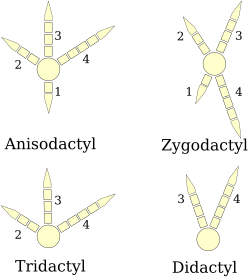
- Anisodactyly: Three toes forward and one back. This is the most common arrangement, used by songbirds, eagles, and hawks for perching.
- Syndactyly: Similar to anisodactyly, but with the third and fourth toes fused, as seen in the belted kingfisher.
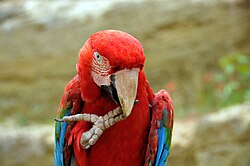
- Zygodactyly: Two toes forward (digits 2 and 3) and two back (digits 1 and 4). This is ideal for arboreal species like parrots, woodpeckers, and cuckoos.
- Heterodactyly: Digits 3 and 4 point forward, while 1 and 2 point back. This is unique to trogons.
- Pamprodactyly: All four toes point forward, found in swifts and mousebirds.
The Chameleon Exception
Chameleons possess a unique pincer-like arrangement. Their front limbs have a medial bundle (digits 1, 2, 3) and a lateral bundle (digits 4, 5). Their hind limbs have a medial bundle (digits 1, 2) and a lateral bundle (digits 3, 4, 5). This differs from zygodactyly, as it does not involve digits 1 and 4 opposing 2 and 3.
Aquatic Adaptations
Secondarily aquatic vertebrates often exhibit convergent evolution, where unrelated species develop similar traits. Many have fused their digits into flippers. While soft tissue covers the limb, remnants of digits usually remain, though they may reduce over time, as seen in baleen whales.
Some aquatic animals exhibit hyperphalangy, an increase in the number of phalanx bones beyond the ancestral condition. This is found in modern cetaceans and extinct marine reptiles like ichthyosaurs and plesiosaurs.
Summary of Dactyly Types
| Term | Digit Count/Arrangement | Example Species |
|---|---|---|
| Pentadactyly | 5 digits | Humans, Reptiles |
| Tetradactyly | 4 digits | Many Birds, Amphibians |
| Tridactyly | 3 digits | Rhinoceros, Emus |
| Didactyly | 2 digits | Cattle, Ostriches |
| Monodactyly | 1 digit | Modern Horses |
| Zygodactyly | 2 forward, 2 back | Parrots, Woodpeckers |
Frequently Asked Questions
What is the difference between polydactyly and syndactyly?
Polydactyly is the condition of having more digits than the usual number for a species, whereas syndactyly is the condition where two or more digits are fused together.
Are horses truly monodactyl?
While horses are functionally monodactyl, supporting their weight on one toe, some research suggests the frog may be composed of remnants of digits II and IV, meaning they may not be strictly monodactyl.
What is hyperphalangy?
Hyperphalangy is an evolutionary increase in the number of phalanges (finger/toe bones) beyond the ancestral mammal or reptile condition, commonly found in cetaceans and extinct marine reptiles.
How does chameleon foot anatomy differ from zygodactyly?
Unlike zygodactyly, where digits 1 and 4 oppose 2 and 3, chameleons group their digits into two opposing bundles (medial and lateral) to create a pincer-like grip for branches.
What is ectrodactyly?
Ectrodactyly, also known as split-hand malformation, is a form of oligodactyly characterized by the congenital absence of one or more central digits of the hands or feet.