Cycle Rickshaws: A Global Perspective on Pedicab Transportation
From the bustling streets of Dhaka to the scenic avenues of Copenhagen, cycle rickshaws—also known as pedicabs—serve as a versatile mode of transport across Asia, Europe, and North America. While they are often prized for their novelty and appeal to tourists, these three-wheeled vehicles offer significant environmental benefits and can often bypass heavy traffic congestion more efficiently than traditional cars.
In Western regions, pedicabs are typically more mechanically advanced, featuring multiple gears, high-performance brakes, and electric motors. In contrast, many Asian variants remain traditional, though electric integration is rapidly increasing to improve efficiency.
Key Facts
- Global Reach: Used extensively across Asia, with growing presence in Europe and North America.
- Environmental Impact: Provide a low-emission alternative to motorized taxis.
- Economic Role: Serve as a vital source of urban employment, particularly in Bangladesh.
- Technological Evolution: Transitioning from purely human-powered to electric-assist and solar-powered models.
- Diverse Terminology: Known as becak in Indonesia, cyclo in Vietnam and Cambodia, and samlor in Thailand.
Cycle Rickshaws in Asia
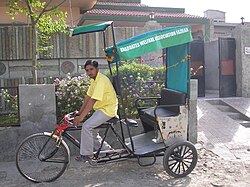
Asia is the heart of rickshaw culture, where these vehicles are often integrated into the daily commute and local economy.
Bangladesh
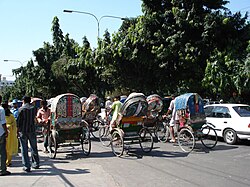
Bangladesh is home to some of the most popular cycle rickshaws in the world. The capital, Dhaka, is recognized as the "Rickshaw Capital of the World," with over 300,000 vehicles operating by the end of the 20th century. Today, approximately 400,000 rickshaws run daily. These vehicles are essential for navigating narrow lanes where buses and cabs cannot enter. However, due to rising traffic congestion, they have been banned on several major city streets.
India
Common in both rural and urban areas since 1930, India has seen significant innovation in the sector. The Nimbkar Agricultural Research Institute began converting rickshaws to electric power in the late 1990s. Modern services like Ecocabs operate as "dial-a-cycle" services in cities such as Fazilka, Amritsar, Central Delhi, and Kolkata. Additionally, the Soleckshaw, a battery-electric assisted model launched in 2008, utilized solar-powered charging stations, though commercial adoption faced administrative hurdles.
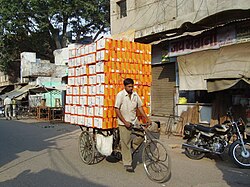
Southeast Asia
- Indonesia: Known as becak, these were once icons of Jakarta before being banned from main streets in the 1970s. They remain common in smaller towns.
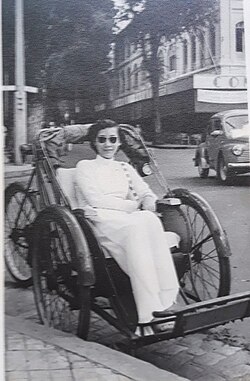
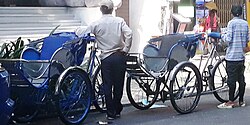
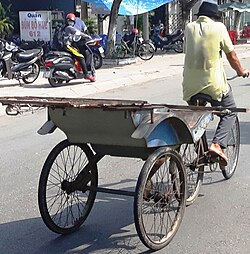
- Vietnam: The xích lô (introduced in 1939) is a cultural symbol of Saigon. While banned in Ho Chi Minh City from 2008 to 2012 except for organized tours, efforts continue to preserve them as heritage symbols.
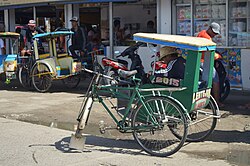
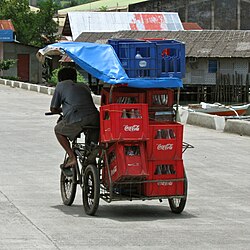
- Philippines: Called pedicabs or traysikad, these are used for short distances, transporting passengers to jeepneys or hauling heavy cargo like livestock.
- Myanmar: The trishaw (saik kar) gained popularity in 1938 in Mandalay as a symbol of nationalism and a boycott of British goods.
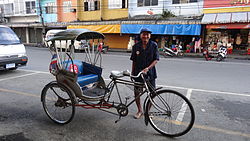
East Asia
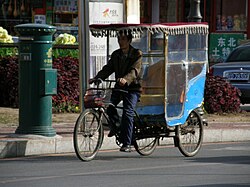
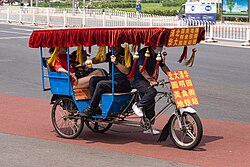
In China, the sanlunche is used in mid-to-large cities, with electric versions dominating Shanghai. In South Korea, the illyeokgeo is primarily a tourist attraction in areas like Seoul's Bukchon Hanok Village.

Cycle Rickshaws in the Americas
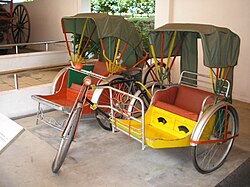
In North America, pedicabs are primarily used for tourism, nightlife, and event transport.
United States
Pedicabs gained momentum starting at the 1962 World's Fair in Seattle. They are now common in major hubs including New York City—which has the largest collection and requires permits for approximately 850 vehicles—as well as Chicago, Miami, and San Francisco.
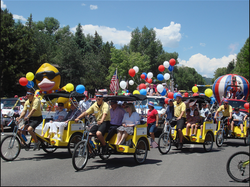
Canada and Mexico
In Canada, services operate in Victoria and Vancouver, with regulations in place in Toronto. In Mexico, they are referred to as bicitaxi or taxi ecológico.
Cycle Rickshaws in Europe
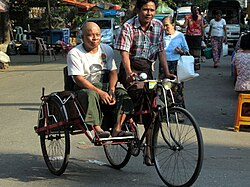
European pedicabs often lean toward high-end engineering and sustainable urban design.
The Velotaxi and Electric Innovation
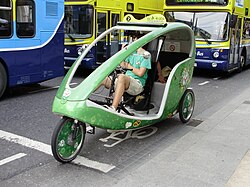
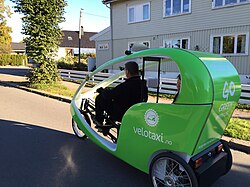
Germany introduced the Velotaxi in the 1990s—a lightweight, plastic-cabbed vehicle designed by Ludger Matuszewski. Modern versions, such as the CityCruiser, feature 500-watt electric-assist motors. While engineered in Germany, these are often manufactured in the Czech Republic or China.
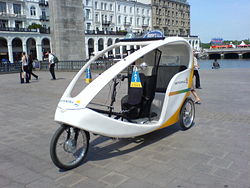
Regional Presence
- United Kingdom: Heavily used in central London (Soho, Covent Garden) and Edinburgh. As of 2024, Transport for London has powers to regulate fares and licensing.
- Denmark and Norway: Active services exist in Copenhagen, Odense, Oslo, and Tønsberg.
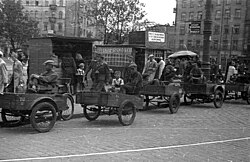
- Poland: During WWII, cycle rickshaws became a primary mode of public transport in Warsaw after Nazi authorities confiscated cars and buses.
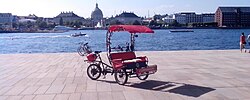
Global Pedicab Summary
| Region | Local Name | Primary Use | Key Characteristic |
|---|---|---|---|
| Bangladesh | Riksha | Daily Commute | Highly decorated, folding hoods |
| Indonesia | Becak | Local Transport | Driver position varies by region |
| Vietnam | Xích lô | Tourism/Heritage | French-influenced design |
| Germany | Velotaxi | Tourism/Events | Plastic cab, electric-assist |
| Philippines | Pedicab/Sikad | Short-haul/Cargo | Sidecar attachment |
Frequently Asked Questions
Why are cycle rickshaws banned in some cities?
Bans are typically implemented to reduce traffic congestion, as rickshaws move slower than motorized vehicles and can occupy entire lanes. In some cases, such as in Jakarta, bans were also linked to concerns over public order.
What is a Velotaxi?
A Velotaxi is a modern, German-designed cycle rickshaw featuring a lightweight plastic cab and often an electric-assist motor, commonly used for tourism and special events like weddings.
How do pedicabs help the environment?
Pedicabs provide a zero-emission or low-emission alternative to internal combustion engine taxis, reducing the carbon footprint of urban transportation.
Where can I find the most pedicabs in the United States?
Manhattan, New York, hosts the largest collection of pedicabs within city limits, with the city mandating operating permits for roughly 850 vehicles.
What is the difference between a cyclo and a becak?
While both are cycle rickshaws, a cyclo is the term used in Vietnam and Cambodia (derived from French), whereas becak is the term used in Indonesia.