Cuyo Region: Argentina's Mountainous Heartland of Wine and Peaks
Located in the central-west of Argentina, Cuyo is a region defined by its dramatic landscapes, towering peaks, and world-renowned viticulture. Historically comprising the provinces of San Juan, San Luis, and Mendoza, the region is a cornerstone of Argentine identity and economy. While the modern political macroregion of "New Cuyo" includes La Rioja, the latter is culturally aligned with the North-West of the country.
From the highest peaks in the Western Hemisphere to the arid plains of the Monte Desert, Cuyo offers a striking contrast of natural beauty and industrial productivity. Its identity is deeply tied to the Andes, which shape everything from the local climate to the quality of its famous vineyards.
Key Facts
- Highest Peak: Home to Aconcagua, the highest mountain outside of Asia.
- Wine Powerhouse: Produces nearly 80% of Argentina's total wine production.
- Geography: Spans an area of 315,226 km² with a population of approximately 3.39 million (2022).
- Climate: Primarily arid or semi-arid, characterized by extreme diurnal temperature ranges.
- Key Provinces: Mendoza, San Juan, and San Luis.
Geography and Natural Landscapes
The Cuyo region is a diverse geographical tapestry, encompassing the Monte Desert, the Patagonian Desert, the High Monte, and the Southern Andean steppe. The terrain is characterized by arid, reddish soil and is punctuated by some of the most significant mountain massifs in the Andes.
Water is a precious resource in this dry landscape. Most rivers are fed by the seasonal thawing of snow from the mountain peaks, leading to a significant increase in water volume during the spring. The Desaguadero River serves as the primary collector, gathering waters from the Bermejo, Vinchina, and Salado rivers before eventually reaching the Colorado River.
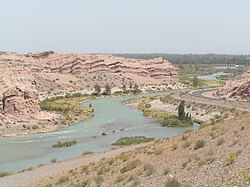
Among its most famous landmarks is the Atuel Canyon, where the Atuel River carves through the landscape, creating a spectacle of geological beauty.
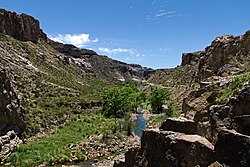
Topographic Extremes
The elevation in Cuyo varies wildly, ranging from 500 meters to nearly 7,000 meters. This verticality creates distinct ecological zones, from the low-lying valleys to the permanent ice and permafrost found at elevations exceeding 4,000 meters.
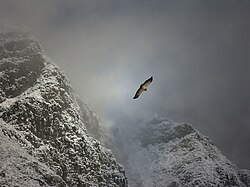
Climate and the Zonda Wind
Cuyo's climate is predominantly arid or semi-arid, with annual precipitation typically ranging between 100 and 500 millimeters. The Andes mountains act as a barrier, preventing rain-bearing clouds from the Pacific Ocean from entering the region, while the subtropical high-pressure belt keeps the area dry.
One of the most distinctive meteorological features of the region is the Zonda. This is a Foehn wind—a warm, dry wind that descends the eastern slopes of the Andes. The Zonda can cause temperatures to spike by as much as 20°C in a few hours, with humidity dropping toward 0%. In summer, these events can push temperatures above 45°C.
Conversely, the region experiences significant cold waves in winter, as the Andes channel cold air from the south. At high elevations, temperatures can plummet between -10°C and -30°C.
Economy and Industry
The economy of Cuyo is heavily driven by viticulture (the cultivation of grapevines). Thanks to abundant sunshine, low humidity, and a temperate climate, the region produces nearly 80% of Argentina's wine, earning global acclaim. Beyond grapes, the region cultivates olives, potatoes, tomatoes, and various fruits, alongside a robust industry for sweets and preserved foods.
Other vital economic sectors include quarrying and oil exploitation. The region's urban centers, such as Mendoza and San Juan, blend colonial architecture—characterized by low houses, narrow streets, and historic churches—with modern infrastructure. The Universidad Nacional de Cuyo, established in 1939, serves as the primary academic hub for the region.
Regional Statistics
The following table provides a detailed breakdown of the provinces within the Cuyo and New Cuyo macroregions based on census data.
| Province | Population (2001) | Area (km²) | Density (inh/km²) | GDP per capita (2013 $) |
|---|---|---|---|---|
| Mendoza | 1,579,651 | 148,827 | 10.6 | 11,957 |
| San Juan | 620,023 | 89,651 | 6.9 | 10,170 |
| San Luis | 367,933 | 76,748 | 4.8 | 13,201 |
| La Rioja | 289,983 | 89,680 | 3.2 | 6,844 |
Tourism and Attractions
Nature tourism is a primary income source for Cuyo. The region attracts visitors with a mix of adventure sports, geological wonders, and cultural festivals. Key attractions include:
- Aconcagua: The highest peak in the Americas, a mecca for mountaineers.
- Ischigualasto: A Provincial Park known for its unique prehistoric fossils and landscapes.
- Las Leñas: A premier destination for winter skiing.
- Fiesta Nacional de la Vendimia: A major national festival celebrating the grape harvest.
- Other sites: The Biosphere Reserve of Ñacuñán, San Rafael, Barreal, and the Puente del Inca natural monument.
Frequently Asked Questions
What is the Zonda wind?
The Zonda is a warm, dry Foehn wind that descends from the Andes. It can cause rapid temperature increases, extreme dryness (near 0% humidity), and temperatures exceeding 45°C during the summer.
Why is Cuyo so important for Argentine wine?
Cuyo produces nearly 80% of Argentina's wine. Its success is due to a combination of arid soil, abundant sunshine, and a temperate climate that is ideal for viticulture.
Which is the highest mountain in the Cuyo region?
The region is home to Aconcagua, which is the highest mountain peak outside of Asia and the highest point in the Western and Southern Hemispheres.
How does the water supply work in such an arid region?
Most of the region's water comes from the thawing of snow on the Andean peaks, which increases river volumes during the spring. This water is essential for the region's irrigation and agriculture.
What provinces make up the Cuyo region?
Historically, Cuyo consists of Mendoza, San Juan, and San Luis. The broader political macroregion known as "New Cuyo" also includes La Rioja.