Andes Mountains: A Comprehensive Overview of the World's Longest Continental Range
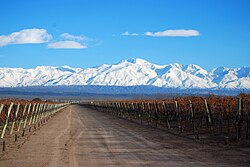
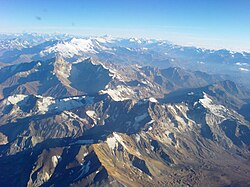
The Andes Mountains, known in Spanish as the Cordillera de los Andes and in Quechua as Anti, represent the longest continental mountain range on Earth. Stretching along the entire western edge of South America, this massive highland system forms a continuous backbone for the continent, creating diverse landscapes that range from arid high plains to lush tropical forests.
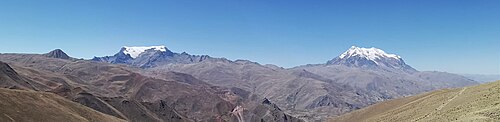
Spanning approximately 8,900 kilometers (5,500 miles), the range traverses seven different countries: Argentina, Chile, Bolivia, Peru, Ecuador, Colombia, and Venezuela. With an average height of about 4,000 meters (13,000 feet), the Andes are the highest mountain range located outside of Asia.
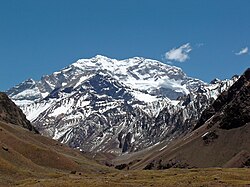
Key Facts
- Length: Approximately 8,900 km (5,500 mi).
- Highest Peak: Aconcagua, Argentina (6,961 m / 22,838 ft).
- Countries: Argentina, Bolivia, Chile, Colombia, Ecuador, Peru, and Venezuela.
- Global Status: Longest continental mountain range in the world.
- Biodiversity: Home to roughly 30,000 species of vascular plants.
Geography and Physical Dimensions
The Andes are characterized by a complex series of parallel cordilleras (mountain chains), high plateaus, and deep intermontane valleys. The width of the range is not uniform; it varies from 200 kilometers (120 miles) to as much as 700 kilometers (430 miles), with the widest section found between 18°S and 20°S latitude.
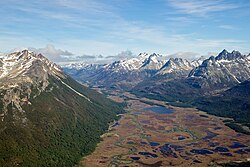
Regional Divisions
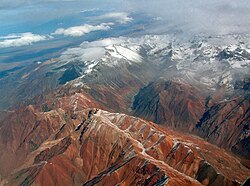
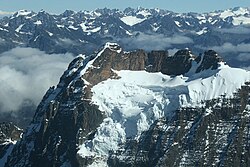
Geographers typically divide the Andes into three primary sections:
- The Southern Andes: Located in Argentina and Chile, south of Llullaillaco.
- The Central Andes: Encompassing Bolivia and Peru.
- The Northern Andes: Stretching through Colombia, Ecuador, and Venezuela.
Geology and Tectonic Activity
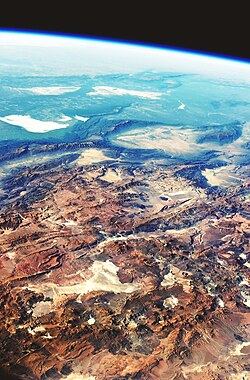
The formation of the Andes is the result of the Andean orogeny, a process of mountain building caused by plate subduction. This tectonic activity has created several oroclines, which are bends in the mountain range. Notable examples include the Bolivian Orocline, the Maipo Orocline, and the Patagonian Orocline.
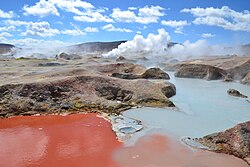
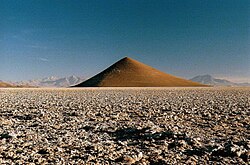
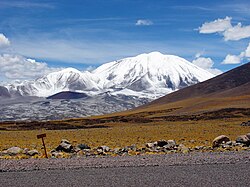
This geological activity also makes the region prone to seismic events. The Andes are a source of shallow intraplate earthquakes within the South American Plate. Additionally, the range contains some of the world's highest volcanoes, such as Ojos del Salado on the Chile–Argentina border, which reaches an elevation of 6,893 meters (22,615 feet).
Climate and Ecological Diversity
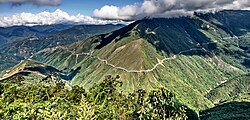
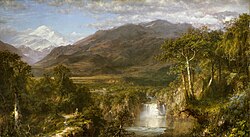
The climate of the Andes is incredibly varied, dictated by latitude, altitude, and proximity to the ocean. Because temperature, pressure, and humidity decrease as elevation increases, the range hosts a massive variety of ecological zones. For instance, tropical rainforests can exist just a few kilometers away from snow-capped peaks like Cotopaxi.
The snow line—the elevation above which snow remains on the ground—varies significantly. In the tropical northern Andes, it sits between 4,500 and 4,800 meters, while in the southern reaches of Tierra del Fuego, it can descend to as low as 300 meters.
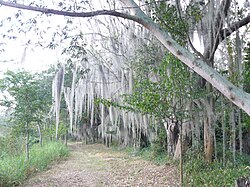
Flora and Fauna
The Andes serve as a global biodiversity hotspot. The region is home to approximately 30,000 species of vascular plants, about half of which are endemic (found nowhere else on Earth). Notable flora includes the Cinchona pubescens, a source of quinine, and the endangered Polylepis forests.
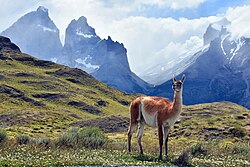
The animal life is equally diverse. The Andes are the most important region in the world for amphibians, hosting nearly 1,000 species. The range also supports approximately 600 species of mammals, 1,700 species of birds, and 600 species of reptiles.

Human Presence and Agriculture
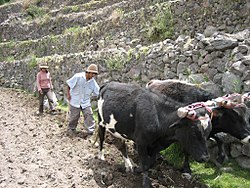
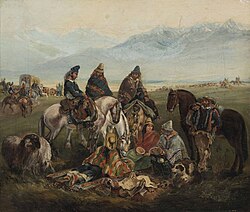
Human civilization has long adapted to the rugged Andean terrain. Major highland cities such as Bogotá, Cusco, La Paz, and Quito have developed within these high-altitude environments. Notably, La Paz, the seat of government in Bolivia, is the highest capital city in the world, sitting at approximately 3,650 meters (11,975 feet).
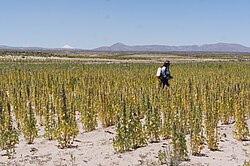
Agriculture remains a vital part of life in the Andes. Farmers utilize the varied terrain to grow essential crops like potatoes, maize, beans, and quinoa. These crops have become staples not just in South America, but globally.
Summary of Key Andean Peaks
| Peak Name | Country | Elevation (m) | Elevation (ft) |
|---|---|---|---|
| Aconcagua | Argentina | 6,961 | 22,838 |
| Ojos del Salado | Chile/Argentina | 6,893 | 22,615 |
| Huascarán | Peru | 6,768 | 22,205 |
| Illimani | Bolivia | 6,438 | 21,122 |
| Chimborazo | Ecuador | 6,268 | 20,564 |
Frequently Asked Questions
What is the highest mountain in the Andes?
The highest peak in the Andes is Aconcagua, located in Argentina, which reaches an elevation of 6,961 meters (22,838 feet).
Which country has the highest capital city in the Andes?
Bolivia is home to the highest capital city, La Paz, which sits at an elevation of approximately 3,650 meters (11,975 feet).
Why is Chimborazo in Ecuador unique?
Due to the Earth's equatorial bulge caused by its rotation, the peak of Chimborazo is farther from the Earth's center than any other location on the planet.
How many countries does the Andes mountain range span?
The Andes extend through seven South American countries: Argentina, Bolivia, Chile, Colombia, Ecuador, Peru, and Venezuela.
What are the main sections of the Andes?
The range is generally divided into the Southern Andes (Argentina and Chile), the Central Andes (Bolivia and Peru), and the Northern Andes (Colombia, Ecuador, and Venezuela).