Cut Flowers: The Science and Business of Global Floriculture
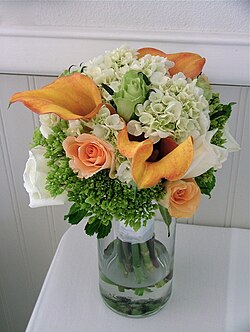
Cut flowers—flowers and buds severed from their parent plants—along with cut greens (foliage used for contrast and design), form a vibrant and complex international industry. From the simple joy of a home garden bouquet to the massive scale of global air freight, these botanical elements are used to enhance human environments, celebrate milestones, and facilitate religious worship.
The professional study of producing, distributing, and marketing these crops is known as floriculture, a specialized branch of horticulture. While floral design professionals (florists) focus on the artistic arrangement of these materials, professional horticulturists manage the intensive cultivation required to ensure flowers survive the journey from the field to the vase.
Key Facts
- Global Market: The cut flower market is projected to reach US$50.1 billion by 2030.
- Temperature Zones: Plants are categorized by growth preference: Cool (10°C to 18°C), Moderate (15°C to 24°C), and Warm (18°C to 30°C).
- Vase Life: Longevity varies by species, ranging from under 5 days (dahlias) to 4 weeks (carnations).
- Major Hubs: Royal FloraHolland in the Netherlands is the world's largest flower market.
- Postharvest Care: Maintaining a "Floral Chain-of-Life" through refrigeration and pH-balanced water is critical for longevity.
The Diverse Uses of Cut Flowers
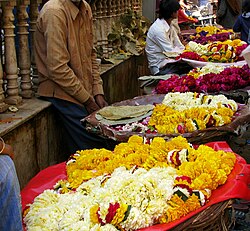
Flowers serve a multitude of cultural and social purposes. In South and Southeast Asia, they are integral to worship and religious rituals. In many other cultures, they are essential for formal events, including weddings, funerals, and hotel lobby displays. Beyond formal arrangements, flowers are used as personal adornments in hair or as boutonnieres.
Value-added products such as garlands, wreaths, and bouquets are primary drivers of market value. Whether used as a gift for a friend or a decorative element in a professional flower show, cut flowers bring the outdoors inside.
The Global Floral Industry and Trade
Until the 1950s, the floral industry was largely local. The evolution of international trade and air freight transformed the sector, allowing flowers to be grown in optimal climates and shipped to population centers worldwide. This shift enabled countries like Colombia, Ecuador, Kenya, Ethiopia, and China to become major exporters.
In these regions, farmers often utilize altitude to produce different crops year-round—cooler crops in the mountains and warmer crops in the valleys. This globalization has significantly increased the variety of plant taxa available to consumers globally.
Major Market Players
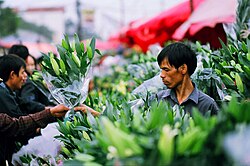
The Netherlands remains a central hub, with Royal FloraHolland handling over US$4 billion in flowers annually. Other significant exporters include Colombia, Ecuador, and Kenya. China has also seen rapid growth, particularly in the Yunnan Province, where the Dounan Flower Market serves as a primary distribution point for a massive domestic market.
Postharvest Life and Longevity
Once cut, a flower is separated from its root-based sugar and water source, though it continues to respire and photosynthesize. This makes them highly perishable; in some regions, such as India, certain temple flowers have a shelf life of only one day.
The Floral Chain-of-Life
To extend vase life, a strict sequence of care is required:
- Harvest: Picked during the cool morning hours and immediately placed in water.
- Cooling: Refrigerated to 2–4°C (36–39°F) using vacuum or hydrocoolers to slow metabolism.
- Conditioning: Stems are cut under water to remove air bubbles from the xylem (water-conducting tissue) and placed in low pH water with biocides and sucrose.
- Maintenance: Kept refrigerated until they reach the final consumer.
Vase Life by Species
| Longevity Category | Duration | Example Species |
|---|---|---|
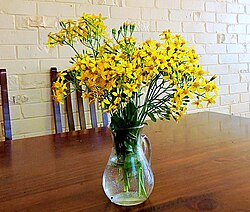
| Short | Less than 5 days | Dahlias, Irises, Peonies, Daffodils, Delphinium |
| Medium | 6 to 14 days | Marigolds, Snapdragons, Orchids, Roses |
| Long | 2 to 4 weeks | Tulips, Carnations, Chrysanthemums |
Preservation and Sustainability
For those seeking longer-lasting options, preserved flowers are an alternative. Species like lavender and strawflower can be air-dried, often hanging upside down in dark, air-conditioned rooms to maintain color and stem straightness. More delicate species may require silica gel or freeze-drying.
However, the industrial side of floriculture faces criticism. Intensive greenhouse monocultures often rely on highly toxic pesticides and significant water consumption. These environmental and safety concerns have led to the "Slow Flowers" movement, which advocates for sustainable, locally grown floriculture.
Frequently Asked Questions
What is the best additive to prolong the life of cut flowers?
Research by the Brooklyn Botanical Garden indicates that retailer-provided flower food is the most effective. These solutions typically contain an acidifier to lower pH, disinfectants to kill bacteria, and sugar to replace the energy the flower lost when severed from its roots.
How does temperature affect flower growth?
Plants are categorized by their preference: cool-temperature plants prefer 10°C to 18°C, moderate-temperature plants prefer 15°C to 24°C, and warm-temperature plants prefer 18°C to 30°C.
What is "pulsing" in floriculture?
Pulsing is a chemical treatment where flowers are exposed to increasing concentrations of sucrose for 16 to 20 hours to extend their vase life.
Why are stems cut under water during conditioning?
Cutting stems under water prevents air bubbles from entering the xylem vessels, ensuring the flower can efficiently take up water and nutrients.
What is the "Slow Flowers" movement?
Slow Flowers is a movement that promotes sustainable floriculture within the consumer's own country to reduce the environmental impact of long-distance air freight and the use of toxic pesticides associated with industrial monocultures.