Cultivated Plant Taxonomy: The Science of Naming and Classifying Cultigens
Cultivated plant taxonomy is the specialized study of the theory and practice used to identify, describe, classify, and name cultigens—plants whose origin or selection is primarily the result of intentional human activity. While its primary focus is on human-influenced plants, taxonomists in this field work with all varieties of plants found in cultivation.
This discipline is a core component of horticultural botany. Most of this work takes place within botanical gardens, universities, government departments, and large nurseries. Professionals in this field engage in plant hunting (searching for and recording new plants suitable for cultivation), creating horticultural floras (descriptions of cultivated plants in specific regions), and maintaining herbaria and databases to preserve botanical knowledge.

Key Facts
- Cultigens are plants specifically selected or created through human intervention.
- The International Code of Nomenclature for algae, fungi, and plants (Botanical Code) serves scientific purposes.
- The International Code of Nomenclature for Cultivated Plants (Cultivated Plant Code) serves both scientific and commercial/utilitarian needs.
- Binomial nomenclature, the two-word naming system, was formalized by Carl Linnaeus in 1753.
- The terms cultigen (1918) and cultivar (1923) were coined by Liberty Hyde Bailey.
The Dual Systems of Plant Nomenclature
Naming plants is a complex process governed by two distinct nomenclatural codes. The first is the Botanical Code, which focuses on the objectives of the scientific community. The second is the Cultivated Plant Code, designed to facilitate communication among farmers, foresters, and horticulturists by providing names for plants used in commerce.
Unlike purely scientific names, variety names for cultigens are not written in Latin. Instead, they are added to the scientific Latin name to ensure clarity in trade and agriculture.
Historical Development of Plant Classification
Early Domestication and the Ancient World (10,000 BCE – 1400 CE)
The roots of plant taxonomy trace back to the earliest days of agriculture. Early humans began domesticating plants as early as 10,000 BCE to ensure food security.

During the Greco-Roman era, influential figures like Aristotle, Theophrastus, and Pliny the Elder laid the groundwork for botanical observation.



Renaissance and the Shift to Science (1400 – 1750)
Between 1400 and 1700, imperial expansion and increased trade in medicinal plants created a need for better classification. Initially, plants were grouped alphabetically or by "folk taxonomy" (their use or growth habit). By 1650, a shift occurred toward natural classification based on the physical characteristics of the plants themselves.

In 1700, J.P. de Tournefort introduced a critical advancement by defining the genus as the basic unit of classification. In his work Institutiones Rei Herbariae, he organized 10,000 species into 698 genera, providing a precursor to modern scientific systems.
The Linnaean Revolution (1750 – 1800)
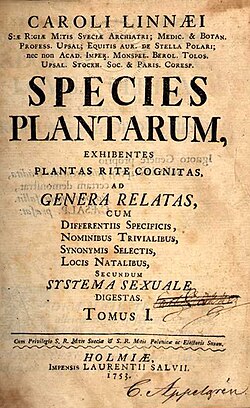
Carl Linnaeus brought definitive order to botanical naming. While he wrote several influential works, including Systema Naturae (1735), it was his 1753 publication Species Plantarum that formalized binomial nomenclature. This system uses a single genus name and a specific epithet to name a species.

Global Trade and the Modern Era
As global trade expanded, the variety of plants entering Europe grew exponentially, necessitating more rigorous naming rules.
| Period | Primary Regions of Origin | Notable Plant Types |
|---|---|---|
| Pre-1560 | Europe | Local flora |
| 1560–1620 | Near East (Turkey) | Bulbous plants (Tulips) |
| 1620–1686 | Canada and Virginia | Herbaceous plants |
| 1687–1772 | South Africa, North America | Trees and shrubs |
| 1772–1820 | Australia, Tasmania, New Zealand | Oceanic flora |
| 1820–1900 | Japan, Tropics | Glasshouse and hardy plants |
| 1900–1930 | West China | East Asian flora |
The Emergence of the Cultivated Plant Code
By the early 20th century, the naming of commercial plants was chaotic, with duplication and inconsistent languages. In 1905, the Vienna Rules established the International Code of Botanical Nomenclature. However, horticultural needs remained distinct.
Liberty Hyde Bailey played a pivotal role by coining the terms cultigen in 1918 and cultivar in 1923. These terms helped distinguish human-selected plants from wild varieties. Following discussions at international congresses in Stockholm and London, the first International Code of Nomenclature for Cultivated Plants (the Cultivated Plant Code) was published in 1953.

Contemporary Taxonomy and Institutions
Today, cultivated plant taxonomy is supported by international organizations and specialized journals. The International Association for Cultivated Plant Taxonomy was launched in 2007 to promote global communication. In the UK, the Horticultural Taxonomy Group (Hortax) provides essential guidance through publications like Plant Names: A Guide for Horticulturists, Nurserymen, Gardeners and Students.
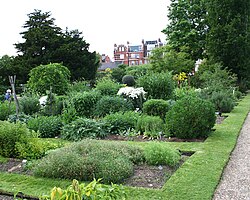
Institutions such as the Royal Horticultural Society's Wisley gardens and the Chelsea Physic Garden remain central to the practice of identifying and classifying these plants.

Frequently Asked Questions
What is the difference between a cultigen and a cultivar?
A cultigen is a plant whose origin or selection is primarily due to intentional human activity. A cultivar (a contraction of "cultivated variety") is a specific type of cultigen that has been selected for particular traits and maintained through propagation.
Why are there two different nomenclatural codes for plants?
The Botanical Code is designed for scientific purposes to classify all plants in nature. The Cultivated Plant Code is designed for utilitarian and commercial purposes, ensuring that farmers and gardeners can communicate clearly about specific varieties used in trade.
Who is responsible for the binomial nomenclature system?
The Swedish botanist Carl Linnaeus formalized the binomial system in his 1753 work Species Plantarum, which uses a two-word Latin name (genus and species) to identify organisms.
How are cultivated plant names typically presented?
They often combine the scientific Latin name with a non-Latin variety or cultivar name. For example, a flowering cherry might be listed as Prunus serrata 'Ojochin', where the cultivar name is placed in single quotation marks.