Cuban Tree Frog: Characteristics, Habitat, and Invasive Impact
The Cuban tree frog (Osteopilus septentrionalis) is a formidable amphibian known for its impressive size and highly adaptable nature. While native to the Caribbean, this species has become a significant invasive presence across the Americas, impacting local ecosystems and even human infrastructure. From its unique physical adaptations to its voracious appetite, the Cuban tree frog is a complex subject of both biological interest and ecological concern.
Key Facts
- Scientific Name: Osteopilus septentrionalis
- Size: 2 to 5.5 inches (5 to 12.7 cm) in length
- Native Range: Cuba, the Bahamas, and the Cayman Islands
- Diet: Highly diverse; includes insects, lizards, snakes, and other frogs
- Conservation Status: Least Concern (IUCN 3.1)
- Key Trait: Secretes a toxic mucus that can cause irritation to human eyes
Physical Description and Adaptations
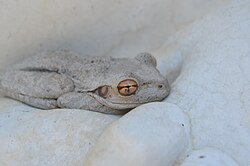
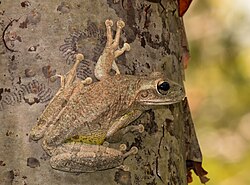
As the largest tree frog species in North America, the Cuban tree frog is easily identifiable by its robust build. Their skin is typically gray, brown, or green, often featuring a rough, warty texture with mottled patterns. Interestingly, younger frogs tend to exhibit more vibrant green coloration than adults. To aid in survival, they possess the ability to change their color and pattern for camouflage.
One of their most striking features is the bright yellow color on their inner thighs. This serves as a defense mechanism; when the frog jumps, the sudden flash of color can confuse potential predators. Their toes are equipped with specialized sticky pads, an essential adaptation for their arboreal (tree-dwelling) lifestyle.
A unique biological adaptation is found in their skull: the skin on their heads is co-ossified, meaning it is fused directly to the bone. This prevents the skin from moving when rubbed and helps minimize water loss by reducing the number of blood vessels in that area. However, owners and observers should be cautious, as the frogs secrete a toxic mucus that can cause a fiery sensation if it comes into contact with human eyes.
Behavior and Life Cycle
Cuban tree frogs are primarily nocturnal, meaning they are most active during the night. They are famously voracious eaters, consuming almost anything that fits in their mouths. This includes native frogs, which can lead to significant population declines in non-native habitats. Their activity can even impact human utility systems; they are known to climb utility poles, occasionally causing short-circuits and power outages.
Breeding and Development
The life cycle of the Cuban tree frog is characterized by rapid development and high fecundity (the ability to produce many offspring). Breeding occurs year-round depending on environmental conditions, with optimal breeding happening in high humidity and warm temperatures. During the breeding season, males develop a black nuptial pad on their hands or wrists to assist in holding the female during amplexus (the mating embrace).
A single female can lay a clutch containing several hundred to over a thousand eggs. These eggs can hatch in less than 30 hours, and the tadpoles can reach full development in just one month. While tadpoles primarily feed on algae, they are also known to compete with and occasionally eat other tadpoles. Once they undergo metamorphosis, the resulting froglets measure between 0.55 and 0.67 inches.
Distribution and Invasive Spread
While native to Cuba, the Bahamas, and the Cayman Islands, the Cuban tree frog has successfully colonized various regions, including Puerto Rico, the US Virgin Islands, and parts of Florida. Their spread is often aided by human activity; they frequently "hitchhike" on shipments of potted plants, vegetation, boats, and motorized vehicles. In Florida, their movement into the mainland is believed to have been facilitated by construction along State Road A1A in the 1940s.
In many areas, they are classified as an invasive species because they disrupt local biodiversity. In Puerto Rico, for example, they have become a major predator of the common coquí frog. Their ability to thrive in urban, suburban, and agricultural environments—including areas with exotic plants—makes them particularly difficult to manage.
Summary of Biological Classification
| Rank | Taxon |
|---|---|
| Kingdom | Animalia |
| Phylum | Chordata |
| Class | Amphibia |
| Order | Anura |
| Family | Hylidae |
| Genus | Osteopilus |
| Species | O. septentrionalis |
Frequently Asked Questions
Are Cuban tree frogs dangerous to humans?
While not inherently aggressive, they secrete a toxic mucus that can cause a burning sensation if it touches your eyes. They can also trigger allergic or asthmatic reactions in some individuals.
Why are they considered an invasive species?
They are considered invasive because they compete with native species for resources and prey upon native frogs, lizards, and snakes, which can lead to a decline in local biodiversity.
Can I keep a Cuban tree frog as a pet?
They are available in the pet trade and are relatively inexpensive, but they are not ideal for everyone. Their toxic mucus and potential for cannibalistic behavior (if different sizes are housed together) make them unsuitable, especially for children.
How do they spread to new locations?
They are known to travel via cargo ships and hitchhike on items such as potted plants, vegetation, packaging, and motorized vehicles.
What do they eat?
They have a very wide diet and will eat almost anything large enough to fit in their mouths, including insects, smaller frogs, lizards, and even snakes.