Crown Groups and Stem Groups in Phylogenetics
In the study of phylogenetics—the science of evolutionary relationships—scientists need precise ways to categorize organisms. One of the most effective frameworks for this is the distinction between crown groups, stem groups, and pan-groups. These terms allow researchers to organize both living species and their extinct relatives based on their position on the evolutionary tree.
The concept of the crown group was first developed by Willi Hennig, the founder of phylogenetic systematics. While the specific terminology of "crown" and "stem" was coined by R. P. S. Jefferies in 1979, the terms gained widespread scientific adoption after being reintroduced by Graham Budd and Sören Jensen in 2000.
What is a Crown Group?
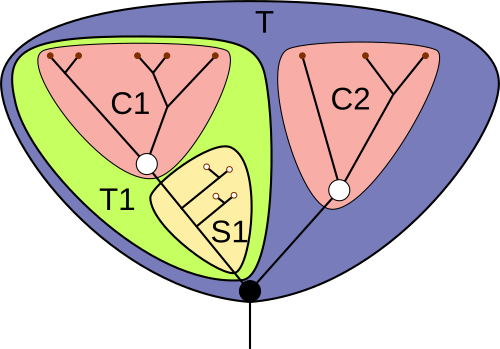
A crown group (also known as a crown clade or assemblage) is a collection of species that includes all living representatives of a group, their most recent common ancestor, and all descendants of that ancestor. Essentially, it is a way of defining a clade—a group consisting of a species and all its descendants, whether they are still alive or extinct.
For example, Aves (birds) can be defined as a crown group. This includes the most recent common ancestor of all modern birds and every descendant of that ancestor. It is important to note that a species does not need to have living descendants to be part of a crown group. If an extinct side branch evolved from the most recent common ancestor of living members, it remains part of the crown group. The dodo and the great auk are examples of extinct birds that fall within the bird crown group.
Conversely, organisms that diverged before the most recent common ancestor of the living group are excluded. While Archaeopteryx is often considered a bird in a general sense, it falls outside the crown group Aves because it descended from an earlier ancestor.
The Pan-Group and Total Group
To account for the broader evolutionary history of a lineage, biologists use the concept of the pan-group (or total group). A pan-group consists of the crown group plus all organisms that are more closely related to it than to any other living group.
Using the bird example, Pan-Aves includes all living birds and all fossil organisms more closely related to birds than to crocodilians (their closest living relatives). This expanded group includes not only primitive birds like Hesperornis and Confuciusornis but also all dinosaurs and pterosaurs.
Similarly, Pan-Mammalia includes all mammals and their fossil ancestors back to the point where they split from the Sauropsida (the lineage leading to reptiles and birds). In this context, Pan-Mammalia is synonymous with Synapsida.
Understanding Stem Groups
A stem group is a paraphyletic assemblage—a group that does not include all the descendants of its common ancestor. Specifically, a stem group consists of the members of a pan-group minus the crown group. This leaves only the primitive, extinct relatives that exist on the phylogenetic line leading up to the last common ancestor of the living group.
Because they are defined as the ancestors and side-branches leading to the living group, all members of a stem group are necessarily extinct. This concept is vital for paleontologists because it provides a way to name and categorize fossils that do not possess all the diagnostic features of living species but are clearly related to them.
Examples of Stem Groups
- Stem Birds: This group includes non-avian dinosaurs and pterosaurs. As the stem group evolved, bird-like features such as hollow bones and feathers appeared before the crown group Aves finally emerged.
- Stem Mammals: This includes synapsids and mammaliaforms like docodonts and morganucodonts. While traditionally called mammals, these organisms fall outside the crown group.
- Stem Tetrapods: These are animals in the lineage leading to four-limbed vertebrates from their divergence from lungfish, including various lobe-finned fishes and early labyrinthodonts.
- Stem Arthropods: This group includes enigmatic Burgess Shale creatures like Anomalocaris and Opabinia, which possess some, but not all, arthropod characteristics.
Key Facts
- Crown Group: Living species + their most recent common ancestor + all descendants.
- Pan-Group: The crown group + all extinct relatives more closely related to them than to any other living group.
- Stem Group: The pan-group minus the crown group; consists entirely of extinct species.
- Phylogenetic Utility: Stem groups allow scientists to map the step-by-step acquisition of evolutionary traits.
- Terminology: The "crown" and "stem" terms were coined by R. P. S. Jefferies in 1979.
Summary of Phylogenetic Groups
| Group Type | Composition | Includes Living Species? | Includes Extinct Species? |
|---|---|---|---|
| Crown Group | Most recent common ancestor of living members and all descendants | Yes | Yes (side branches) |
| Stem Group | Pan-group members excluding the crown group | No | Yes (all members) |
| Pan-Group | Crown group + all more closely related extinct taxa | Yes | Yes |
Palaeontological Significance
The distinction between these groups is more than academic; it is a powerful tool for understanding evolution. By placing fossils within a stem group, researchers can establish the exact order in which major biological features were acquired. This helps integrate fossil data into the study of living organisms and explains why some fossils lack the full set of traits required to be classified in a living clade, yet are clearly ancestral to it.
Frequently Asked Questions
Can a crown group contain extinct species?
Yes. While a crown group is defined by its living members, any extinct species that descended from the most recent common ancestor of those living members is included in the crown group.
What is the difference between a pan-group and a crown group?
A crown group only includes descendants of the most recent common ancestor of living species. A pan-group is much broader, including the crown group and all extinct ancestors that diverged before the crown group formed, as long as they are more closely related to that group than to any other living lineage.
Why are all members of a stem group extinct?
By definition, a stem group is the total group (pan-group) minus the crown group. Since the crown group contains all the living representatives of that lineage, removing the crown group leaves only extinct species.
What is a plesion-group?
A plesion-group generally refers to a "nearby group" or a sister group to a given taxon. It can also describe a group defined by primitive traits (symplesiomorphies) that split off earlier on the phylogenetic tree.
How does the crown group definition affect the classification of birds?
It creates a distinction between "Crown-Aves" (modern birds and their immediate ancestors) and the broader group of bird-like creatures. This means some animals traditionally called birds, like Archaeopteryx, are technically stem-birds rather than members of the crown group Aves.