Critica Botanica and the Evolution of Linnaean Nomenclature
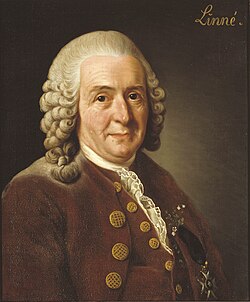
In the early 18th century, the scientific community faced a chaotic challenge: as colonial exploration brought thousands of new organisms to Europe, there was no standardized way to name or categorize them. Botanists relied on polynomials—long, descriptive Latin phrases known as nomina specifica—which became increasingly unwieldy as more species were discovered. Into this confusion stepped Carl Linnaeus (1707–1778), a Swedish botanist, physician, and naturalist whose work would revolutionize biological science.
One of the pivotal milestones in this transformation was the publication of Critica Botanica ("Critique of botany") in July 1737. Published in Germany when Linnaeus was 29, this work served as an elaboration of the principles he first outlined in his 1736 text, Fundamenta Botanica. Together, these works provided the theoretical framework for a streamlined system of naming that allowed scientists across the globe to communicate with precision.
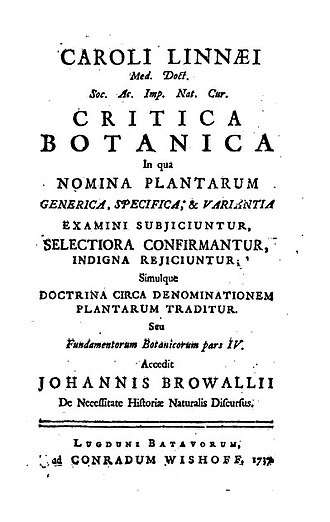
Key Facts
- Author: Carl Linnaeus, a Swedish naturalist and physician.
- Core Purpose: To establish standardized rules for the acceptance and formation of plant names.
- Major Innovation: The promotion of the binomial system, pairing a generic name with a specific epithet.
- Key Publication: Critica Botanica (1737) expanded upon the aphorisms found in Fundamenta Botanica (1736).
- Legacy: Provided the foundation for the Species Plantarum (1753), the official starting point for modern botanical nomenclature.
The Shift to Binomial Nomenclature
Before Linnaeus, naming a plant required a diagnostic phrase that distinguished it from all others. However, every time a new species was added to a genus, these phrases often had to be adjusted, creating a logistical nightmare for researchers. Linnaeus proposed a solution: the nomen triviale (trivial name), a single word associated with the generic name to designate a species.
While Linnaeus initially viewed the nomen triviale as a matter of convenience rather than a replacement for the diagnostic description, it eventually became the standard. Today, this two-part name is known as the binomial, consisting of the generic name and the specific epithet. This system transformed scientific naming from cumbersome descriptions into a stable, international language.
The Dutch Period and Intellectual Growth
Between 1735 and 1738, Linnaeus lived in the Netherlands, serving as the personal physician to George Clifford, a wealthy merchant-banker. Clifford possessed an extraordinary garden filled with tropical and sub-tropical plants from around the world. This environment provided Linnaeus with the raw material needed to test his theories.
During this highly productive era, Linnaeus published several foundational works, including Bibliotheca Botanica (1736) and Hortus Cliffortianus (1738). These publications allowed him to refine his thoughts on classification, which he later synthesized in the 1751 Philosophia Botanica. His goal was to move botany away from "gentlemen's agreements" and toward fixed, universal laws.
Principles of the Critica Botanica
The Critica Botanica was structured as a series of aphorisms—concise principles that acted as a "grammar and syntax" for botany. Linnaeus was dogmatic in his approach, often discarding the names of his predecessors in favor of terms that were short, euphonious, and memorable.
Rules for Generic Names
Linnaeus believed that generic names should be easy to pronounce and no longer than 12 letters. Some of his key principles included:
- Uniqueness: All plants in one genus must share the same name, and different genera must have different names.
- Clarity: Names with similar sounds should be avoided to prevent confusion.
- Commemoration: He advocated for naming plants after people, including friends, patrons, and fellow botanists.
Rules for Specific Names
For species, Linnaeus emphasized that a plant is only completely named when it possesses both a generic and a specific name. The specific name's primary role is to distinguish the plant from all others within the same genus at a single glance.
The Culmination: Species Plantarum
The ambitions Linnaeus held in the 1730s reached their peak with the 1753 publication of Species Plantarum. This monumental work acted as a global flora, codifying morphological terminology and introducing his "sexual system" of classification. In this text, the species—rather than the genus—became the fundamental taxonomic unit. Linnaeus defined a species as structures in nature that do not owe their shape to growth conditions or occasional features.
| Publication | Year | Primary Contribution |
|---|---|---|
| Systema Naturæ | 1735 | Early hierarchical classification of nature (Animals, Plants, Minerals). |
| Fundamenta Botanica | 1736 | Established initial aphorisms for botanical nomenclature. |
| Critica Botanica | 1737 | Expanded rules for naming genera, species, and varieties. |
| Philosophia Botanica | 1751 | The mature synthesis of his botanical philosophy. |
| Species Plantarum | 1753 | The starting point for modern scientific botanical nomenclature. |
Historical Assessment
Linnaeus's approach was rooted in Aristotelian logic, utilizing a method of logical division to categorize the natural world. While some historians, such as Alan Morton, have criticized his theoretical rigidity, others highlight his immense practical contribution. By creating a Latin-based nomenclature that was stable and verifiable, Linnaeus provided biology with a universal tool for international scientific exchange.
Frequently Asked Questions
What is the difference between a polynomial and a binomial?
A polynomial is a long descriptive phrase used to name a species, whereas a binomial is a two-word name consisting of a generic name and a specific epithet.
Why is Species Plantarum considered so important?
It is the official starting point for scientific botanical nomenclature, providing a comprehensive global flora and codifying the use of the binomial system.
What was the purpose of the nomen triviale?
The nomen triviale was introduced by Linnaeus as a convenient, single-word identifier for a species to avoid the complexity of long diagnostic phrases.
How did Linnaeus choose generic names?
He sought names that were short, pleasant to hear, and easy to say, often drawing from Greek and Roman mythology or naming plants after significant people.
What was the "sexual system" of classification?
It was a method of plant classification introduced in Species Plantarum based on the organs of fructification, specifically the flowers and fruits.