Cover Songs: The Evolution of Musical Reinterpretation
In the world of popular music, a cover version—also known as a remake, revival, or simply a cover—is a new performance or recording of a song by someone other than the original composer or performer. While the term once specifically described rival versions released simultaneously to compete for chart success, it has evolved to encompass any subsequent recording of a piece of music.
Historically, the concept of an "original" version was less prominent before the mid-20th century. Music was primarily viewed as a live event, and the goal of publishing sheet music was to encourage as many artists as possible to perform a composition. In this era, the song itself held more value than the specific artist performing it.
Key Facts
- Definition: A cover is a new recording of a song by an artist other than the original performer.
- Legal Framework: In the U.S., the Copyright Act of 1909 and the Music Modernization Act of 2021 govern how covers are licensed.
- Purpose: Covers can serve as tributes, tools for learning musical styles, or commercial attempts to capitalize on a hit tune.
- Impact: Some covers, such as Jimi Hendrix's "All Along the Watchtower," become more iconic than the original versions.
The History and Evolution of the Cover
From Competition to Tribute
In the early 20th century, record labels often rushed to produce "cover" versions of hit songs to cash in on their popularity. For example, the song "Ain't She Sweet" saw success in 1927 via Eddie Cantor, was repopularized in 1949 by Pearl Bailey, and was later recorded by the Beatles in 1964. By the late 1930s, however, younger audiences began seeking out specific artists rather than just the song, shifting the focus toward the performer's unique style.
By the 1950s, the purpose of the cover shifted. Musicians began recording songs as tributes to their idols or as a way to master specific genres. Until the mid-1960s, it was common for albums to feature "evergreens"—standard tunes that allowed artists to showcase their versatility.
The Role of Social and Racial Dynamics
During the early days of rock and roll, many songs originally recorded by R&B and country musicians were re-recorded by artists with a more "polished" or toned-down style. This was often driven by radio stations that were reluctant to play raw R&B for mass audiences. Some critics, including singer-songwriter Don McLean, described these sanitized cover versions as a "racist tool," as they allowed white artists to reach mass markets that were closed to the original Black creators.
Types of Modern Cover Performers
Today, cover versions are central to the repertoires of three main types of entertainers:
- Revivalist Artists: These performers curate and recreate entire genres to introduce them to new, younger audiences. Examples include Sha Na Na (1950s doo-wop), The Blues Brothers (1950s/60s soul and R&B), and The Black Crowes (1970s blues-rock).
- Tribute Bands: Groups that focus on recreating the experience of a specific artist for nostalgic audiences.
- Cover Bands: Musicians who play a variety of familiar hits for entertainment.
Legal Framework and Copyright in the U.S.
Recording a cover requires navigating copyright law to ensure the original creator is compensated. Under the Copyright Act of 1909, musicians have the right to record previously released tunes through specific licensing:
- Mechanical License: A negotiated agreement between the artist and the copyright holder.
- Compulsory License: A legal provision allowing an artist to record a song without explicit permission from the author, provided they pay a standard royalty through agencies like the Harry Fox Agency or Easy Song Licensing.
The Music Modernization Act of 2021 further updated these rules by establishing the Mechanical Licensing Collective (MLC) to manage blanket compulsory licensing for digital platforms.
Global Variations and Artistic Shifts
Covers often transcend language and genre. Some songs are translated into different languages to suit local markets, such as the English version of Falco's "Der Kommissar" or the various localized lyrics used in Hong Kong's Cantopop era. Others undergo radical stylistic shifts; for instance, Jonathan Coulton reimagined Sir Mix-a-Lot's rap hit "Baby Got Back" as an acoustic soft rock song.
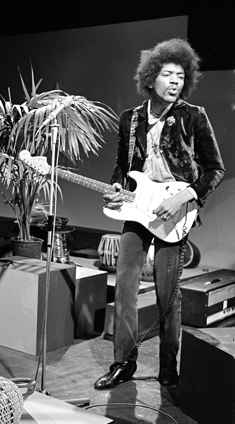
In some cases, a cover becomes the definitive version. Jimi Hendrix's 1968 interpretation of Bob Dylan's "All Along the Watchtower" became so influential that Dylan himself began altering his live performances to mirror Hendrix's style.
Updating Classics for New Eras
Artists frequently update older songs to fit contemporary tastes. "Singin' in the Rain," originally from 1929, was updated for the 1950s by Gene Kelly, turned into a disco track by Sheila in 1978, and later remixed by Mint Royale for a commercial. Similarly, the Righteous Brothers' version of "Unchained Melody" became far more widely known than the original 1955 performance by Todd Duncan.
| Song Title | Original/Early Version | Famous Cover/Update | Key Change |
|---|---|---|---|
| All Along the Watchtower | Bob Dylan (1967) | Jimi Hendrix (1968) | Became the definitive standard |
| Hurt | Nine Inch Nails | Johnny Cash (2002) | Eclipsed the original in popularity |
| Singin' in the Rain | Cliff Edwards (1929) | Gene Kelly (1952) | Updated for Hollywood musical era |
| Unchained Melody | Todd Duncan (1955) | Righteous Brothers (1965) | Achieved wider global recognition |
Frequently Asked Questions
What is the difference between a cover song and a remake?
While often used interchangeably, a cover is generally a new performance of a song by a different artist. A remake often implies a more comprehensive re-recording, sometimes by the original artist or in a significantly updated production style.
Do artists need permission to record a cover song in the US?
Not necessarily. While they can negotiate a mechanical license, they can also use a compulsory license, which allows them to record the song as long as they pay the legally mandated royalties to the copyright holder.
What is a revivalist band?
A revivalist band is a group that dedicates itself to recreating an entire genre of music—such as 1950s doo-wop or 1970s blues-rock—specifically to introduce that style to new audiences who have no prior nostalgic connection to it.
Can a cover version be more successful than the original?
Yes. This is common in the music industry. Examples include Jimi Hendrix's version of "All Along the Watchtower" and Johnny Cash's version of "Hurt," both of which became more widely recognized than the original recordings.
What is a mechanical license?
A mechanical license is a copyright agreement that allows a musician to record and distribute a version of a song written by someone else, ensuring the songwriter receives payment for each copy sold or streamed.