Courtship Displays: The Art and Science of Animal Attraction
In the natural world, finding a mate is rarely a matter of chance. Instead, many species engage in a courtship display—a complex set of ritualized behaviors designed to attract a partner. While these displays are most commonly performed by males, the ultimate goal is to signal fitness, strength, or beauty to a potential mate. Because the mate typically exercises a choice, these behaviors are driven by sexual selection, the evolutionary process where certain traits become more common because they are preferred by the opposite sex.
These displays are diverse, ranging from intricate "dances" and vocalizations to the production of mechanical sounds and the showcase of physical ornaments. Whether it is a bird's vibrant plumage or a spider's rhythmic movement, these signals serve as a biological resume, informing the partner of the suitor's quality.
Key Facts
- Purpose: Courtship displays are used to attract mates and are a primary driver of sexual selection.
- Methods: Behaviors include ritualized movements, vocalizations, mechanical sounds, and visual displays of strength or beauty.
- Diversity: Displays can be performed by males, females, or both (mutual display).
- Costs: High-energy displays can be metabolically expensive and may increase vulnerability to predators.
- Complexity: Many animals use multi-modal signaling, combining sight, sound, and touch to increase mating success.
Types of Courtship Displays
Male-Driven Displays
In many species, the burden of attraction falls on the male. These displays often involve highly ritualized movements. For example, the male six-plumed bird-of-paradise (Parotia lawesii) performs a "ballerina dance," utilizing unique breast and occipital feathers to stimulate the female's visual system. Similarly, the fruit fly Drosophila subobscura employs rapid sidestepping and intricate wing scissoring patterns to attract females.
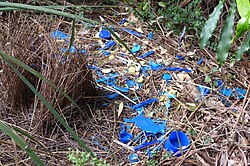
Some males go beyond movement, creating physical structures to showcase their quality. The male satin bowerbird builds and decorates a bower—a specialized structure used specifically to attract potential mates.
Mutual and Female Displays
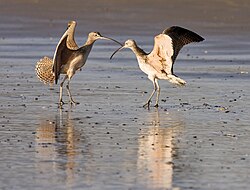
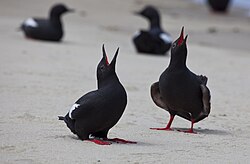
While male displays are more frequently documented, courtship is not always one-sided. Mutual courtship displays occur when both the male and female engage in synchronized behaviors to strengthen a pair bond. This is observed in species such as the long-billed curlew (Numenius americanus) and the Pigeon Guillemot (Cepphus columba).
In rarer cases, females may also possess sexual ornaments or perform displays to attract males, shifting the traditional roles of sexual selection.
The Mechanics of Attraction
Multi-modal Signal Processing
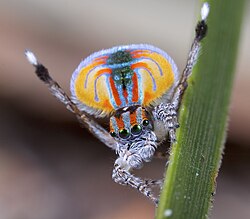
Many animals do not rely on a single sense to attract a mate; instead, they use multi-modal signaling, which is the simultaneous use of multiple sensory channels (such as visual and auditory cues). The peacock spider (Maratus volans) is a prime example, combining vibrant colors with specific rhythmic movements to capture a female's attention.
Leks and Agonistic Behavior
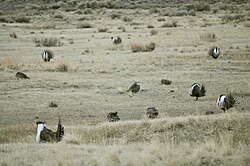
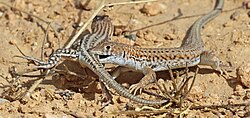
Some species utilize a lek, a communal area where males gather to perform competitive displays. In the case of the Greater sage-grouse, males perform a "strutting" display to attract visiting females. Within these environments, agonistic behavior—social behavior related to fighting or competition—often occurs as males compete for the best display positions.
Sexual Ornaments and Conflict
Sexual ornaments are physical traits—like the peacock's tail—that may not serve a survival purpose but are highly attractive to mates. However, courtship is not always harmonious. Sexual conflict can arise when the evolutionary interests of the male and female differ, sometimes leading to coercive behaviors or "covert" courtship displays that are less obvious to other observers.
Biological Costs and Environmental Influence
Courtship is not without risk. The energetic costs of maintaining elaborate ornaments or performing high-intensity dances can be significant, potentially leaving the animal exhausted or more visible to predators. Furthermore, environmental factors such as light intensity and the surrounding spectrum can influence how a display is perceived, affecting the overall success of the mating attempt.
| Display Type | Primary Mechanism | Example Species |
|---|---|---|
| Ritualized Movement | Dances, wing scissoring | Six-plumed bird-of-paradise |
| Physical Construction | Bower building | Satin bowerbird |
| Multi-modal | Visual + Auditory/Tactile | Peacock spider |
| Lekking | Communal strutting | Greater sage-grouse |
| Mutual Display | Synchronized behavior | Pigeon Guillemot |
Frequently Asked Questions
What is the main purpose of a courtship display?
The primary purpose is to attract a mate by signaling genetic quality, health, or strength. This allows the choosing partner to select the best possible mate for their offspring, driving the process of sexual selection.
Do females ever perform courtship displays?
Yes, although less common than male displays, some species feature female displays or ornaments. Additionally, many species engage in mutual courtship where both sexes participate equally.
What is a lek in animal behavior?
A lek is a specific area where males of a species gather to perform competitive displays. Females visit these areas to observe the males and choose a partner based on the quality of their performance.
Why are some courtship displays so energy-intensive?
High-energy displays serve as an "honest signal" of fitness. Only the healthiest and strongest individuals can afford the metabolic cost of such displays, proving their quality to the potential mate.
What is multi-modal signaling?
Multi-modal signaling is the use of multiple sensory cues—such as combining a visual dance with a specific sound—to make a courtship message more effective and increase the likelihood of mating success.