Count Basie: The Architect of the Big Band Swing Era
William James "Count" Basie was more than just a pianist; he was a cornerstone of American music. As a virtuoso organist, composer, and legendary bandleader, Basie defined the sound of the swing era—a style of jazz characterized by a strong rhythmic drive and a danceable beat. From his early days in the heart of Kansas City to his global tours and collaborations with the greatest vocalists of the 20th century, Basie's influence on jazz remains unparalleled.
Key Facts
- Full Name: William James Basie
- Active Years: 1924–1984
- Primary Instruments: Piano and Organ
- Major Innovation: Developed a minimalist piano style and emphasized the rhythm section in big band arrangements.
- Key Collaborations: Worked extensively with Frank Sinatra, Ella Fitzgerald, and Joe Williams.
- Major Honors: Multiple Grammy Awards, Kennedy Center Honors, and induction into the Down Beat Jazz Hall of Fame.
Early Life and the Kansas City Sound
Born on August 21, 1904, Basie spent his early career touring the vaudeville circuits, including the Keith and Columbia Burlesque circuits. Between 1925 and 1927, he performed with acts like Katie Krippen and Her Kiddies and accompanied blues singer Gonzelle White. These travels took him through the jazz hubs of New Orleans, St. Louis, Chicago, and Kansas City, where he met influential figures such as Louis Armstrong.
A pivotal moment occurred in 1928 in Tulsa, where Basie encountered Walter Page and his Famous Blue Devils, one of the first true big bands. After joining the group, which operated primarily in Texas and Oklahoma, he earned the nickname "Count," a nod to the "jazz royalty" tradition of the time.
The Rise of the Count Basie Orchestra
In 1935, Basie formed his own orchestra. By 1936, the group moved to Chicago for a significant engagement and their first recording session. This session, produced by John Hammond, is often cited as a "perfect" recording, featuring the earliest recordings of saxophonist Lester Young. These tracks were released under the pseudonym Jones-Smith Incorporated on Vocalion Records.
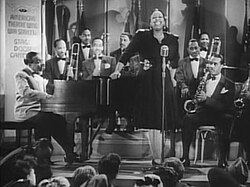
As the band transitioned to New York City, they became a sensation at the Famous Door, a mid-town spot with a CBS network feed. Basie expanded the band's sonic palette by employing arrangers like Jimmy Mundy and introducing innovations such as the use of two "split" tenor saxophones and a heavy emphasis on riffing—the repetition of a short, catchy musical phrase by a section of the band.
The Evolution of the "New Testament" Band
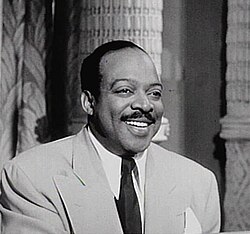
Following World War II, the big band era declined, leading Basie to temporarily disband his large group in favor of smaller combos. However, in 1952, prompted by vocalist Billy Eckstine, Basie reformed his group as a 16-piece orchestra. This iteration became known as the "New Testament" band.
Unlike the earlier group, the New Testament band relied more on written arrangements than improvised "head" arrangements. With the support of promoter Norman Granz and labels like Mercury and Verve, Basie's sound evolved into a polished ensemble. During this period, he began touring Europe, finding immense appreciation in France, Germany, and the Netherlands.
Collaborations with Jazz and Pop Icons
Basie's orchestra became the gold standard for backing the world's most prominent vocalists. He formed a legendary partnership with Frank Sinatra, recording the albums Sinatra-Basie (1962) and It Might as Well Be Swing (1964), both featuring arrangements by a young Quincy Jones.
His work with Ella Fitzgerald was equally impactful, particularly the 1963 album Ella and Basie!. Other key vocalists included Joe Williams, whose hit "Every Day (I Have the Blues)" became a staple of the Basie catalog, and Billy Eckstine.
Later Years and Lasting Legacy
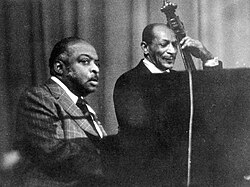
Basie continued to lead his orchestra into the 1980s, appearing in films such as Blazing Saddles (1974) and Cinderfella (1960). He remained active until his final years, performing for the Pittsburgh Steelers' 50th Anniversary in 1982.
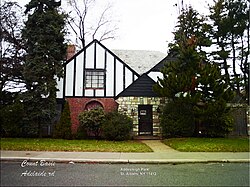
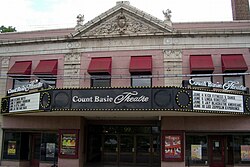
Count Basie passed away from pancreatic cancer on April 26, 1984, in Hollywood, Florida, at the age of 79. His legacy is preserved not only through his vast discography but also through physical landmarks; in 2009, a portion of Manhattan was renamed Count Basie Place in his honor.
Summary of Career Achievements
| Category | Details |
|---|---|
| Key Eras | Kansas City Jazz, Swing Era, New Testament Band |
| Notable Albums | The Atomic Mr. Basie, One O'Clock Jump, Sinatra-Basie |
| Major Awards | 10 Grammy Awards, Kennedy Center Honors (1981) |
| Hall of Fame Inductions | Down Beat, Blues Hall of Fame, Nesuhi Ertegun Jazz Hall of Fame |
Frequently Asked Questions
What was the "New Testament" band?
The New Testament band was the 16-piece orchestra Basie reformed in 1952. It differed from his earlier group by relying more on written arrangements and a tighter ensemble sound rather than the looser, improvised style of the early swing years.
How did Count Basie's piano style influence jazz?
Basie was famous for his minimalist approach. Instead of playing dense chords, he used space and precise, sparse notes to emphasize the rhythm and allow the rest of the orchestra to shine.
Who were some of the most important arrangers for Basie?
Key arrangers included Quincy Jones, Neal Hefti (who wrote "Li'l Darlin'"), Benny Carter, and Sammy Nestico, all of whom helped broaden the orchestra's sound.
Which vocalists are most associated with Count Basie?
The most prominent collaborators were Frank Sinatra, Ella Fitzgerald, Joe Williams, and Billy Eckstine.
What is the significance of "One O'Clock Jump"?
"One O'Clock Jump" is one of Basie's most famous compositions and recordings, serving as a definitive example of the Kansas City swing style.