Council for At-Risk Academics: Protecting Global Intellectual Freedom
The Council for At-Risk Academics (Cara) is a British charitable organization dedicated to supporting scholars in immediate danger. Whether academics are forced into exile or choose to remain in their home countries despite severe risks, Cara provides the financial and logistical support necessary to ensure their work continues. Beyond individual scholars, the organization also assists higher education institutions whose operations are compromised by political or social instability.
By facilitating relocations to universities abroad or providing support within a scholar's country of origin, Cara ensures that intellectual contributions are not lost to persecution. Today, the charity operates from the premises of London Southbank University, continuing a legacy of academic rescue that spans nearly a century.
Key Facts
- Founded: 1933 as the Academic Assistance Council (AAC).
- Mission: To assist academics in danger and protect academic freedom globally.
- Impact: Helped 1,500 academics in its early years, including 16 Nobel Laureates.
- Network: Works with 112 universities in the Cara Scholars at Risk UK Universities Network.
- Scope: Provides fellowship placements, visa assistance, and country-specific support programs.
The Evolution of Cara: From the AAC to the Present
The organization was established in April 1933 by William Beveridge. While traveling to Vienna, Beveridge learned that leading professors were being dismissed from German universities based on political or racial grounds. Moved by this, he launched a "rescue operation" to support displaced academics, enlisting the help of prominent intellectuals and appointing Lord Ernest Rutherford as the first President.
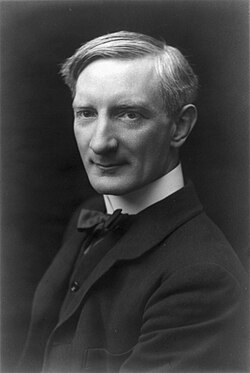
By May 1933, the Academic Assistance Council (AAC) circulated a founding statement to British politicians, philanthropists, and universities. The focus was strictly practical: helping scholars escape persecution and find placements in British universities, while deliberately avoiding political commentary.
Expanding the Mission: SPSL
In 1936, the AAC was renamed the Society for the Protection of Science and Learning (SPSL). This shift reflected a broader ideological goal: moving from the assistance of individuals to the protection of academic freedom (the principle that scholars should have freedom of research and expression without interference).
During the 1930s and 1940s, the SPSL helped thousands. Some of these scholars, after escaping Nazi Germany and Austria, required further aid to be released from British internment on the Isle of Man, where they had been held as "enemy aliens." The impact of this era was profound, with assisted academics contributing to the discovery of penicillin and the foundation of the Paralympics.
Modern Transitions
Following World War II, the organization continued its work, recognizing that intolerance persisted globally. In the 1940s and 1950s, it aided those fleeing Stalinist regimes in the USSR and Eastern Europe, and later, those escaping apartheid in South Africa and military juntas in Chile and Argentina.
In 1999, the organization became the Council for Assisting Refugee Academics (Cara). In 2014, it adopted its current name, the Council for At-Risk Academics. This change acknowledged that many scholars are at great risk but do not identify as "refugees," as they hope to return home once conditions improve.
Prominent Scholars Assisted
The legacy of the organization is evidenced by the extraordinary achievements of the scholars it supported. In its early years alone, 16 Nobel Prize winners and 18 knights were among the 1,500 academics assisted.
| Name | Field/Contribution | Key Achievement |
|---|---|---|
| Max Born | Physics | Nobel Prize 1954; pioneer of quantum mechanics |
| Sir Ernst Chain | Chemistry/Medicine | Nobel Prize 1945; shared work on penicillin |
| Sir Ludwig Guttmann | Medicine | Founded the Paralympics |
| Sir Hans Krebs | Biochemistry | Nobel Prize 1953; discovered the Krebs Cycle |
| Max Perutz | Chemistry | Nobel Prize 1962; structure of haemoglobin |
| Sir Karl Popper | Philosophy | Influential critic of totalitarianism |
| Albie Sachs | Law/Human Rights | Justice in the South African Constitutional Court |
Current Operations and Programs
Cara is governed by a Council of Management consisting of 25 members, primarily from academia. Led by President Professor Sir Malcolm Grant CBE and Executive Director Stephen Wordsworth, the organization manages several critical initiatives.
The Fellowship Programme
This program secures placements for academics in immediate danger. Cara collaborates with 112 universities in the UK and abroad to arrange these positions. The organization handles background checks, qualification verification, and visa procurement for scholars and their families. While Cara secures fee waivers and in-kind support, it also provides additional funding from its own resources.
Country-Specific Programmes
Cara also operates targeted programs for regions facing acute crises:
- The Iraq Programme: Launched in 2006 to counter a campaign of assassination and kidnapping of academics. It fostered collaboration between 16 UK and 11 Iraqi universities, researching topics such as depleted uranium soil contamination and public health technologies.
- The Zimbabwe Programme: Launched in 2009 to address the decline in higher education quality. A key achievement was the 2012 establishment of a "Virtual Lecture Hall" at the University of Zimbabwe, allowing exiled academics to teach and collaborate in real time.
Frequently Asked Questions
What is the main purpose of Cara?
Cara assists academics who are in immediate danger, forced into exile, or facing risks in their home countries, helping them continue their studies and research through financial and logistical support.
How does the Fellowship Programme work?
Cara works with a network of 112 universities to find placements for scholars. They verify qualifications, negotiate fee waivers, and assist with the visa process for the academic and their family.
Who founded the organization and why?
William Beveridge founded the organization in 1933 as the Academic Assistance Council (AAC) after learning that professors were being dismissed from German universities for racial or political reasons.
Does Cara only help people move to the UK?
No. While many are relocated to the UK, Cara also supports academics who remain in their home countries or are exiled in surrounding regions through specific Country Programmes.
What is the difference between a refugee and an at-risk academic in Cara's view?
The name change in 2014 to "At-Risk Academics" reflects that many scholars face extreme danger but do not identify as refugees because they intend to return to their home countries once it is safe to do so.