Corrientes: The Vibrant Capital of Argentina's Littoral
Perched on the eastern shore of the Paraná River, Corrientes serves as the capital of the province of Corrientes, Argentina. Known in Guarani as Taragui (meaning "Currents"), this historic city is a cultural hub located approximately 1,000 km from Buenos Aires and 300 km from Posadas. With a population of 346,334 as of the 2010 Census, it stands as a gateway to the Argentine Littoral, facing its twin city, Resistencia, across the river.
The city is characterized by a charming blend of colonial and modern architecture, punctuated by numerous churches and a lush canopy of orange, jacaranda, ceibo, and lapacho trees. Beyond its aesthetics, Corrientes is celebrated for hosting some of Argentina's most significant cultural events, including its massive annual carnival and the traditional chamamé music celebrations.
Key Facts
- Founded: April 3, 1588, by Juan Torres de Vera y Aragón.
- Location: Eastern shore of the Paraná River, Argentina.
- Climate: Humid subtropical (Cfa) with an average annual temperature of 21.3 °C.
- Key Infrastructure: The General Belgrano Bridge and Doctor Fernando Piragine Niveyro International Airport.
- Cultural Identity: Strong influence of Spanish and Guarani heritage.
History and Heritage
The region's European contact began early, with Sebastian Cabot establishing the Sancti Spiritu fort in 1527, followed by Pedro de Mendoza's 1536 expedition in search of the "Sierras of Silver." The city was officially founded in 1588 as San Juan de Vera de las Siete Corrientes. The name refers to the seven peninsulas along the riverbank that created treacherous currents for early navigators.
Strategically positioned between Buenos Aires and Asunción (Paraguay), the city's elevation of 55 meters provided a critical advantage by preventing floods. Over the centuries, Corrientes has been a site of significant conflict and resilience, resisting British invasions in 1807 and navigating tensions with the centralist government of Buenos Aires during the Argentine War of Independence. The city was later united with the central government following attacks by Paraguayan forces during the Paraguayan War in 1865.
Geography and Transportation
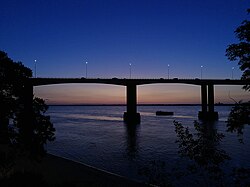
Corrientes is a vital transit point in the Argentine Littoral. The General Belgrano Bridge is the city's most prominent landmark, spanning the Paraná River to connect Corrientes with Resistencia, the capital of Chaco Province. Further west along the river lies the Yaciretá dam, one of the world's largest hydroelectric power generators.
Air travel is facilitated by the Doctor Fernando Piragine Niveyro International Airport (IATA: CNQ), located 5 km from the city center. While the city once relied on the Ferrocarril Económico Correntino narrow gauge railway to Mburucuyá, that line operated only between 1912 and 1927.
Climate and Environment
The city experiences a humid subtropical climate (classified as Cfa under the Köppen system). It is characterized by high annual rainfall, averaging around 1,500 millimetres (59 in), and a warm average temperature of 21.3 °C (70.3 °F). Frosts are extremely rare, typically occurring only in early July.
Temperature extremes are notable; the city recorded its highest temperature of 43.5 °C (110.3 °F) on October 1, 2020, while the lowest temperature ever recorded was −2.8 °C (27.0 °F) on June 15, 1979.
| Metric | Value |
|---|---|
| Annual Average Temperature | 21.3 °C (70.3 °F) |
| Annual Average Precipitation | 1,455.1 mm (57.29 in) |
| Record High Temperature | 43.5 °C (110.3 °F) |
| Record Low Temperature | −2.8 °C (27.0 °F) |
| Average Relative Humidity | 74.1% |
Culture, Education, and Society
Corrientes is an intellectual center for the region, hosting the National University of the Northeast and the University of Cuenca del Plata. The city's sporting culture is dominated by football, with teams such as Huracán Corrientes, Boca Unidos, and Deportivo Mandiyú.
The city has produced a wide array of notable figures, from politicians like Manuel Lagraña to artists such as singer Ramona Galarza and tennis player Leonardo Mayer. It also holds a place in international literature as the setting for Graham Greene's 1973 spy novel, The Honorary Consul.
Frequently Asked Questions
What does the name "Corrientes" mean?
The name refers to the "seven currents" created by seven peninsulas on the river shore, which historically made navigation difficult in this area.
Which city is the "twin city" of Corrientes?
Resistencia, the capital of Chaco Province, is considered the twin city of Corrientes and is connected to it via the General Belgrano Bridge.
What are the most famous cultural celebrations in Corrientes?
The city is best known for its massive annual carnival held every February and its celebrations of chamamé, a traditional musical style of the region.
What is the climate like in Corrientes?
Corrientes has a humid subtropical climate with warm temperatures year-round and significant rainfall, averaging about 1,500 mm annually.
How can visitors reach the city?
Visitors can arrive via the Doctor Fernando Piragine Niveyro International Airport or by road via National Route 12.