Coronary Artery Bypass Grafting (CABG)
For decades, medical science has sought effective ways to treat angina—the chest pain resulting from coronary artery disease (CAD). Since its modern introduction in the 1960s, Coronary Artery Bypass Grafting (CABG) has emerged as a primary surgical treatment for significant CAD. By creating a new pathway for blood to flow around blocked arteries, CABG restores oxygen-rich blood to the heart muscle, improving both survival rates and quality of life.
Key Facts
- Purpose: To bypass severe blockages in the coronary arteries to treat coronary artery disease.
- Primary Grafts: Commonly uses the great saphenous vein from the leg or the internal thoracic artery from the chest.
- Comparison: Often compared to Percutaneous Coronary Intervention (PCI), with CABG showing superior long-term survival in specific high-risk groups.
- Success Rate: Approximately 60% of patients remain angina-free 10 years after the procedure.
- Risk Factors: Operative mortality increases with age, female gender, and the presence of left main disease.
Diagnosing Coronary Artery Disease
Before considering surgery, clinicians use several methods to detect and assess the severity of CAD. While history, clinical exams, and electrocardiography (ECG) provide initial clues, more advanced imaging is required for surgical planning.
Echocardiography allows doctors to measure the ejection fraction (the percentage of blood leaving the heart each time it contracts) and evaluate heart valve function. However, the most accurate diagnostic tools are the coronary angiogram and coronary CT angiography, which provide a detailed map of the arterial lesions.
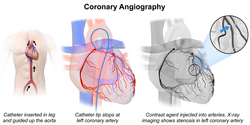
The significance of a blockage is measured by diameter loss. A 50% loss in diameter results in a 75% loss of cross-sectional area, which is generally considered moderate. Severe stenosis is defined as a diameter loss of two-thirds or more, representing a cross-sectional area loss of over 90%. To refine this diagnosis, interventional cardiologists may use intravascular ultrasound or fractional flow reserve (FFR), which compares pressure after the stenosis to mean aortic pressure; a ratio below 0.80 indicates a significant blockage.
CABG vs. PCI: Which is Better?
A central debate in cardiac surgery is whether CABG or Percutaneous Coronary Intervention (PCI)—a less invasive procedure using stents—is more effective. Research indicates that the choice often depends on the patient's specific condition.
- Left Main Disease: Studies from 2016 and 2023 suggest that CABG outperforms PCI in the long run (5+ years) for patients with unprotected left main disease, showing lower mortality rates.
- Diabetic Patients: A 2012 trial demonstrated a significant advantage for CABG over PCI in diabetic patients, with benefits remaining evident at 7.5-year follow-ups, particularly for younger patients and smokers.
- Multivessel Disease: Trials from 2015 and 2021 concluded that CABG is generally a safer and more effective option for patients with multivessel disease compared to second-generation drug-eluting stents.
The Surgical Procedure
CABG is a complex operation that can be performed using different techniques depending on the patient's needs.
On-Pump CABG
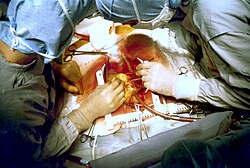
The traditional "on-pump" approach utilizes a cardiopulmonary bypass (CPB) machine. This machine takes over the function of the heart and lungs, allowing the surgeon to operate on a still heart. The process involves harvesting a healthy vessel (the graft), establishing the bypass via an aortic cannula, and performing the anastomosis (the surgical connection of the graft to the artery).
Off-Pump CABG
In "off-pump" surgery, the heart continues to beat during the procedure, avoiding the need for a heart-lung machine. This is often used to reduce certain risks associated with CPB.
Graft Types and Configurations
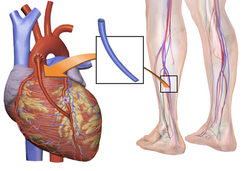
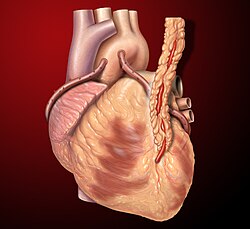
Surgeons may perform a single, double, triple, or quadruple bypass depending on how many arteries are blocked. Common grafts include the internal thoracic artery or the saphenous vein from the leg.
Outcomes and Potential Complications
CABG is highly effective at reducing mortality from severe CAD. However, the risk of operative mortality is closely tied to age; for example, the rate is approximately 1.8% for patients aged 50–59, rising to 8.3% for those over 80. Other risk factors include left ventricle dysfunction and re-operation.
Post-Operative Complications
- Low Cardiac Output Syndrome (LCOS): Occurring in up to 14% of patients, LCOS is often transient and managed with inotropes or an intra-aortic balloon pump.
- Myocardial Infarction: Post-operative heart attacks occur in 2% to 5% of cases.
- Arrhythmias: Atrial fibrillation is common, affecting 20% to 40% of patients.
- Neurological Effects: About 1.5% of patients experience focal deficits like stroke. Additionally, cognitive impairment is reported in up to 80% of patients at discharge, though this often resolves over a year.
Historical Evolution
The foundation of modern CABG was laid in 1962 when Mason Sones developed coronary angiography. In 1964, Vasilii Kolesov and Michael DeBakey performed early successful anastomoses, but it was Argentine surgeon René Gerónimo Favaloro who standardized the use of the saphenous vein, making the procedure a global standard of care.
![René Gerónimo Favaloro was an Argentine cardiac surgeon and educator best known for his pioneering work on coronary artery bypass surgery using the great saphenous vein.[49]](/images/d6/96/d6966eb1ac8fe0fbec038caaea834f87fc4a11dac4549260bcf4717b56b144e7.jpg)
The introduction of cardioplegia (arresting the heart using potassium-based solutions) in the 1970s and 80s significantly reduced the risk of ischemia and infarction during surgery, further lowering operative mortality.
| Feature | CABG (Surgery) | PCI (Stenting) |
|---|---|---|
| Invasiveness | High (Open-heart) | Low (Catheter-based) |
| Long-term Survival | Higher in Left Main/Diabetic CAD | Comparable in short-term (3 years) |
| Recovery Time | Longer | Shorter |
| Angina Relief | ~60% angina-free at 10 years | Variable based on stent type |
Frequently Asked Questions
What is the difference between a double and a triple bypass?
The terms refer to the number of coronary arteries that are bypassed. A double bypass means two blocked arteries were bypassed with grafts, while a triple bypass means three were treated.
Is CABG better than a stent (PCI)?
While PCI is less invasive, CABG generally provides better long-term survival and lower mortality for patients with diabetes, multivessel disease, or left main coronary artery disease.
What is the saphenous vein graft?
It is a healthy vein harvested from the leg and surgically attached to the coronary artery to create a detour around a blockage.
What are the main risks of heart bypass surgery?
Significant complications can include bleeding, heart attack, stroke, kidney injury, pneumonia, and arrhythmias such as atrial fibrillation.
How long does the benefit of CABG last?
Many patients experience a high quality of life for at least five years, and about 60% remain free of angina 10 years after the operation.