René Favaloro: The Pioneer of Coronary Artery Bypass Surgery
René Gerónimo Favaloro was a visionary Argentine cardiac surgeon and educator whose contributions fundamentally altered the landscape of cardiovascular medicine. He is most renowned for pioneering the coronary artery bypass surgery using the great saphenous vein, a procedure that provided a lifeline to millions of patients suffering from coronary artery disease worldwide.
Key Facts
- Primary Achievement: Standardized the technique for coronary artery bypass surgery using the saphenous vein.
- Education: Graduated from the National University of La Plata in 1949.
- Key Institution: Spent critical formative years at the Cleveland Clinic in the United States.
- Legacy: Founded the Fundación Favaloro to integrate medical care, research, and education.
- Philosophy: Advocated for "medical humanism," providing high-tech care to both wealthy and indigent patients.
Early Life and Medical Foundations
Born on July 12, 1923, in La Plata, Argentina, René Favaloro was raised in a family with Sicilian roots. His journey into medicine began at the National University of La Plata, where he earned his medical degree in 1949. During his residency at the Hospital Policlínico San Martín, Favaloro was exposed to complex cases and learned the importance of simplicity and standardization in surgical procedures—principles that would later define his professional legacy.
Early in his career, Favaloro demonstrated a strong moral compass. He declined a medical auxiliary position that required enrollment in the Peronist Party, choosing instead to serve as a rural physician in Jacinto Aráuz, La Pampa Province. Alongside his brother, Juan José, he worked to elevate the healthcare standards of this remote region by training nurses and teachers and equipping the local clinic with an operating room and X-ray facilities.
The Cleveland Clinic and the Bypass Breakthrough
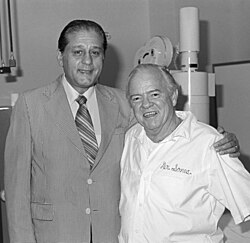
Driven by a passion for thoracic surgery—the surgical treatment of organs within the chest—Favaloro traveled to the United States to join the Cleveland Clinic. Working with experts like Donald B. Effler, William L. Proudfit, and F. Mason Sones, Jr., Favaloro immersed himself in the study of coronary angiograms (X-ray images of the heart's blood vessels).
In May 1967, Favaloro implemented a revolutionary idea: using the saphenous vein from the leg to bypass an obstructed segment of a coronary artery. This allowed blood to flow distally, bypassing the blockage and restoring oxygen to the heart muscle. This standardization of the bypass technique transformed the treatment of coronary arteriosclerosis and earned Favaloro international acclaim.
The Favaloro Foundation and Medical Humanism
Returning to Argentina in 1971, Favaloro sought to create a center of excellence that mirrored the Cleveland Clinic's integration of research and clinical practice. In 1975, he established the Fundación Favaloro. The foundation became a hub for education, training over 450 residents from across the Americas.
Favaloro's commitment to "medical humanism" was evident in his practice. While he treated high-profile patients, he dedicated a significant portion of his daily work to indigent patients who could not afford the high costs of bypass surgery. He also remained a staunch advocate for disease prevention and basic hygiene to reduce mortality rates.
Institutional Growth
The foundation's growth led to the creation of the Basic Investigation Laboratory in 1980, which eventually evolved into the Universidad Favaloro in 1998. In 1992, he opened the nonprofit Favaloro Foundation Institute of Cardiology and Cardiovascular Surgery in Buenos Aires, offering specialized transplants for the heart, lung, liver, kidney, and bone marrow.
Final Years and Legacy
The end of Favaloro's life was marked by tragedy and systemic frustration. By 2000, the Favaloro Foundation faced a debt of US$18 million. Despite repeated pleas for government assistance and attempts to collect debts from the PAMI public medical insurance agency, Favaloro received no official support.
On July 29, 2000, at the age of 77, Favaloro committed suicide. A letter he wrote to President Fernando de la Rúa revealed his deep exhaustion with the corruption of the healthcare system, comparing himself to "Don Quixote" in a lonely battle against giants. He was also grieving the loss of his wife, María Antonia Delgado, who had passed away in 1998.
| Category | Details |
|---|---|
| Born/Died | July 12, 1923 – July 29, 2000 |
| Major Innovation | Standardization of Coronary Artery Bypass Grafting (CABG) |
| Key Institutions | Cleveland Clinic, Fundación Favaloro, Universidad Favaloro |
| Notable Awards | Canada Gairdner International Award, Prince Mahidol Award, Golden Plate Award |
| Medical Philosophy | Medical Humanism and Disease Prevention |
Frequently Asked Questions
What was René Favaloro's most significant medical contribution?
His most significant contribution was the standardization of coronary artery bypass surgery using the saphenous vein, which allowed surgeons to bypass blocked coronary arteries and restore blood flow to the heart.
Where did Favaloro develop his bypass technique?
He developed and refined the technique while working at the Cleveland Clinic in the United States, utilizing their extensive collection of coronary angiograms.
What was the purpose of the Fundación Favaloro?
The foundation was created to be a center of excellence that combined high-quality medical attention, advanced scientific research, and the education of future medical professionals.
Why is Favaloro associated with "medical humanism"?
He believed that advanced medical technology should serve all of humanity, leading him to provide free or low-cost life-saving surgeries to indigent patients alongside his work with wealthy clients.
What led to the tragic death of Dr. Favaloro?
Favaloro committed suicide due to a combination of personal grief following his wife's death and profound frustration over the corruption and financial instability of the Argentine health system, which left his foundation in deep debt.