Córdoba Central Railway
The Córdoba Central Railway (CCR), known in Spanish as the Ferrocarril Central Córdoba, was a pivotal British-owned rail network that once spanned the heart of Argentina. Founded in 1887, the company developed an extensive system covering 1,960 km (1,220 mi), connecting the bustling port of Buenos Aires to the northwestern city of Tucumán via key hubs like Rosario and Córdoba.
Operating on a metre gauge (a track width of 1,000 mm), the CCR played a vital role in inter-city transport and regional development before financial pressures led to its acquisition by the state.
Key Facts
- Founded: 1887
- Network Length: 1,960 km (1,220 mi)
- Track Gauge: 1,000 mm (metre gauge)
- Primary Termini: Retiro (Buenos Aires) and Tucumán
- Major Cities Served: Santa Fe, Córdoba, Santiago del Estero, and Catamarca
- Final Status: Nationalized in 1948 as part of the Belgrano Railway
The Early Years and Expansion
The origins of the CCR began with a concession granted to William Temple in 1885 for a 206 km line connecting San Francisco to the Alta Córdoba suburb of Córdoba city. This initial line was completed in 1888.
The company's growth accelerated in 1887 when the government granted the operation of the Ferrocarril Central Norte's 884 km line to Hume Hnos. & Cía. This network included branches from Alta Córdoba to Tucumán, Frías to Santiago del Estero, and Recreo to Chubicha. By 1889, these operational rights were transferred to the Córdoba Central Railway.
Between 1889 and 1891, the network expanded further through the addition of the Tucumán-Lamadrid line (140 km) and the Argentine North Western Railway (284 km). During this period, the "Ferrocarril Córdoba y Rosario" was established in London with a capital of $10,164,646 to manage transferred assets from Meiggs & Cía.
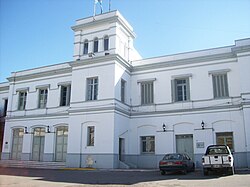
The North Western Branch
In 1901, the CCR took over the British-owned Córdoba North Western Railway, which ran from Córdoba to Cruz del Eje via Cosquín and La Calera. This route followed the path of the Río Primero and had been previously operated by Otto Bemberg & Cía. While the government re-acquired this 155 km line in 1909, a portion of this branch continues to be used today by the Tren de las Sierras.
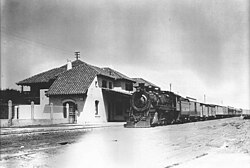
Connecting to the Capital
A major milestone occurred in 1912 when the Argentine government granted the CCR a concession to build a direct link between Rosario and Buenos Aires. This line opened on May 1, 1912, and by October 1914, the company inaugurated its own railway terminus at Retiro in Buenos Aires.
During this same year, the CCR absorbed the Córdoba & Rosario Railway, a British company with which it had shared mutual interests for several years, further consolidating its hold on the region's transport.
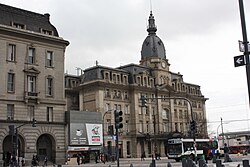
Financial Decline and Nationalisation
Despite its expansive reach, the Córdoba Central Railway faced intense competition from both other rail lines and the rising popularity of road transport. These pressures led to severe financial instability.
In May 1939, the company was sold to the Government of Argentina, and its operations were absorbed by the Argentine State Railway. The final transition occurred during the general railway nationalisation of 1948, at which point the CCR became an integral part of the Belgrano Railway network.
Summary of Railway Specifications
| Feature | Detail |
|---|---|
| Native Name | Ferrocarril Central Córdoba |
| Operational Period | 1888 – 1939 (as independent company) |
| Total Distance | 1,960 km |
| Track Gauge | 1,000 mm (Metre Gauge) |
| Key Termini | Retiro and Tucumán |
| Successor Network | Belgrano Railway (post-1948) |
Frequently Asked Questions
What was the track gauge used by the Córdoba Central Railway?
The railway used a 1,000 mm metre gauge, which is narrower than the standard gauge used in many other parts of the world.
Which cities were the primary termini of the network?
The network extended from the Retiro station in Buenos Aires in the east to Tucumán in the northwest.
Why was the company sold to the Argentine government?
The company suffered from severe financial problems caused by intense competition from other railway lines and the growth of road transport.
What happened to the CCR after the 1948 nationalisation?
Following the nationalisation of Argentina's railways in 1948, the former Córdoba Central Railway lines became part of the Belgrano Railway network.
Which current railway service uses part of the old CCR route?
The Tren de las Sierras currently operates on the branch that previously ran from Córdoba to Cruz del Eje.