Cool Jazz: The Subdued Evolution of Modern Jazz
Emerging in the United States after World War II, cool jazz represents a pivotal shift in the trajectory of modern music. While its predecessor, bebop, was defined by frantic tempos and complex harmonic structures, cool jazz introduced a more relaxed, reflective approach. Often described as the "pastel colors" of jazz compared to the "fiery red" of bebop, this genre prioritized melodic flow and tonal subtlety over wild exuberance.
Key Facts
- Origins: Developed in the 1940s as a reaction to the intensity of bebop.
- Core Characteristics: Relaxed tempos, lighter tones, and a preference for formal arrangements.
- Key Influences: Drew from classical music, swing, and the "light" saxophone style of Lester Young.
- Major Hubs: Primarily centered in New York City, Los Angeles, and San Francisco.
- Legacy: Paved the way for modal jazz, bossa nova, and the ECM label's aesthetic.
Stylistic and Cultural Foundations
Cool jazz did not appear in a vacuum; it was a gradual evolution. Early progenitors included cornetist Bix Beiderbecke and saxophonist Frankie Trumbauer, who softened the rhythmic impact of jazz to maintain a smoother melodic line. However, the most significant influence was tenor saxophonist Lester Young. Unlike the full-bodied sound of his contemporaries, Young played with a light tone and often played "behind the beat," emphasizing melodic development over "hot" phrases.
The genre also integrated elements of third stream—a synthesis of classical music and jazz. This is evident in the use of formal arrangements and instruments not typically found in jazz combos, such as the French horn and tuba.
The Rise of the Cool Era
The formalization of the style is often linked to the late 1940s. Claude Thornhill's big band set the stage with its unique instrumentation, which later influenced the 1947 Woody Herman band and its "Four Brothers" sound—a coordinated, blended section of four strong improvisers.
A landmark moment occurred when Miles Davis formed a nonet in 1948, featuring musicians like Gerry Mulligan and Gil Evans. Their recordings, later compiled as Birth of the Cool (1957), sought a lighter, more expressive sound. Davis aimed for deliberation in his note choices rather than the exuberance typical of the era.
Diversification of the Style
Following Davis, the genre branched into several directions:
- The Modern Jazz Quartet: Co-founded by John Lewis, this group incorporated baroque forms like the fugue (a contrapuntal composition) into swinging jazz.
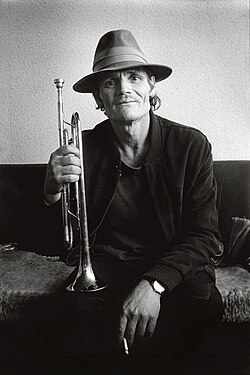
- The Pianoless Quartet: Gerry Mulligan and Chet Baker innovated by removing the piano, creating a more open sonic texture.
- Cerebral Alternatives: In New York, Lennie Tristano and Lee Konitz developed an atonal approach focusing on linear improvisation.
- The Brubeck Quartet: Dave Brubeck and Paul Desmond moved away from bebop influences, focusing on advanced swing-era developments.
West Coast Jazz
By the 1950s, a distinct scene emerged in California, often labeled West Coast jazz. This movement was bolstered by musicians from Stan Kenton's Innovations Orchestra and centered around venues like the Hermosa Beach Lighthouse Café. Figures such as Shorty Rogers and Shelly Manne were central to this scene.
Some artists, like Chico Hamilton, pushed the genre toward chamber music by adding a cellist to the ensemble and utilizing subtle rhythmic control. While "West Coast jazz" is often used interchangeably with "cool jazz," historians note that the cool aesthetic was equally present in New York, and many California musicians still employed "hotter" jazz approaches.
Summary of Cool Jazz Categories
| Category | Key Characteristics | Notable Artists |
|---|---|---|
| Soft Bebop Variants | Subdued versions of bop structures | Miles Davis, Stan Getz, Gerry Mulligan |
| Advanced Swing Evolution | Eschewed bop for linear/swing developments | Dave Brubeck, Lennie Tristano, Lee Konitz |
| West Coast Jazz | California-based cool developments | Shorty Rogers, Shelly Manne, Howard Rumsey |
| Exploratory Subdued Music | Experimental but quiet effect | Teddy Charles, Chico Hamilton, John LaPorta |
Legacy and Influence
The influence of cool jazz extended far beyond the 1950s. The Dave Brubeck Quartet's 1959 album Time Out became a massive commercial success, reaching No. 2 on the Billboard Pop Albums chart. The genre's emphasis on space and subtlety led directly to modal jazz—exemplified by Miles Davis's Kind of Blue—and influenced the development of bossa nova and free jazz.
In the 1970s, the ECM label continued the cool tradition by valuing clarity of expression, subtlety, and a dislike for bombast. Today, the fingerprints of cool jazz can be found in minimalism, new-age, and various world music idioms.
Frequently Asked Questions
How does cool jazz differ from bebop?
Cool jazz is characterized by relaxed tempos, lighter tones, and a more reflective attitude, whereas bebop is known for being fast, complex, and high-energy.
What is the significance of "Birth of the Cool"?
It is a collection of recordings by the Miles Davis Nonet that prefigured the cool jazz era, emphasizing a lighter sound and more deliberate note choices than contemporaneous jazz.
Is West Coast jazz the same as cool jazz?
While often used synonymously, West Coast jazz specifically refers to the scene in California. However, the cool aesthetic originated and flourished in New York as well.
What is "third stream" music?
Third stream is a musical term describing the synthesis of classical music elements and jazz, a technique frequently employed by cool jazz musicians to create formal arrangements.
Who was the most influential figure in the development of the cool sound?
Tenor saxophonist Lester Young is cited as the musician who prefigured and influenced cool jazz more than any other, primarily through his light tone and melodic approach to improvisation.