Dave Brubeck: The Architect of Cool Jazz and Complex Time
David Warren Brubeck was more than just a pianist; he was a visionary who expanded the boundaries of jazz. As a foremost exponent of cool jazz—a relaxed, melodic style of jazz that emerged in the late 1940s—Brubeck challenged the conventions of the genre. His work is celebrated for its intellectual depth, characterized by the use of unusual time signatures, the superimposition of contrasting rhythms and tonalities, and a seamless blend of classical, jazz, and blues influences.
Key Facts
- Highest Selling Album: Time Out was the first jazz album to sell over one million copies.
- Iconic Single: "Take Five" remains the highest-selling jazz single of all time.
- Musical Innovation: Pioneered the use of nonstandard time signatures (such as 5/4 and 9/8) in popular jazz.
- Social Impact: Formed one of the first racially diverse bands while serving in the US Army.
- Major Honors: Recipient of a Grammy Lifetime Achievement Award and a Kennedy Center Honoree.
Early Life and Military Service
Born in Concord, California, Brubeck's early career was shaped by both his musical curiosity and his time in the US Army. While drafted into service, he avoided combat after a Red Cross show he performed in became a significant hit. During his military tenure, Brubeck demonstrated his commitment to integration by forming one of the first racially diverse bands in the Army.
His professional recording career began in 1949 with Jack Sheedy of Coronet Records. Due to financial difficulties, Sheedy transferred the masters of Brubeck's octet and trio to the Circle Record Company, which later became the renowned Fantasy Records. Brubeck's early recordings were commercial successes, with the label shipping up to 50,000 copies per quarter.
The Dave Brubeck Quartet and the "Time" Series
In 1951, Brubeck formed the Dave Brubeck Quartet. While the group saw various personnel changes, the most prolific lineup existed between 1958 and 1967, featuring saxophonist Paul Desmond, bassist Eugene Wright, and drummer Joe Morello.
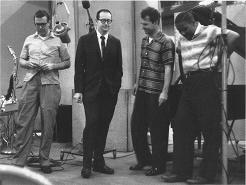
A 1958 tour sponsored by the U.S. Department of State served as the catalyst for the 1959 masterpiece Time Out. This album broke commercial and artistic barriers by utilizing esoteric themes and contrarian time signatures. The lead track, "Take Five," written by Paul Desmond in 5/4 time, became a global phenomenon.
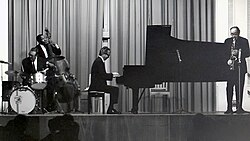
The success of Time Out led to a series of albums exploring nonstandard meters, including:
- Time Further Out: Miro Reflections (1961): Explored 4/4, 5/4, and 8/8, and introduced 7/4.
- Countdown—Time in Outer Space (1962): Dedicated to astronaut John Glenn, featuring 4/4 and 5/4.
- Time Changes (1963): Utilized 4/4, 5/4, and 7/4.
- Time In (1966): The final installment of the series.
These albums were also noted for their artistic presentation, featuring cover art by contemporary painters such as Joan Miró, Franz Kline, and Sam Francis.
Expanding the Horizon: Third Stream and Global Influence
Brubeck was a pioneer of Third Stream, a musical term describing a synthesis of classical music and jazz. This curiosity extended to his global travels, which inspired the "Jazz Impressions" series of albums, including recordings from the U.S.A. (1956), Eurasia (1958), Japan (1964), and New York (1964). These works produced enduring standards like "Summer Song" and "Brandenburg Gate."
In 1961, Brubeck and his wife, jazz lyricist Iola Whitlock, developed The Real Ambassadors, a jazz musical based on their experiences with Department of State foreign tours. The soundtrack featured legendary artists including Louis Armstrong and Carmen McRae.
Later Years and Lasting Legacy
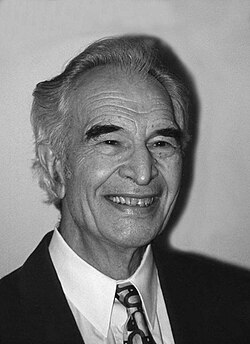
In his later years, Brubeck continued to perform and receive accolades. He remained a figure of immense prestige, receiving honorary doctorates from the Eastman School of Music, Berklee College of Music, and George Washington University.
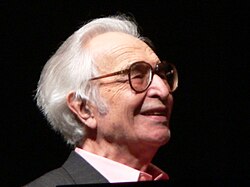
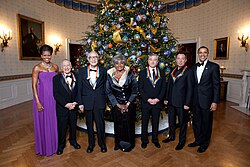
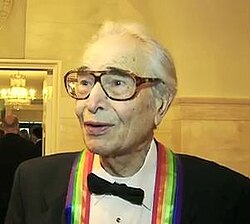
On December 6, 2009—his 89th birthday—Brubeck was honored at the Kennedy Center Honors. During the event, President Barack Obama emphasized Brubeck's importance to the American identity, stating, "You can't understand America without understanding jazz, and you can't understand jazz without understanding Dave Brubeck."
Brubeck passed away from heart failure on December 5, 2012, in Norwalk, Connecticut, just one day before his 92nd birthday.
| Category | Details |
|---|---|
| Primary Genres | Cool Jazz, West Coast Jazz, Third Stream |
| Key Collaborators | Paul Desmond, Eugene Wright, Joe Morello |
| Defining Work | Time Out (1959) |
| Major Awards | Grammy Lifetime Achievement, Kennedy Center Honors, National Medal of Arts |
| Active Years | 1940s – 2012 |
Frequently Asked Questions
What made Dave Brubeck's music unique?
Brubeck was known for using unusual time signatures (like 5/4 or 9/8) and combining different musical styles, including classical music, jazz, and blues, to create a sophisticated and intellectual sound.
What is the significance of the album Time Out?
Time Out was a landmark recording that proved complex, nonstandard time signatures could be commercially successful. It was the first jazz album to sell over one million copies.
Who were the members of the most successful Dave Brubeck Quartet?
The most prolific lineup (1958–1967) consisted of Dave Brubeck on piano, Paul Desmond on saxophone, Eugene Wright on bass, and Joe Morello on drums.
How did Brubeck contribute to social integration?
While serving in the US Army, Brubeck formed one of the first racially diverse bands, reflecting his commitment to integration during a period of significant racial tension in the United States.
What was the "Third Stream" in Brubeck's work?
Third Stream refers to the synthesis of classical music and jazz, a style Brubeck embraced by incorporating classical structures and tonalities into his jazz compositions.