Convention on Migratory Species: Protecting Wildlife Across Borders
Wildlife does not recognize national boundaries. For species that travel thousands of miles across continents and oceans, survival depends on the cooperation of every country they visit. The Convention on the Conservation of Migratory Species of Wild Animals, commonly known as the CMS or the Bonn Convention, is the primary international legal framework designed to ensure these animals are protected throughout their entire migratory range.
Established under the auspices of the United Nations Environment Programme (UNEP), the CMS focuses on the global conservation of wildlife and their essential habitats. By coordinating efforts between range states—the nations that a migratory species visits or inhabits—the convention prevents the fragmented protection that often occurs when animals move between different jurisdictions.
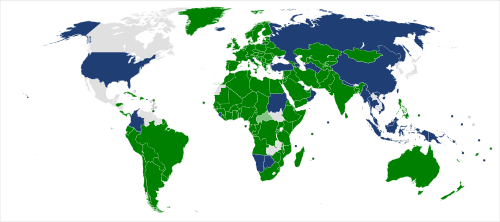
Key Facts
- Signed: 23 June 1979 in Bonn, West Germany.
- Effective Date: 1 November 1983.
- Membership: 130 States plus the European Union.
- Depositary: The Government of Germany.
- Scope: Covers mammals, birds, fish, reptiles, and insects.
- Structure: Utilizes two main Appendices to categorize species by threat level.
Fundamental Principles and Legal Framework
The core mission of the CMS is outlined in Article 2, which emphasizes the necessity of conserving migratory species. Parties agree to take action whenever possible and appropriate, with a specific priority given to species whose conservation status is unfavorable or those that are becoming endangered.
Appendix I: Threatened Migratory Species
Appendix I lists migratory species that are threatened with extinction. Under Article III, range states are legally obliged to provide these animals with strict protection. This includes conserving or restoring their habitats, removing obstacles to their migration, and controlling other factors that could endanger their survival.
Appendix II: Species Requiring International Cooperation
Appendix II includes migratory species that have an unfavorable conservation status or would significantly benefit from international cooperation. For these species, the CMS encourages range states to conclude global or regional agreements to ensure their long-term survival.
CMS Instruments: Agreements and MOUs
To translate high-level goals into action, the CMS utilizes specific legal instruments. These are divided into formal Agreements and less formal Memoranda of Understanding (MOUs).
Formal Agreements
These are legally binding treaties focused on specific groups of animals. Notable examples include:
- AEWA: Conservation of African-Eurasian Migratory Waterbirds (covering 254 species).
- EUROBATS: Conservation of European Bats (covering 52 species).
- ACAP: Conservation of Albatrosses and Petrels.
- ACCOBAMS: Conservation of Cetaceans in the Black Sea, Mediterranean, and contiguous Atlantic.
- ASCOBANS: Conservation of Small Cetaceans in the Baltic, North East Atlantic, Irish, and North Seas.
- Gorilla Agreement: Conservation of Gorillas and their habitats.
- Wadden Sea Seals: Conservation of Seals in the Wadden Sea.
Memoranda of Understanding (MOUs)
MOUs are non-binding but critical tools for conservation. To date, 19 MOUs have been signed, targeting specific species such as the Siberian Crane, the Saiga Antelope, and various marine turtles and sharks. For instance, the Raptors MoU focuses on 76 species of birds of prey.
Organizational Structure
The CMS operates through a structured system of governance to ensure scientific accuracy and political accountability.
Conference of the Parties (COP)
The COP is the primary decision-making body. Members meet periodically to review the implementation of the convention and approve financial regulations. Recent and upcoming meetings include COP 14 in Samarkand, Uzbekistan (2024) and COP 15 in Campo Grande, Brazil (2026).
Standing Committee (StC)
The Standing Committee consists of 15 members elected for three-year terms. Its role is to monitor the budget, ensure COP decisions are implemented, and provide guidance to the secretariat.
Scientific Council (ScC) and Sessional Committee
The Scientific Council provides expert advice on research, management measures, and the inclusion of species in the Appendices. Since 2014, a Sessional Committee—a representative sub-body of the Council—has assisted in these functions.
The Secretariat
Based at the United Nations Campus in Bonn, Germany, the secretariat manages the daily operations of the CMS. It also maintains an outpost in Abu Dhabi, UAE, which specifically oversees the MOUs for Dugongs and Migratory Birds of Prey.
Summary of CMS Framework
| Component | Purpose | Legal Status |
|---|---|---|
| Appendix I | Protect species threatened with extinction | Strict Protection Obligation |
| Appendix II | Coordinate conservation for species in need | Cooperative Action |
| Agreements | Targeted conservation for specific groups | Legally Binding |
| MOUs | Flexible conservation frameworks | Non-binding |
Frequently Asked Questions
What is the difference between Appendix I and Appendix II?
Appendix I is for species threatened with extinction, requiring range states to provide strict protection. Appendix II is for species that would benefit from international cooperation to prevent them from becoming threatened.
Who is the depositary of the Bonn Convention?
The Government of the Federal Republic of Germany serves as the depositary for the convention.
What is a range state?
A range state is any nation that a migratory species naturally inhabits or visits during its annual migration cycle.
How many species are covered by AEWA?
The Agreement on the Conservation of African-Eurasian Migratory Waterbirds (AEWA) covers 254 species of birds that depend on wetlands.
Where is the CMS Secretariat located?
The main secretariat is located at the United Nations Campus in Bonn, Germany, with an additional outpost office in Abu Dhabi, United Arab Emirates.