Conservation-Dependent Species: Definitions, Challenges, and Recovery
In the complex effort to preserve global biodiversity, some species exist in a precarious state where their survival is tied directly to human intervention. These are known as conservation-dependent species. By definition, these are taxa that rely on specific, ongoing conservation programs to prevent them from sliding into endangered categories. If these human-led efforts were to cease, the species would likely qualify as threatened within five years.
Key Facts
- Definition: Species that would become threatened if specific conservation programs were stopped.
- IUCN Status: Originally a distinct category (LR/cd), now largely merged into "Near Threatened" (NT).
- Green Status: A modern metric used to measure the recovery and dependence of a species regardless of its category.
- Flora vs. Fauna: Animals are often managed via recovery plans, while plants are primarily protected through habitat maintenance.
- Legal Frameworks: Different regions use varying laws, such as the US Endangered Species Act or Australia's EPBC Act.
The Evolution of IUCN Classifications
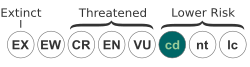
The term "Conservation Dependent" (LR/cd) originated from the IUCN 1994 Categories & Criteria (version 2.3). Under this system, it was one of three "Lower Risk" categories, alongside Near Threatened (LR/nt) and Least Concern (LR/lc).
In 2001, the IUCN updated its system to version 3.1. In this revision, the Conservation Dependent category was folded into the Near Threatened category. However, because not every species is re-evaluated immediately, some taxa still retain the original "Conservation Dependent" label in the Red List.
The Green Status Metric
Starting in 2020, the IUCN introduced an optional "Green Status" assessment. Unlike the primary category, which focuses on extinction risk, the Green Status is a standardized measure of global recovery. It reintroduces a systematic measure of conservation dependence by comparing the projected short-term (10-year) future of a species with and without active conservation actions.
Challenges in Species Preservation
Maintaining conservation-dependent species is fraught with biological and political hurdles. A primary challenge is population connectivity—the ability of animals to move between habitats and interact with humans/regulators to ensure their survival. When species are not susceptible to existing regulations, or when laws contain gaps, these species can quickly deplete.
Furthermore, the United States Endangered Species Act of 1973, while designed to protect species from extinction, is sometimes criticized for failing to account for broader biological ecosystem conservation. Beyond biological gaps, funding remains a critical issue. Disagreements among legal and political members regarding the allocation of funds often stall restoration efforts, leaving dependent species at risk despite existing regulatory provisions.
Conservation Methods: Flora vs. Fauna
While plants and animals may share the same risk status, the strategies used to save them differ significantly:
- Fauna (Animals): Protection typically involves government-led recovery plans and formal conservation agreements.
- Flora (Plants): Protection focuses on maintaining a healthy habitat. This includes keeping areas uncivilized and minimizing pollution emissions to ensure the environment remains viable.
Regional Implementation and Examples
The EPBC Act in Australia
Australia's Environment Protection and Biodiversity Conservation Act 1999 (EPBC Act) continues to use a "Conservation Dependent" category. Interestingly, species in this category do not receive the same special protections as those listed as "matters of national environmental significance." However, fauna may be classified here if their associated flora is directly threatened.
As of December 2018, eight fish species were listed as conservation-dependent under the EPBC Act, including the Orange roughy, Southern bluefin tuna, and the Scalloped hammerhead shark.
Case Study: The Scalloped Hammerhead
To protect the Scalloped hammerhead (Sphyrna lewini), strict fisheries rules are implemented as conservation efforts. These include:
- Mandatory Reporting: Fishers must report catches via an automated interactive voice response system.
- Logbook Documentation: All shark catches and discards must be recorded in official logbooks.
- Data Validation: Fisheries officers are authorized to inspect boats and catches within one hour of docking.
Summary of Listed Species
| Group | Examples |
|---|---|
| Arthropods | California ground cricket, Coachella Valley grasshopper, Mono Lake brine shrimp |
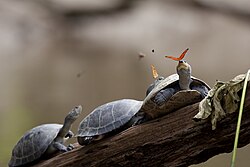
| Reptiles | Arrau turtle |
| Fish (EPBC Act) | Orange roughy, Southern dogfish, Silver gemfish |
Frequently Asked Questions
What happens if conservation efforts for a dependent species stop?
If the species-specific or habitat-specific conservation programs cease, the species would likely qualify for one of the threatened categories within a period of five years.
Is "Conservation Dependent" still an official IUCN category?
It was part of the 1994 criteria but was merged into the "Near Threatened" category in 2001. It persists only for taxa that have not yet been re-evaluated under the newer system.
How does the Green Status metric differ from the Red List category?
While the Red List category assesses the risk of extinction, the Green Status is an optional assessment that measures the global recovery of a species and its dependence on continued conservation actions.
Why are plants managed differently than animals?
Animal conservation often relies on specific recovery plans and government agreements, whereas plant conservation focuses more broadly on maintaining habitat health and reducing pollution.
Does the EPBC Act provide special protection for conservation-dependent species?
No, species listed as "Conservation Dependent" under the EPBC Act are not considered "matters of national environmental significance" and therefore do not receive special protection.