Congregationalism: History, Beliefs, and Global Expansion
Congregationalism is a Reformed Christian tradition within Protestantism characterized by a specific form of church governance known as congregational polity. In this system, each local church operates independently and autonomously, managing its own affairs without the oversight of a higher ecclesiastical authority. This tradition is a direct theological continuation of the movement upheld by the Puritans.
The core principles of this faith are enshrined in two primary confessions: the Cambridge Platform (1648) and the Savoy Declaration (1658). These documents codify the belief that the local congregation is the primary seat of authority, distinguishing them from other Reformed traditions, such as Presbyterianism, which utilizes a governance structure based on elders.
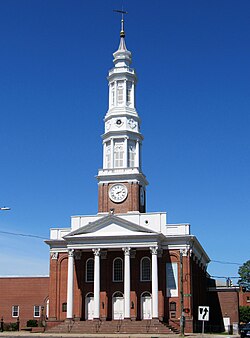
Key Facts
- Governance: Each congregation is autonomous and self-governing.
- Theology: Rooted in the Reformed (Calvinist) tradition.
- Foundational Documents: The Cambridge Platform (1648) and the Savoy Declaration (1658).
- Origins: Emerged from the 16th-century Puritan movement in England.
- Key Figures: Early development was led by divines Robert Browne, Henry Barrowe, and John Greenwood.
Origins and the Puritan Reformation
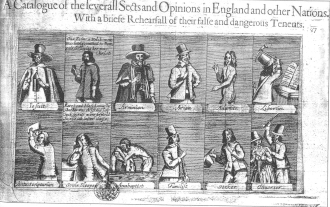
The roots of Congregationalism lie in the 16th-century Puritan movement, which sought to complete the English Reformation. While the Church of England had separated from the Roman Catholic Church under Henry VIII, many Puritans felt it retained too many medieval Catholic elements, such as episcopal polity (government by bishops), formal liturgies, and clerical vestments.
Early adherents were often called Separatists or Independents. These small groups, sometimes known as Brownist congregations, frequently met in secret to avoid persecution. Many were forced into exile in Holland, where they struggled to maintain stability. Notable figures who faced exile or death during this era included Henry Barrow, John Greenwood, and John Penry.
The Journey to North America
In the early 17th century, a Separatist group known as the Scrooby Congregation formed in Nottinghamshire. Led by pastor John Robinson and elder William Brewster, the group fled to Holland in 1607. In 1620, a portion of this group—historically known as the Pilgrims—sailed on the Mayflower to establish the Plymouth Colony, effectively transplanting the Congregational tradition to North America.
Global Expansion and Regional Developments
The Americas
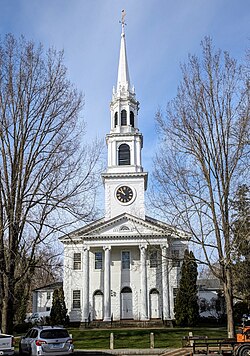
In the United States, the autonomy of the church was formally described in the Cambridge Platform of 1648. From New England, the model spread into New York and the Old Northwest. In Canada, many Congregational churches merged into the United Church of Canada in 1925, though some later separated to form the Congregational Christian Churches in Canada in 1988.
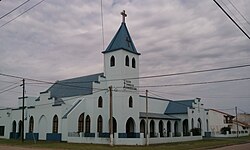
In Argentina, the movement grew significantly starting in 1924 through the work of missionary John Hoelzer. The church expanded from Entre Ríos into provinces such as Chaco, Misiones, and Buenos Aires. Today, the Evangelical Congregational Church is present in over 150 towns and cities across Argentina, as well as in Paraguay, Uruguay, and southern Brazil.
Europe and the United Kingdom
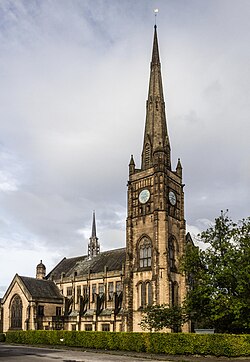
The Congregational Union of England and Wales was established in 1831 to provide support and advice to independent churches. In 1972, a majority of these churches merged with the Presbyterian Church of England to form the United Reformed Church (URC), though approximately 600 churches maintained their independence. In Ireland, the Congregational Union of Ireland was founded in 1829.
Bulgaria and the Pacific
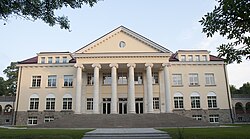
In Bulgaria, Congregationalists (referred to as "Evangelicals") were among the first Protestant missionaries to the Ottoman Empire. Supported by the American Board of Commissioners for Foreign Missions (ABCFM), they contributed to the Bulgarian National Revival. By 1909, 19 Congregational churches were established in the region.
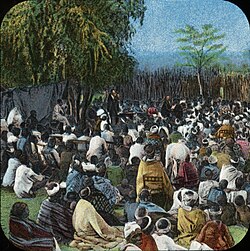
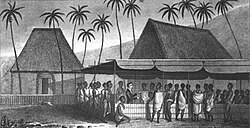
In the Pacific, the Congregational Christian Church of Samoa was founded in 1830 by John Williams of the London Missionary Society. It has grown into one of the largest church groups in the region, with over 100,000 members across Samoa, American Samoa, New Zealand, Australia, and America.
Summary of Congregationalist Development
| Region/Document | Key Date/Period | Significance |
|---|---|---|
| Cambridge Platform | 1648 | Codified church autonomy in New England. |
| Savoy Declaration | 1658 | Established the confession of faith for English Congregationalists. |
| Plymouth Colony | 1620 | Introduction of the tradition to North America via the Pilgrims. |
| Samoa | 1830 | Foundation of one of the Pacific's largest Congregational bodies. |
| Bulgaria | 1840–1878 | Establishment of early "Evangelical" churches in the Ottoman Empire. |
| Argentina | 1924 | Beginning of widespread expansion in South America. |
Frequently Asked Questions
What is the main difference between Congregationalism and Presbyterianism?
The primary difference lies in polity, or church government. While both are Reformed/Calvinist, Presbyterians use a system of governance by elders (presbyters) across a hierarchy of courts, whereas Congregationalists believe each local congregation is autonomous and self-governing.
Who were the Separatists?
Separatists were early Congregationalists in 16th-century England who believed the Church of England was too similar to the Roman Catholic Church to be reformed from within. They chose to separate entirely from the state church, often facing persecution or exile.
What is the significance of the Mayflower in this tradition?
The Mayflower carried the Scrooby Congregation (the Pilgrims) to North America in 1620. This event was pivotal as it established the first permanent Congregationalist communities in the New World.
How did Congregationalism reach Bulgaria?
It was introduced by Protestant missionaries, primarily through the American Board of Commissioners for Foreign Missions (ABCFM) starting in the mid-19th century. These missionaries focused on converting Orthodox Christians and supported the Bulgarian National Revival.
What happened to most Congregational churches in England in 1972?
Approximately three-quarters of English Congregational churches merged with the Presbyterian Church of England to form the United Reformed Church (URC), although several hundred churches chose to remain independent.