Commonwealth War Graves Commission: Preserving the Memory of the Fallen
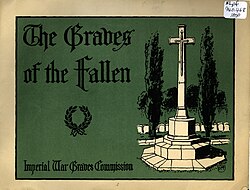
The Commonwealth War Graves Commission (CWGC) is an intergovernmental organisation dedicated to the permanent commemoration of military personnel and civilians who died during the two World Wars. Founded on the principle that every life lost in service should be remembered with dignity and equality, the Commission manages thousands of cemeteries and memorials across the globe.
Headquartered in Maidenhead, United Kingdom, the CWGC operates under the patronage of King Charles III and the presidency of Anne, Princess Royal. Its membership includes Australia, Canada, India, New Zealand, South Africa, and the United Kingdom.

Key Facts
- Founded: May 21, 1917, as the Imperial War Graves Commission.
- Renamed: Became the Commonwealth War Graves Commission on March 28, 1960.
- Scope: Commemorates over 600,000 casualties from the Second World War and millions from the First.
- Civilian Records: Maintains the Civilian War Dead Roll of Honour, containing nearly 67,000 names.
- Global Reach: Manages war graves and memorials worldwide, including over 40,000 non-Commonwealth war graves.
Historical Evolution
The First World War and Establishment
The Commission was established during the First World War to ensure that the dead were not forgotten. It introduced the concept of uniform memorials, ensuring that regardless of rank or status, every soldier received an equal tribute.
The Second World War and Civilian Commemoration
At the onset of the Second World War in 1939, the Commission utilized lessons from the First World War to organize grave registration units and earmark land for cemeteries. A significant shift occurred on February 7, 1941, when a supplemental charter empowered the organization to record Commonwealth civilian war deaths—those who died due to enemy action.
This effort resulted in the Civilian War Dead Roll of Honour. The first six volumes were delivered to the Dean of Westminster on February 21, 1956, with the final volume added in 1958. These records are now housed in St George's Chapel in Westminster Abbey.
Architectural Design and Horticulture
Standardized Memorial Features
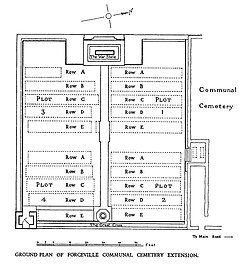
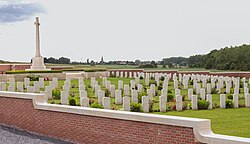
The CWGC is renowned for its consistent architectural language, designed to create a sense of peace and permanence. Key features include:
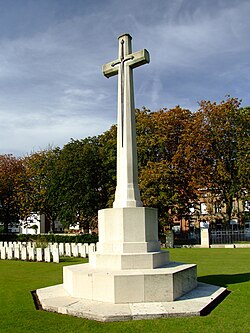
- The Cross of Sacrifice: A prominent stone cross found in most cemeteries.
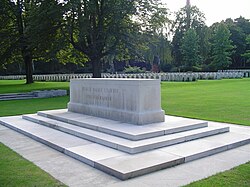
- The Stone of Remembrance: A large altar-like stone typically found in larger cemeteries.
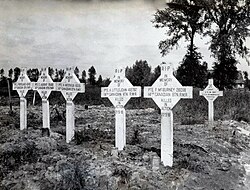
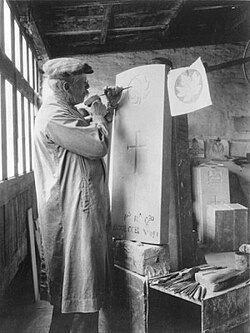
- Headstones: Standard markers usually made of Portland stone. In specific regions, such as the Gallipoli Peninsula, stone-faced pedestal markers are used due to challenging ground conditions.
The Art of Maintenance
The Commission employs specialized horticulture to ensure cemeteries remain beautiful and respectful. Landscaping is adapted to the local climate: roses are common in Belgium, dry landscaping is used in Egypt, and tropical plants are utilized in Thailand.
Operational Challenges and Modern Projects
Identification and Reburials
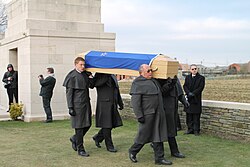
The CWGC continues to identify remains and perform reburials decades after the conflicts ended. For example, a New Zealand soldier was reburied as recently as February 2012, and new names are frequently added to memorials as records are uncovered.
Addressing Historical Inequalities
The Commission is actively working to correct historical gaps in commemoration. In 2026, it was announced that 9,909 British Indian Army servicemen would be added to the casualty database. These records, sourced from Punjab, include approximately 40% Muslim, 25% Sikh, and 25% Hindu soldiers.
Vandalism and Preservation
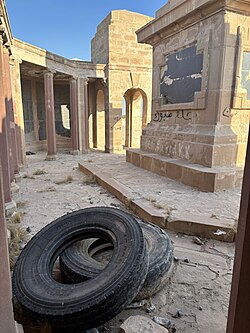
Maintaining sites in volatile regions remains a challenge. While many sites are pristine, others have suffered from neglect and vandalism, such as the Basra Memorial in Iraq, which was reported as neglected in July 2024.
Summary of CWGC Operations
| Category | Details |
|---|---|
| Headquarters | Maidenhead, United Kingdom |
| Member Nations | Australia, Canada, India, New Zealand, South Africa, UK |
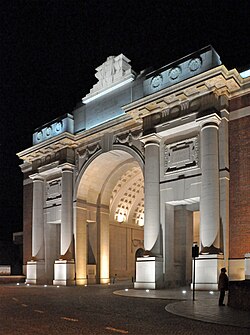
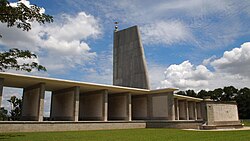
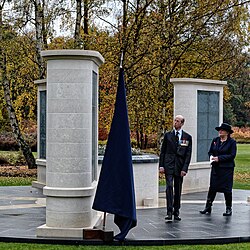
| Key Memorials | Menin Gate, Kranji War Memorial, Brookwood Memorial |
| Civilian Record | Civilian War Dead Roll of Honour (Westminster Abbey) |
| Primary Materials | Portland stone |
Frequently Asked Questions
Why are the headstones uniform in design?
The uniform design ensures that all fallen service members are commemorated equally, regardless of their military rank, social status, or religion.
Can families repatriate the remains of their loved ones?
Generally, the Commission's policy is that bodies should not be repatriated. However, an exception was made for the American Graves Registration to repatriate American citizens serving in Commonwealth nations during the Second World War.
Who is included in the Civilian War Dead Roll of Honour?
The roll includes Commonwealth civilians who died as a direct result of enemy action during the Second World War.
How does the CWGC handle different climates in its cemeteries?
The Commission uses region-specific horticulture, such as tropical landscaping in Thailand and dry landscaping in Egypt, to ensure the sites are sustainable and aesthetically appropriate for the environment.
What is the Cross of Sacrifice?
The Cross of Sacrifice is a standardized architectural feature—a stone cross with a downward-pointing sword—found in the majority of CWGC cemeteries.