Common Names vs. Scientific Names: Understanding How We Label the Natural World
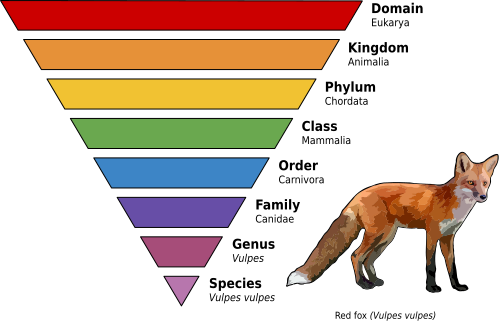
Whether you are walking through a forest or working in a laboratory, you likely use different names to describe the things you see. You might call a furry animal a "red fox," while a biologist refers to it as Vulpes vulpes. This distinction between common names—the everyday language we use—and scientific names—the standardized system used by experts—is more than just a matter of vocabulary; it is a fundamental part of how humans categorize the world.
What Exactly is a Common Name?
In biology, a common name is the name of a taxon (a group of one or more populations of an organism) or a specific organism based on the everyday language of a particular culture or region. These are often contrasted with scientific names, which are typically based in Latin to ensure global consistency.
The concept of common naming also extends to chemistry. The International Union of Pure and Applied Chemistry (IUPAC) distinguishes between two types of non-systematic names:
- Common names: Names that unambiguously define a chemical but do not follow systematic naming conventions (for example, "acetone" is the common name for the systematic "2-propanone").
- Vernacular names: Names used in trade, industry, or labs that may not unambiguously describe a single chemical. For instance, "copper sulfate" could refer to either copper(I) sulfate or copper(II) sulfate.
Folk Taxonomy and the Logic of Everyday Naming
Common names are the building blocks of folk taxonomy, an informal and often incomplete system of classification. Unlike scientific nomenclature, folk taxonomy has no formal rules and is not always logically consistent.
For example, not every animal called a "fly" is biologically a fly (such as mayflies or dragonflies), and some actual flies are not called flies (such as the "bee lice" of the family Braulidae). Some common names are unique and do not refer to any broader group, such as the okapi, ginkgo, or ratel.
In contrast, scientific nomenclature is a global system designed to denote organisms uniquely and definitively. Organizations like the International Commission on Zoological Nomenclature (ICZN) establish formal rules to ensure that these names reflect well-defined biological relationships.
The Evolution of the Binomial System
The modern scientific system of binomial nomenclature (the practice of giving every species a two-part name) actually shares similarities with older vernacular styles. Before Carl Linnaeus formalized the scientific system, non-modern cultures often used a noun-adjective format. For example, the general term "owl" was made more specific by adding an adjective, such as "screech owl."
Linnaeus himself recognized this in his 1745 work, Flora Svecica, where he recorded Swedish common names alongside scientific ones. Interestingly, these Swedish common names were already binomials. Linnaeus essentially took the style of vernacular nomenclature and linked it to stable, verifiable scientific concepts, making it suitable for international use.
Geographic and Cultural Variations
The reach of a common name varies wildly. Some are nearly universal within a language (like "cat"), while others are restricted to a single country or even a small local district. Some languages use common names to provide poetic or humorous descriptions of animals.
The following table illustrates how the same species can have a scientific name, a standard English common name, and various descriptive terms in Irish.
| Scientific Name | English Name | Irish Terms | Literal Translation of Poetic Terms |
|---|---|---|---|
| Vulpes vulpes | Red fox | Madra rua or sionnach | "red dog" |
| Lutra lutra | Otter | Madra uisce or dobharchú | "water dog" |
| Canis lupus | Wolf | Mac Tíre or faolchú | "son of the land" |
| Chiroptera (order) | Bats | Sciathán leathair or ialtóg | "leather wing" |
The Problems with Common Names
While common names are accessible, they create significant challenges for professionals. Scientists prefer formal taxonomic names for several reasons:
- Local Distribution: A single fish species may have multiple common names in one small area.
- Biological Ignorance: Laypeople may give different names to the same species because of ecophenotypic variation (changes in appearance due to maturity, gender, or environmental response).
- Lack of Relationship Data: Common names do not imply biological relationships, whereas scientific names do.
- Instability: Common names can change over time due to confusion or contact with other languages.
- Gaps in Naming: Many species—especially rare ones or those without economic value—have no widely recognized common name. In one list of 1,200 fish species, more than half lacked a common name.
Coining New Common Names
Because scientific names can be difficult for the public to pronounce or remember, biologists often "coin" common names for field guides. Some of these are simple translations of Latin, though these can be inaccurate (e.g., confusing gratiosus with "gracile").
This practice has been controversial. In 1868, de Candolle's Laws of Botanical Nomenclature argued against fabricating "vulgar names" that were totally different from Latin ones, suggesting that such novelties provide no real advantage to the public.
Despite this, many authorities continue to create standardized lists to fill gaps or replace confusing names. However, this can lead to errors. A notable example is the use of "thick-knee" for birds of the genus Burhinus. Not only do some species in the genus lack thick joints, but the "knees" being described are actually the intertarsal joints (the ankles).
Efforts Toward Standardization
To reduce confusion, various organizations maintain official lists of common names:
- Australian Fish Names List (AFNS): An official Australian Standard since 2007, developed by taxonomic and industry experts.
- Entomological Society of America: Maintains a database of official insect common names reviewed by a formal committee.
- Society for the Study of Amphibians and Reptiles (SSAR): Provides updated standardized lists for North American species, including a searchable online database.
- The Auk: Published guidelines in 1978 that led to Birds of the World: Recommended English Names.
- Academy of the Hebrew Language: Publishes dictionaries of common names for species in Israel, including reptiles and dragonflies.
Key Facts
- Common names are based on everyday language, while scientific names are typically Latin-based and standardized.
- Folk taxonomy is an informal classification system that often lacks biological consistency.
- Binomial nomenclature was popularized by Linnaeus to provide a stable, international system for naming organisms.
- Ecophenotypic variation can lead to a single species being given multiple common names based on its appearance.
- Many rare species have no common name at all, while some common names apply to multiple different species.
- Official bodies like the AFNS and SSAR work to standardize common names to improve communication between scientists and the public.
Frequently Asked Questions
Why can't we just use common names for everything?
Common names vary by region, language, and culture, which leads to confusion. They also fail to show the biological relationship between species and can be ambiguous, with one name referring to multiple species or one species having many names.
What is the difference between a common name and a vernacular name in chemistry?
In chemistry, a common name (like acetone) is non-systematic but still unambiguously identifies a single chemical. A vernacular name (like copper sulfate) is used in trade or labs and may be ambiguous, referring to more than one chemical.
Who decides what the "official" common name of an animal is?
Official names are typically decided by specialized organizations or committees, such as the Entomological Society of America for insects or the Australian Fish Names Committee for fish.
Why did Linnaeus use a two-part name for species?
Linnaeus developed binomial nomenclature to create a stable, verifiable, and international system. This replaced the inconsistent local naming traditions with a structured format that could be used by scientists worldwide.
What is "folk taxonomy"?
Folk taxonomy is the informal way people classify objects and organisms using common names. It does not follow strict scientific rules, which is why some animals are called "flies" even if they do not belong to the biological order of true flies.