Commensalism: The Biology of One-Sided Benefit
In the complex web of nature, species rarely exist in total isolation. Instead, they engage in symbiosis—long-term biological interactions that shape how organisms survive and evolve. While some of these relationships are mutually beneficial or parasitic, there is a unique middle ground known as commensalism.
Commensalism occurs when one species, the commensal, gains a benefit from another species, the host, while the host remains substantially unaffected—neither helped nor harmed. These benefits typically include access to nutrients, shelter, support, or a means of transportation.
Key Facts
- Definition: A symbiotic relationship where one organism benefits and the other is neither helped nor harmed.
- Etymology: Derived from the Latin commensalis, meaning "sharing a table."
- Dynamics: Often involves a smaller commensal species and a larger host species.
- Adaptations: Commensals often develop specialized structural adaptations to better utilize their hosts.
- Diversity: Occurs across all domains of life, from bacteria and fungi to plants and mammals.
The Mechanics of Commensal Relationships
Commensalism is often characterized by a disparity in size and role. The host organism generally remains unmodified, while the commensal may evolve specific traits to maximize the advantage of the association. For example, remoras have evolved specialized organs to attach themselves to sharks and other large fish, allowing them to travel effortlessly and feed on the host's fecal matter or meal leftovers.
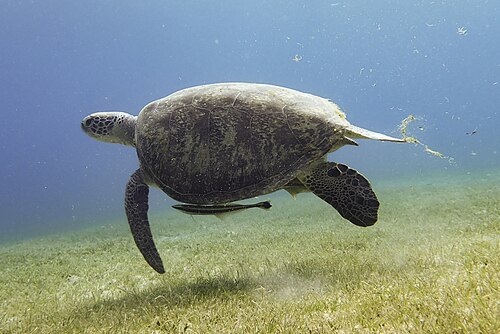
Similar dynamics are seen in the avian world, where various bird species perch on large mammal herbivores to feed on insects stirred up by the mammals' grazing movements.
Commensalism and the Path to Domestication
One of the most fascinating aspects of commensalism is its role in the evolution of domestic animals. Many species began as synanthropes—wild animals that live near and benefit from human habitats without significantly affecting humans.
The transition from a wild population to a domestic one typically follows a specific evolutionary pathway: anthropophily (attraction to humans), habituation, commensalism, and finally, a reciprocal partnership. Animals that were less aggressive and had shorter "fight-or-flight" distances were more successful in these human-adjacent niches.
![Domestic and feral pigeons (above) (Columba livia domestica) are commensals, having lived alongside humans for thousands of years after being domesticated from the rock dove (Columba livia). Due to its range being expanded with human assistance, the pigeon has a cosmopolitan distribution.[6]](/images/a3/e4/a3e48da9c71897482171d6183d9d8b335807df91dee77aa3d22756b06525d04d.jpg)
The Case of the Domestic Dog
The dog is considered a classic example of the commensal pathway. Evidence suggests that wolves began associating with hunter-gatherers during the Pleistocene, well before the advent of agriculture. Subdominant pack members with lower stress thresholds likely scavenged carcasses left by humans. Over time, this led to neotenization—the retention of juvenile physical features into adulthood—and a reduction in aggression, laying the groundwork for full domestication.
Microbial and Marine Examples
Commensalism is not limited to large animals; it is prevalent in the microscopic world and the deep ocean.
Bacterial Commensals
Staphylococcus aureus is a well-known bacterium that can be pathogenic, but many strains act as metabiotic commensals. These strains exist as part of the skin flora or within the nasal and oral cavities of 20% to 30% of the human population, benefiting from the body's mucous membranes without causing harm.
Chemical Facilitation in Nitrification
In the nitrogen cycle, a commensal relationship exists between Nitrosomonas and Nitrobacter species. Nitrosomonas oxidizes ammonium into nitrite; Nitrobacter then uses that nitrite as a substrate to obtain energy for growth. In this scenario, the waste product of one species becomes the essential fuel for another.
Deep-Sea Associations
In the Gulf of Mexico, brittle stars often associate with octocorals. The brittle stars benefit by being elevated into the water column, which facilitates suspension feeding. While historically viewed as purely commensal, some recent research suggests the octocorals may receive a subtle benefit from the cleaning action of the moving brittle stars.
Types of Commensalism
Biologists categorize commensal interactions based on the nature of the benefit provided:
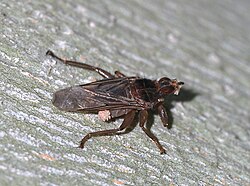
- Phoresy: An interaction where one animal attaches to another solely for transport. Examples include mites on flies or pseudoscorpions on mammals.
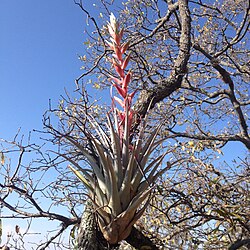
- Inquilinism: The use of another organism for permanent housing, such as orchids growing on tree branches.
- Metabiosis: An indirect dependency where one organism modifies the environment to make it suitable for another, such as hermit crabs using discarded gastropod shells.
- Facilitation (Probiosis): General interactions that benefit at least one participant and harm neither.
Summary of Symbiotic Interactions
| Interaction Type | Effect on Species A | Effect on Species B | Example |
|---|---|---|---|
| Commensalism | Benefits (+) | Neutral (0) | Remora and Shark |
| Mutualism | Benefits (+) | Benefits (+) | Bees and Flowers |
| Parasitism | Benefits (+) | Harmed (-) | Ticks and Mammals |
| Amensalism | Neutral (0) | Harmed (-) | Penicillium mold and Bacteria |
Scientific Debates
Some biologists argue that true commensalism is rare. They suggest that most "neutral" relationships are actually subtle forms of mutualism or parasitism. For instance, epiphytes (plants that grow on others) might be "nutritional pirates" that intercept nutrients intended for the host tree, or their weight might cause limbs to break, shifting the relationship from commensalism to parasitism.
Frequently Asked Questions
What is the difference between commensalism and mutualism?
In mutualism, both species derive a benefit from the interaction. In commensalism, only one species benefits, while the other is neither helped nor harmed.
How did commensalism lead to the domestication of dogs?
Less aggressive wolves likely began scavenging near human camps. This commensal relationship allowed them to access food sources, leading to evolutionary changes in behavior and morphology (neotenization) before humans began active breeding.
What is phoresy?
Phoresy is a specific type of commensalism where one organism uses another exclusively for transportation, such as mites hitching a ride on a beetle.
Can a commensal relationship become parasitic?
Yes. If the commensal begins to harm the host—for example, if an epiphytic plant grows so large that it shades the host tree and reduces its photosynthesis—the relationship shifts to parasitism.
What is an example of microbial commensalism?
An example is the relationship between Nitrosomonas and Nitrobacter, where Nitrobacter uses the nitrite produced as waste by Nitrosomonas to grow.