Commemorative Coins: History, Types, and Numismatic Value
A commemorative coin is a special issue of currency designed to honor a specific event, person, or anniversary. Unlike standard currency, these coins feature distinct designs that reference the occasion of their creation. While some are minted exclusively for collectors, many are released into general circulation, blending historical tribute with everyday commerce.
Types of Commemorative Coinage
Not all commemorative coins serve the same purpose. Numismatists—those who study or collect currency—generally categorize these coins into three distinct types based on their intended use.
- Regular Issue Coinage: These are standard coins used in daily commerce, typically maintaining the same design for several years (such as standard euro coins).
- Circulating Commemoratives: These coins are intended for everyday use but feature a limited-edition design to mark a specific location, person, or event. Examples include the U.S. 50 State Quarters and various €2 commemorative issues.
![The US Bicentennial quarter is an example of a circulating commemorative coin. It is one of the most common commemorative coins, with over 1.6 billion minted,[1] and as a result is still in regular circulation.](/images/b2/ec/b2ecd638827ef28518667c2ca052d458dc856b43ed2bc25e2a854015971687e4.jpg)
- Non-Circulating Legal Tender (NCLT): While technically legal tender (meaning they can theoretically be used to buy goods), NCLT coins are designed as collector's items. They often possess high numismatic value and are frequently minted in precious metals like gold or silver, featuring either an uncirculated condition or a high-quality proof finish.
The Evolution of Commemorative Minting
Ancient and Pre-Modern Origins
Historically, coins have always mirrored the political and economic climate of their time. In the Roman Empire, coins were frequently used as political propaganda, celebrating military victories and the defeat of foreign powers. These designs often symbolically depicted the subordination of conquered territories to Roman authority.
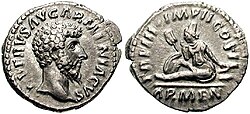
In times of crisis, states issued emergency money. During the 1529 Ottoman siege of Vienna, coins were minted on square flans—known as klippe—because square shapes were faster and easier to produce than round ones under siege conditions. Other early special issues were created to fund military campaigns or pay war indemnities.
Monarchies and Nation-Building
During the age of absolutism, "largesse" coins were minted to proclaim the coronation of a new monarch. In Europe, these were often scattered from royal chariots to gain public applause; in India, similar coins were known as "nisar" coinage. Sweden continued this tradition with "kastpenning" coins as late as 1873.
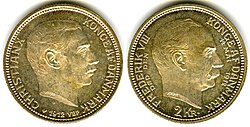
As European nation-states formed, commemorative coins became tools for establishing national identity. For example, Denmark issued a one-sixth rigsdaler through public contributions to fund a new fleet during the Napoleonic wars. Similarly, the 1871 Prussian thaler celebrated the victory in the Franco-Prussian war, paving the way for the crowning of the German Emperor.
The Shift from Precious to Base Metals
Until World War II, commemorative coins were almost exclusively made of precious metals, as base metals were seen as unworthy of honoring a nation. However, the economic crises of the 1930s and the impact of World War I led to the abolition of the convertibility of banknotes to gold and silver.
By 1970, the use of precious metals in circulating currency was largely abandoned. This created a divide: commemoratives became either high-value collector's items or base-metal circulating coins. For instance, the Soviet Union issued a copper-nickel-zinc rouble in 1965 to mark the 20th anniversary of the victory in World War II, minting 60 million pieces for regular use.
![Soviet rouble of 1965, commemorating the 20th anniversary of the victory in World War II. 60 million pieces were minted[3] and circulated as regular currency.](/images/12/39/1239e64ba6f4694c99607e019a572186be053b495bbf3b59f390ee62c4d7f9b4.jpg)
Modern Regional Practices
Different countries employ different strategies for commemorative issues. The United Kingdom transitioned from the five-shilling crown to the £5 coin for non-circulating commemoratives, while using the 50 pence and £2 coins for circulating versions. Denmark often issues a dual set: an aluminium bronze 20 kroner coin for circulation and a silver 200 krone coin for collectors.
Key Facts
- Purpose: Commemorative coins honor specific events, people, or anniversaries through unique designs.
- NCLT: Non-circulating legal tender is designed for collectors and often minted in gold or silver.
- Klippe: Square-shaped coins produced during emergencies, such as the 1529 siege of Vienna.
- Material Shift: Precious metals were standard for commemoratives until the mid-20th century, after which base metals became common for circulating issues.
- Seigniorage: Many countries issue NCLT coins as a profit-making exercise, targeting specific collector markets.
| Type | Primary Purpose | Common Materials | Intended Use |
|---|---|---|---|
| Circulating Commemoratives | Public awareness/Tribute | Base metals (Copper-Nickel, etc.) | Daily commerce |
| Non-Circulating Legal Tender (NCLT) | Investment/Collecting | Precious metals (Gold, Silver) | Numismatic collection |
| Regular Issue | Standard currency | Standard mint alloys | Daily commerce |
Frequently Asked Questions
What is the difference between a circulating and a non-circulating commemorative coin?
Circulating commemoratives are intended to be used as money in everyday transactions, while non-circulating legal tender (NCLT) is designed specifically for collectors and investors, often featuring precious metals and higher minting quality.
Why were some ancient coins minted in square shapes?
Square coins, known as klippe, were often produced during emergencies, such as the siege of Vienna in 1529. Square flans were quicker and easier to manufacture than round ones under unfavorable conditions.
What is seigniorage in the context of commemorative coins?
Seigniorage refers to the profit a government makes by issuing currency. Many countries issue large quantities of NCLT coins to generate revenue by selling them to collectors at a price higher than the cost of production.
Are all commemorative coins made of gold or silver?
No. While they were traditionally made of precious metals, many modern circulating commemoratives are made of base metals like copper-nickel or aluminium bronze to make them suitable for daily use.
What are "largesse" coins?
Largesse coins were specially prepared issues used to proclaim the coronation of a new monarch. In Europe, these were famously scattered from royal chariots to attract public attention and applause.