U.S. Mint History: From the Fugio Cent to Modern Coinage
The history of American currency is a journey of economic evolution, spanning over two centuries of technological advancement and shifting national priorities. From the earliest resolutions of the Congress of the Confederation to the high-tech facilities of today, the United States Mint has served as the cornerstone of the nation's monetary system.
The first authorization for a national mint occurred on February 21, 1782. This paved the way for the production of the Fugio cent in 1787, the first general-circulation coin of the United States, which was based on the Continental dollar. Since its formal establishment on April 2, 1792, the Mint has transformed from a small operation under the State Department into a vital agency within the Department of the Treasury.
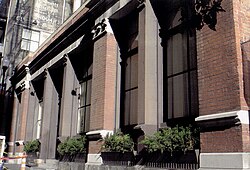
Key Facts
- Established: April 2, 1792.
- Parent Agency: Department of the Treasury.
- First Director: Renowned scientist David Rittenhouse.
- Primary Function: Producing domestic, bullion, and foreign coins, as well as commemorative medals.
- Gold Storage: Significant portions of the U.S. gold reserves are held at Fort Knox, West Point, and Denver.
The Evolution of Minting Facilities
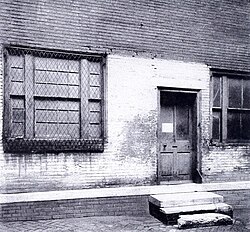
The U.S. Mint has operated various facilities to meet the needs of a growing nation. While the original Philadelphia Mint, known as "Ye Olde Mint," began operations in 1793, the discovery of precious metals in different regions necessitated the creation of branch mints.
Historical Branch Mints
Early branch mints were often established to convert local gold and silver deposits into official coinage. Notable historical branches include:
- Charlotte (C) and Dahlonega (D): Opened in 1838 to process local gold; both closed permanently due to the Civil War.
- New Orleans (O): Operated in two stints (1838–1861 and 1879–1909), producing various gold and silver denominations.
- Carson City (CC): Established in 1870 to utilize local silver veins.
- Manila (M): The only U.S. mint located outside the continental United States, operating in the Philippines between 1920 and 1941.
Modern Minting Operations
Today, the Mint operates several major facilities, each with specialized roles in the production of circulation and collector coins.
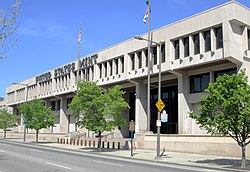
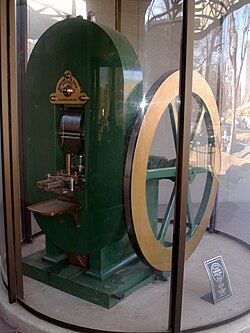
Philadelphia MintAs the largest facility, the Philadelphia Mint is the center for master die production, engraving, and design. While it historically produced almost all official proof coinage, it now focuses on various aspects of production and design. Most coins minted here bear no mint mark, though a special 2017 issue of Lincoln cents featured a "P" mark to celebrate the Mint's 225th anniversary.
The Denver Mint began as an assay office in 1863 and opened its branch in 1906. It primarily strikes circulation coinage and uses the "D" mint mark. It also produces working dies for other minting facilities.
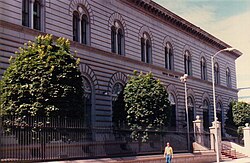
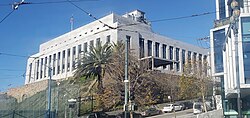
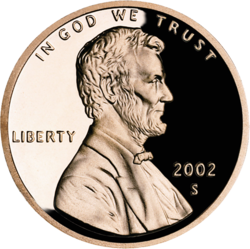
San Francisco MintOpened in 1854 to serve the California Gold Rush, the San Francisco Mint uses the "S" mint mark. Since 1975, it has been used almost exclusively for proof coinage—high-quality coins intended for collectors rather than general circulation.
The newest official branch, West Point, gained its status in 1988. It is a critical site for the production of American Eagle coins (gold, silver, platinum, and palladium) and has recently produced limited quantities of circulating quarters.
Understanding Mint Marks
A mint mark is a small letter stamped on a coin to identify the facility where it was produced. For much of history, these marks were placed on the reverse (back) of the coin. However, in 1968, the location was moved to the obverse (front) for several denominations, including the nickel, dime, and quarter.
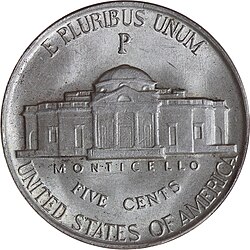
A unique historical exception occurred during World War II. Due to a nickel shortage, the composition of the five-cent coin was changed to include silver. To distinguish these, Philadelphia and San Francisco nickels featured a "P" or "S" mark located above the dome of Monticello on the reverse.
Summary of Major U.S. Mints
| Mint Name | Location | Mint Mark | Primary Use |
|---|---|---|---|
| Philadelphia | Philadelphia, PA | P (rarely) / None | Master dies, design, and production |
| Denver | Denver, CO | D | Circulation coinage |
| San Francisco | San Francisco, CA | S | Proof coinage |
| West Point | West Point, NY | W | Bullion and commemorative coins |
Frequently Asked Questions
Why do some coins have no mint mark?
Historically, coins minted in Philadelphia often bore no mint mark. Additionally, between 1965 and 1967, the Mint temporarily dispensed with mint marks on all coins to discourage hoarding by collectors during the transition from silver to base metal coinage.
What is the difference between circulation and proof coins?
Circulation coins are produced in large quantities for everyday use in commerce. Proof coins are specially struck with higher quality finishes and are intended for collectors.
Where is the U.S. gold bullion stored?
The U.S. Treasury owns over 8,000 tonnes of gold. This is stored in several locations: the U.S. Bullion Depository at Fort Knox, the West Point bullion storage facility, and the Denver Mint facility.
What is a mint mark?
A mint mark is an identifying feature on a coin that indicates the specific facility where the coin was manufactured.
Did the U.S. ever have an overseas mint?
Yes, the Manila Mint was established in the Philippines (then a U.S. territory) and operated from 1920 to 1941, making it the only U.S. mint located outside the continental United States.