Comisión Nacional de Energía Atómica: Driving Argentina's Nuclear Innovation
The Comisión Nacional de Energía Atómica (CNEA), or the National Atomic Energy Commission, serves as the cornerstone of Argentina's nuclear research and development. Established by the Argentine government to harness nuclear energy for peaceful purposes, the agency manages a vast network of research centers, educational institutes, and production facilities that position Argentina as a leader in nuclear technology within Latin America.
Key Facts
- Founded: May 31, 1950.
- Primary Mission: Research, development, and control of nuclear energy for peaceful applications.
- Parent Agency: Ministry of Economy.
- Major Facilities: Atomic Centres in Bariloche, Constituyentes, and Ezeiza.
- Key Innovation: Development of the CAREM-25, the world's first domestically designed small modular reactor (SMR).
- Medical Impact: Production of all nuclear isotopes for medicine used within Argentina via the RA-3 reactor.
Historical Evolution
CNEA was officially established by President Juan Perón's Decree No 10.936 to oversee the funding of the Huemul Project in Bariloche. While the early years were marked by the closure of the Huemul Project following review panels in 1952, the agency pivoted toward sustainable physics and technology research. Admiral Oscar Armando Quihillalt, the first director, played a significant role in the International Atomic Energy Agency.
By 1956, Argentina nationalized its uranium resources, allowing CNEA to control prospecting and production. This era saw the creation of yellowcake (uranium oxide) production capabilities. Between 1960 and 1963, Argentina supplied approximately 90 tons of unsafeguarded yellowcake to Israel for its Dimona reactor.
The agency's infrastructure expanded rapidly in the 1960s. In 1957, the RA-1 Enrico Fermi became the first research reactor built in Latin America. This momentum led to the completion of the 335-MWe Atucha I in 1974 and the 600-MWe Embalse (a Canadian CANDU design) in 1984.
Modern Infrastructure and Specialization
In 1995, CNEA's functions were streamlined. Regulatory oversight was moved to the Nuclear Regulatory Authority (ARN), and the operation of power reactors was handed to Nucleoeléctrica Argentina (NASA). This allowed CNEA to focus exclusively on research and development.
The Three Primary Atomic Centres
CNEA concentrates its operations across three specialized hubs:
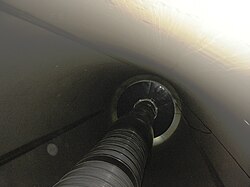
- Centro Atómico Constituyentes: Located in San Martín, this site houses the RA-1 reactor and the Tandar accelerator—a tandem Van de Graaff facility used for nuclear physics and medical research. It is home to the Instituto Sábato, which specializes in Materials Science.
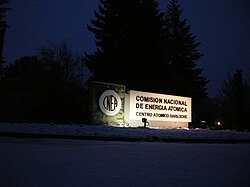
- Centro Atómico Bariloche: This center is renowned for the Instituto Balseiro, which trains physicists and nuclear engineers. Its RA-6 reactor is used for both student training and applied research.
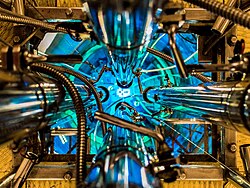
- Centro Atómico Ezeiza: This site operates the RA-3 research/production reactor, which produces nuclear isotopes for medical use in Argentina and neighboring countries. It also hosts the Instituto Beninson.
Technological Advancements and Future Projects
Argentina continues to evolve its nuclear capabilities through domestic innovation. In 2014, the 692-MWe Atucha II began operations. Currently, the country operates three pressurized heavy-water reactors (PHWR), which utilize heavy water as a moderator and coolant with unenriched natural uranium as fuel.
A landmark project is the CAREM-25, a 25 MWe small modular reactor (SMR). Unlike previous plants, the CAREM-25 is entirely designed and developed domestically. It utilizes a pressurized water reactor (PWR) design, using light water as a coolant and moderator with low-enrichment uranium fuel.
To support these efforts, CNEA reopened the enriched uranium plant at Pilcaniyeu in 2010, with a new facility inaugurated in 2015 that employs both gaseous diffusion and laser techniques.
Summary of CNEA Operations
| Facility | Location | Primary Focus/Asset | Academic Unit |
|---|---|---|---|
| Centro Atómico Constituyentes | San Martín, Buenos Aires | RA-1 Reactor, Tandar Accelerator | Instituto Sábato |
| Centro Atómico Bariloche | Bariloche, Río Negro | RA-6 Reactor, Basic Science | Instituto Balseiro |
| Centro Atómico Ezeiza | Ezeiza, Buenos Aires | RA-3 Reactor (Medical Isotopes) | Instituto Beninson |
| Pilcaniyeu Complex | Río Negro | Uranium Enrichment | N/A |
Industrial Spinoffs
The expertise fostered by CNEA led to the creation of INVAP S.E. in 1976, founded by graduates of the Instituto Balseiro. INVAP has become a global exporter of research reactors, providing technology to Peru, Algeria, Egypt, and Australia. The OPAL reactor in Australia, which became operational in 2006, is a prime example of this exported expertise.
Frequently Asked Questions
What is the main purpose of CNEA?
CNEA is the Argentine government agency responsible for the research, development, and control of nuclear energy for peaceful purposes.
What is the CAREM-25?
The CAREM-25 is the world's first small modular reactor (SMR) designed and developed entirely within Argentina. It is a 25 MWe pressurized water reactor.
How does CNEA contribute to medicine?
Through the RA-3 reactor at the Centro Atómico Ezeiza, CNEA produces all the nuclear isotopes used for medical purposes in Argentina and supplies them to neighboring countries.
What is the difference between PHWR and PWR in Argentina's fleet?
Argentina's traditional power reactors (like Atucha and Embalse) are Pressurized Heavy-Water Reactors (PHWR) using natural uranium. The new CAREM-25 is a Pressurized Water Reactor (PWR) using low-enrichment uranium and light water.
What is the role of the Instituto Balseiro?
The Instituto Balseiro is the academic unit of the Centro Atómico Bariloche, specializing in the training of physicists and nuclear engineers.