Colombia–Peru War: The Conflict Over the Leticia District
The Colombia–Peru War, frequently referred to as the Leticia War, was a brief but intense armed conflict fought between September 1, 1932, and May 24, 1933. The struggle centered on a territorial dispute within the dense Amazon rainforest, specifically regarding the Leticia district. While the conflict involved naval skirmishes and aerial combat, it was ultimately resolved through international diplomacy, reaffirming existing treaties and restoring the territorial status quo.
Key Facts
- Duration: September 1, 1932 – May 24, 1933 (approximately 8 months).
- Primary Cause: Dissatisfaction with the Salomón–Lozano Treaty and the transfer of the Leticia district to Colombia.
- Outcome: Colombian victory; the Salomón–Lozano Treaty was upheld.
- Resolution: Mediated by the League of Nations and finalized via the Rio de Janeiro Protocol.
- Casualties: Both sides suffered roughly 60 combat deaths, with hundreds more lost to jungle diseases.
Roots of the Conflict
The tension originated from the Boundary Treaty of March 24, 1922, known as the Salomón–Lozano Treaty. This agreement transferred the Leticia district to Colombia, providing the nation with critical access to the Amazon River. However, the region was predominantly inhabited by Peruvians, leading to deep-seated grievances and a desire within Peru to modify the treaty's terms.
Beyond territorial claims, economic pressures—specifically heavy tariffs on sugar—further fueled Peruvian resentment. This environment led to the formation of the National Patriotic Junta (also known as the Patriotic Junta of Loreto) on August 27, 1932. This group of civilians and military officers sought the "recovery of the port" through a manifesto called the Leticia Plan.
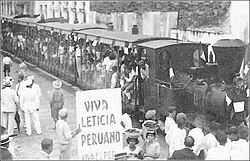
The Leticia Incident and Civilian Takeover
The conflict began not with a formal declaration of war, but with a civilian-led operation. On September 1, 1932, a group known as the Civilian Recovery Army seized Leticia. The sudden takeover forced Colombian authorities and police to flee into neighboring Brazil.
Following the seizure, Peruvian President Luis Miguel Sánchez Cerro dispatched two army regiments to Leticia and Tarapacá. Initially, the Colombian government largely ignored these movements, but the situation escalated when Peruvian forces began blocking trade ships on the Putumayo River.
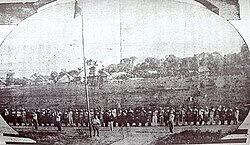
Colombian Mobilization and Patriotism
By mid-September, the Colombian public reacted with an explosion of patriotism. Thousands of students marched in Bogotá, and the Senate approved 10 million dollars to fund a military response. To bolster their forces, Colombia utilized the expertise of German aviators from SCADTA (the predecessor to Avianca), who converted commercial aircraft into a temporary air force.
General Alfredo Vásquez Cobo led the Colombian response, arriving at the mouth of the Amazon in December 1932 with a fleet consisting of turn-of-the-century gunboats and newly acquired British destroyers.
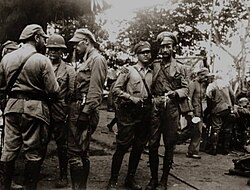
Military Engagements
The war was characterized by small-scale battles and skirmishes along the river systems of the Amazon basin.
The Battle of Tarapacá and Early Clashes
Colombia launched its first major attack on Tarapacá, choosing it as a softer target than the heavily defended Leticia. While the Peruvian Air Force attempted to bomb the Colombian fleet on February 14, 1933, most bombs missed their targets.
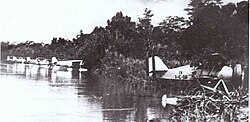
Riverine Warfare and Jungle Combat
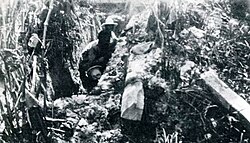
The conflict saw several significant engagements, including the Battle of Puerto Hilario on March 13, where Peruvian forces successfully repelled a Colombian landing. Other clashes occurred at Buenos Aires, Gueppi, and Calderón. In the Battle of Yabuyanos on April 29, Colombian forces successfully pushed Peruvian infantry into retreat.
The Final Push and the Algodón River
In May 1933, the Colombian fleet targeted the Peruvian seaplane base at the Algodón River. After an initial failed attempt, a second daytime attack on May 8 saw Colombian fighter-bombers engage Peruvian aircraft. The Colombian flotilla eventually captured the base and its aircraft workshop.
Resolution and Aftermath
The military stalemate was broken by political upheaval in Peru. On April 30, 1933, President Sánchez Cerro was assassinated. His successor, Óscar Benavides, sought a diplomatic end to the war. He met with Colombian Liberal Party leader Alfonso López Pumarejo to agree that the Leticia district would be turned over to a commission of the League of Nations.
The conflict officially concluded with the signing of the Rio de Janeiro Protocol in 1934. Peru expressed regret for the events and reaffirmed the validity of the Salomón–Lozano Treaty, returning the territory to Colombia (status quo ante bellum).
| Feature | Peru | Colombia |
|---|---|---|
| Troop Strength (1932) | 17,500+ | 6,000+ |
| Naval Assets | 2 gunboats, 3 transports, 4 launches | 7 gunboats, 3 transports |
| Air Power | 9 seaplanes | 14 aircraft |
| Combat Casualties | ~60 | ~60 |
| Disease Casualties | 140–200 | 150–250 |
Frequently Asked Questions
What was the primary cause of the Colombia–Peru War?
The war was caused by a territorial dispute over the Leticia district in the Amazon. Peruvians were dissatisfied with the Salomón–Lozano Treaty of 1922, which had granted Colombia access to the Amazon River by transferring the district to their control.
How was the conflict resolved?
The conflict was resolved through the mediation of the League of Nations and the subsequent signing of the Rio de Janeiro Protocol in 1934, which upheld the original Salomón–Lozano Treaty.
What role did aviation play in the war?
Aviation was critical for both sides due to the difficult jungle terrain. Colombia notably used commercial pilots from SCADTA to form a temporary air force, while Peru utilized seaplanes and fighters like the Vought Corsair and Curtiss Hawk.
Why were disease casualties higher than combat casualties?
The war took place in the dense Amazon rainforest, an environment where soldiers were exposed to tropical jungle diseases, which proved more lethal than the actual military engagements.
Who was the leader of Peru during the start of the conflict?
The conflict began under the presidency of Luis Miguel Sánchez Cerro, who supported the recovery of Leticia. His assassination in April 1933 paved the way for a diplomatic resolution under his successor, Óscar Benavides.