Cold Seeps: Deep-Sea Oases of Chemosynthetic Life
Deep beneath the ocean surface, far beyond the reach of sunlight, exist extraordinary environments known as cold seeps. These are areas of the seafloor where fluids rich in hydrocarbons—specifically methane and hydrogen sulfide—leak from the Earth's crust. Unlike hydrothermal vents, which spew superheated water, cold seeps are characterized by temperatures that are typically only slightly higher than the surrounding seawater. This relative coolness gives them their name, though they are just as vital to deep-sea biodiversity as their hotter counterparts.
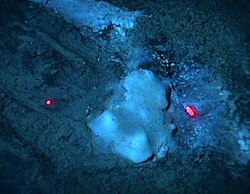
These seeps create unique biomes that support endemic species through chemosynthesis, a process where organisms derive energy from chemical reactions rather than sunlight. Over time, the interaction between methane and seawater, often mediated by bacteria, leads to the formation of carbonate rock reefs and minerals like ikaite (a hydrous calcium carbonate), fundamentally altering the topography of the ocean floor.
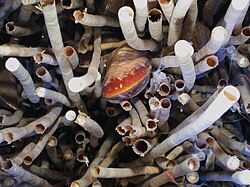
Key Facts
- Composition: Fluids typically consist of methane, hydrogen sulfide, and other hydrocarbons.
- Temperature: Slightly warmer than surrounding seawater, but significantly cooler than hydrothermal vents (which exceed 60°C).
- Energy Source: Life is sustained by chemosynthesis rather than photosynthesis.
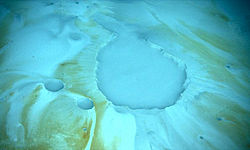
- Geological Features: Can manifest as brine pools, pockmarks, or mud volcanoes.
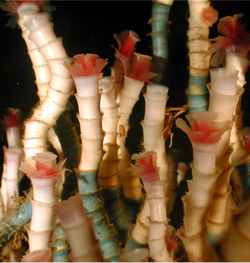
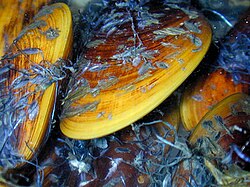
- Key Species: Dominant life forms include specialized tube worms, mussels, and bacterial mats.
Types of Cold Seeps
Cold seeps vary based on the materials being released and the geological structures that facilitate the seepage. The primary types include:
- Gas Seeps: These primarily release methane, including gas hydrate seeps.
- Oil and Gas Seeps: Areas where liquid petroleum and natural gas escape the seafloor.
- Brine Seeps: Formed within brine pools, which are highly saline bodies of water that collect in depressions on the seafloor.
- Pockmarks and Mud Volcanoes: Distinct geological craters or mounds created by the forceful escape of fluids and sediments.
Chemosynthetic Communities and Biology
The biological communities at cold seeps are built upon a foundation of sulfide-oxidizing bacteria. These microbes often form thick mats that serve as the primary producers for the rest of the ecosystem.
Dominant Species
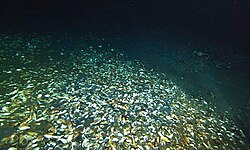
Two of the most prominent organisms found in these environments are specialized bivalves and polychaete worms. In the Gulf of Mexico, for example, the mussel species Bathymodiolus childressi and the tube worm Lamellibrachia luymesi are dominant. These animals often maintain symbiotic relationships with bacteria to process the chemical energy from the seeps.
Bacterial Mats
Bacterial mats, such as those consisting of Beggiatoa spp., are frequently observed at seep sites. These mats act as a biological filter, processing the chemicals emerging from the sediment before they disperse into the wider ocean.
Global Distribution and Discoveries
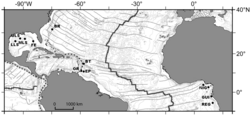
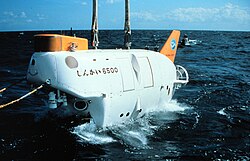
Cold seeps are found worldwide, typically at depths of 500 meters (1,600 feet) or deeper. Their discovery has been made possible by advanced submersible technology.
The Gulf of Mexico
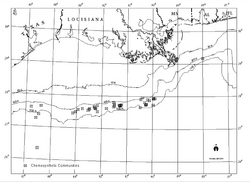
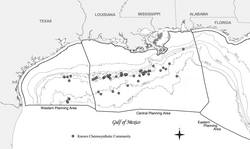
The Gulf of Mexico is one of the most studied regions for cold seeps. A notable site is Bush Hill, a dense community of tube worms and mussels located over a salt diapir (a geological intrusion of salt) in Green Canyon Block 185. This site rises about 40 meters above the seafloor in water depths of approximately 580 meters.
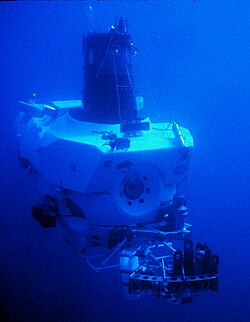
The discovery of these communities was accelerated by the crewed submersible DSV Alvin in 1983. By 2006, researchers had identified more than 50 distinct communities in the northern Gulf of Mexico.
Other Global Locations
- Atlantic Ocean: Communities exist on mud volcanoes and diapirs in the Barbados accretionary prism and the Blake Ridge off North Carolina, as well as pockmark clusters in the Gulf of Guinea and the Gulf of Cádiz.
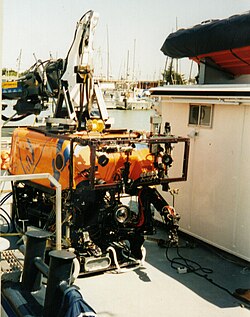
- Pacific Ocean: Significant seeps are found in Monterey Bay (studied via the ROV Ventana), the Japan Trench, the Nankai Trough, and along the margins of New Zealand and Chile.
- Other Regions: Seeps have also been documented in the Mediterranean Sea, the Indian Ocean, and the Antarctic.
Geological Record and Detection
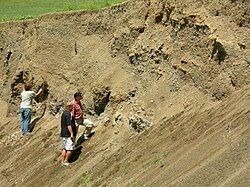
Cold seeps are not only modern phenomena; they leave a permanent mark in the geological record. Fossilized deposits, such as those found in the Pierre Shale of southwest South Dakota from the Late Cretaceous period, provide evidence of ancient chemosynthetic ecosystems.
Summary of Cold Seep Characteristics
| Feature | Cold Seeps | Hydrothermal Vents |
|---|---|---|
| Temperature | Slightly above ambient seawater | Very high (60°C to 400°C+) |
| Primary Chemicals | Methane, Hydrogen Sulfide | Hydrogen Sulfide, Metals |
| Common Structures | Brine pools, Pockmarks, Mud volcanoes | Black smokers, Chimneys |
| Energy Basis | Chemosynthesis | Chemosynthesis |
Frequently Asked Questions
Are cold seeps actually cold?
The term "cold" is relative. While the fluids are not hot like those at hydrothermal vents, they are often slightly warmer than the surrounding deep-sea water.
How do animals survive without sunlight at cold seeps?
They rely on chemosynthesis. Bacteria convert the chemical energy from methane and hydrogen sulfide into organic matter, which then supports larger organisms like tube worms and mussels.
What is a brine pool?
A brine pool is an area of extremely high salinity on the ocean floor. These pools are often associated with cold seeps where salt has seeped through the seafloor and encrusted the substrate.
Where are the most dense cold seep communities found?
Some of the densest aggregations are found in the Gulf of Mexico, particularly at sites like Bush Hill, and in various trenches and margins across the Pacific and Atlantic Oceans.
Can cold seeps be found in the fossil record?
Yes. Carbonate rock formations created by methane reactions preserve evidence of these communities, such as the Late Cretaceous deposits found in South Dakota.