Club Atlético Lanús: A Legacy of Resilience and Glory
Known affectionately as Granate (Garnet), Club Atlético Lanús stands as a pillar of Argentine football. From its humble beginnings in the suburbs of Greater Buenos Aires to conquering continental tournaments, the club's journey is a testament to perseverance. Today, playing out of the Estadio Lanús, the club continues to compete at the highest level of the Primera División.
Key Facts
- Founded: January 3, 1915.
- Home Ground: Estadio Lanús (Capacity: 47,027).
- Major Honors: Two Primera División titles (2007, 2016) and two Copa Sudamericana titles.
- All-Time Top Scorer: José Sand with 173 goals.
- Most Appearances: Maximiliano Velázquez with 423 matches.
Origins and Foundation
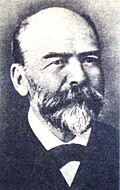
The roots of the club are tied to Anacarsis Lanús, a French immigrant who arrived in 1854 and established the city of Lanús. Before the current club existed, two other entities bore the name: Lanús Athletic Club and Lanús United. The latter participated in the Copa de Competencia in 1913 and 1914 but eventually faced severe financial distress.
On January 3, 1915, a merger between the struggling Lanús United and Club El Progreso gave birth to a new institution. Under the first presidency of Miguel Usaray, the name Club Atlético Lanús was officially adopted on January 27, 1915.
The Early Years and the 1920s
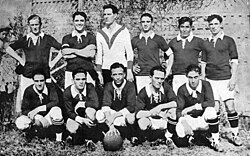
Lanús began its journey in the División Intermedia, the second tier of the league system. After defeating Argentino de Quilmes in 1919, the club earned promotion to the Primera División. Their debut in the top flight occurred on August 8, 1920, in a 1–0 loss to Racing Club.
While the early 1920s were challenging—including a last-place finish in 1923—the club found its footing by 1927, finishing 3rd in the season behind only San Lorenzo and Boca Juniors.
Mid-Century Struggles and "The Globetrotters"
The 1930s and 40s were marked by both individual brilliance and institutional turmoil. Forward Luis Arrieta became a club legend, finishing as the top scorer in 1943 and eventually netting 120 goals. However, the club suffered a controversial relegation in 1949 following a disputed series against Huracán, where the Argentine Association's decisions led to Lanús being sent down to Primera B.
The club bounced back immediately, winning the 1950 Primera B championship to secure promotion.
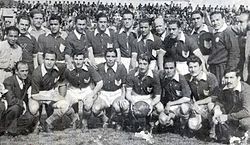
By 1951, Lanús became a sensation, earning the nickname The Globetrotters for their thrilling style of play. They dominated early in the season, led by José Florio, who scored 21 goals before being sold to the Italian club Torino for a record $1,500,000.
The Path to Modern Success
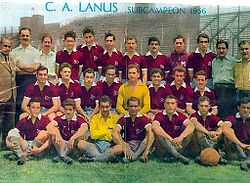
The 1960s and 70s saw a cycle of relegations and promotions. Under the management of Héctor Guidi, the club won the Primera B title in 1964, though they struggled to maintain stability in the top flight during the 1970s.
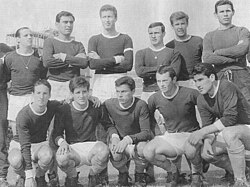
The 1980s brought further hardship, including a heartbreaking failure to promote in 1984 due to a refereeing error that ended a match five minutes early. However, the appointment of Miguel Ángel Russo as manager in 1986 sparked a revival, returning the club to the First Division after 13 years.
National and International Glory
The 21st century marked the golden era of the Granate. In 2007, under coach Ramón Cabrero, Lanús captured its first Apertura (opening tournament) title, with José Sand leading the scoring. This was followed by a second league title in 2016, where they defeated San Lorenzo 4–0 in the final.
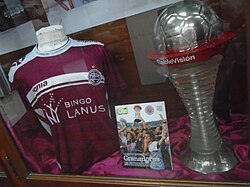
Internationally, the club reached new heights in the 2020s. Lanús secured its second Copa Sudamericana title in 2025 by defeating Atlético Mineiro on penalties and followed this achievement by winning the Recopa Sudamericana in 2026 after a victory over Flamengo.
Club Overview and Statistics
| Category | Detail |
|---|---|
| League | Primera División |
| Highest Position | 1st (2007, 2016) |
| Total Primera División Seasons | 67 |
| Biggest Win (Primera) | 9–0 vs Quilmes (1935) |
| Biggest International Win | 6–0 vs Olimpia (2012) |
Frequently Asked Questions
Who is the all-time top scorer for Club Atlético Lanús?
José Sand is the club's all-time leading goalscorer, having netted 173 goals across multiple stints with the team.
What does the nickname "Granate" mean?
"Granate" translates to Garnet, referring to the distinct deep red color of the club's home jerseys.
When did Lanús win its first national league title?
The club won its first Primera División title during the 2007 Apertura tournament under the guidance of manager Ramón Cabrero.
Which international trophies has the club won recently?
Lanús won its second Copa Sudamericana in 2025 and its first Recopa Sudamericana in 2026.
Who is the player with the most appearances in club history?
Maximiliano Velázquez holds the record for the most matches played, with a total of 423 appearances.