Clement XIV: The Pontificate of Diplomacy and the Suppression of the Jesuits
The papacy of Clement XIV was defined by a delicate balancing act between spiritual authority and the growing political power of European monarchs. Ascending to the throne during a period of intense friction between the Catholic crowns and the Holy See, Clement XIV sought to heal diplomatic breaches and ensure the stability of the Church through strategic concessions and reconciliation.
His approach was calculated from the start, aiming to smooth over conflicts that had escalated during the previous pontificate. By yielding papal claims to Parma, he successfully secured the restitution of Benevento and Avignon, placing the relationship between spiritual and temporal authorities on a more harmonious footing.
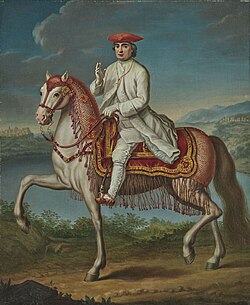
Key Facts
- Jesuit Suppression: Formally suppressed the Society of Jesus on July 21, 1773, via the brief Dominus ac Redemptor.
- Diplomatic Success: Recovered Avignon and Benevento by conceding claims to Parma.
- Humanitarian Stance: Defended Jewish communities against blood accusations during his time as a councilor of the Holy Office.
- Cultural Patronage: Knighted the young Wolfgang Amadeus Mozart into the Order of the Golden Spur.
- Succession: Elevated sixteen cardinals, including Giovanni Angelo Braschi (the future Pope Pius VI).
Relations with the Jewish Community
Clement XIV's election was met with optimism by the Jewish community. This trust stemmed from his previous role as a councilor of the Holy Office, where on March 21, 1758, he issued a memorandum declaring them innocent of the slanderous blood accusation (the false claim that Jews used the blood of Christians for rituals).
While investigating charges against the Jews of Yanopol, Poland, for Pope Benedict XIV, Ganganelli (Clement XIV) not only refuted the claims but demonstrated that most similar accusations since the 13th century were groundless. Although he remained more reserved regarding the beatifications of Simon of Trent and Andreas of Rinn, he suggested that the long delays in their beatification indicated significant doubts about the veracity of the accusations.
The Suppression of the Society of Jesus
One of the most contentious issues of his reign was the status of the Jesuits. By the time of his papacy, the Society of Jesus had already been expelled from several nations, including Brazil (1754), Portugal (1759), France (1764), Spain and its colonies (1767), and Parma (1768).
The Bourbon monarchs exerted immense pressure on the new pope for the total abolition of the order. Initially, Clement XIV attempted to appease these powers through superficial hostility toward the Jesuits. He refused meetings with the superior general, Lorenzo Ricci, removed the order from the administration of the Roman and Irish Colleges, and prohibited the recruitment of new novices.
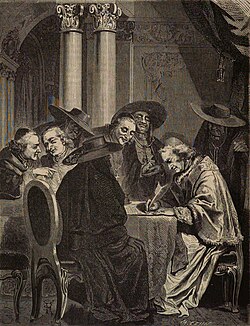
As Catholic nations threatened to secede from the Church, Clement XIV ultimately yielded to avoid a European schism. On July 21, 1773, he signed the brief Dominus ac Redemptor, suppressing the Society of Jesus. This move was driven by political necessity rather than theological dispute. Notably, the order was ignored in non-Catholic nations like Russia and Prussia, where papal authority was not recognized.
Cultural Encounters and Wolfgang Amadeus Mozart
The pontificate of Clement XIV is also remembered through the lens of art and music. In the spring of 1770, Wolfgang Amadeus Mozart and his father, Leopold, visited Rome. While Leopold viewed the upper clergy as haughty, the pope received the Mozarts personally.
During this visit, the 14-year-old Wolfgang performed a legendary feat of musical memory. He transcribed Gregorio Allegri's Miserere mei, Deus—a piece performed in the papal chapel that was forbidden to be copied under threat of excommunication—after hearing it only once. In recognition of his genius, Clement XIV appointed Mozart a knight of the Order of the Golden Spur. The pope later bestowed the same honor upon German composer Georg Joseph Vogler in 1774.
Administrative Activities and Beatifications
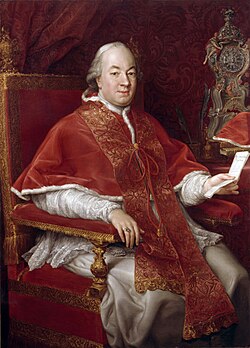
Clement XIV's administrative legacy includes the elevation of sixteen cardinals across twelve consistories. Among these was Giovanni Angelo Braschi, who would eventually succeed him as Pope Pius VI.
While the pope conducted no formal canonizations, he beatified several individuals to recognize their holiness.
| Date | Individual(s) Beatified |
|---|---|
| June 4, 1769 | Francis Caracciolo |
| September 16, 1769 | Giuliana Puricelli, Bernard of Baden, and Catherine of Pallanza |
| 1771 | Tommaso Bellacci |
| December 14, 1771 | Martyrs of Otranto |
| June 8, 1772 | Paul Burali d'Arezzo |
| August 29, 1772 | John dal Bastone |
| 1773 | Pope Benedict XI |
| 1774 | Beatrix of Este the Younger |
Frequently Asked Questions
Why did Clement XIV suppress the Jesuits?
The suppression was a political decision made to prevent a widespread secession of Catholic countries, particularly the Bourbon monarchies, from the Church. It was not the result of a theological controversy.
How did the Jesuits react to the suppression in non-Catholic countries?
In nations such as Prussia and Russia, where the authority of the pope was not recognized, the decree of suppression was simply ignored.
What was Clement XIV's relationship with the Jewish community?
He was viewed favorably because he had previously refuted blood accusations against Jewish communities, arguing that such claims were groundless.
What was the significance of Mozart's encounter with the Pope?
Mozart demonstrated his extraordinary musical memory by transcribing a secret composition, the Miserere mei, Deus, after one hearing, leading the Pope to name him a knight of the Order of the Golden Spur.
Who succeeded Clement XIV as Pope?
He was succeeded by Pope Pius VI, who had been one of the sixteen cardinals elevated to the cardinalate by Clement XIV.