Clan Fraser
The Clan Fraser is a distinguished Scottish clan hailing from the Lowlands. While often associated with their Highland cousins, the Clan Fraser of Lovat, the Lowland Frasers are a separate entity with their own distinct history and leadership. Both clans share a common ancestry, yet each maintains a separate chief officially recognized by the Standing Council of Scottish Chiefs.
Guided by the motto "All my hope is in God," the clan is identified by its plant badge, the yew, and a crest featuring a flourish of strawberries. Today, the clan is led by Chief Katherine Fraser, The Rt. Hon. The Lady Saltoun.
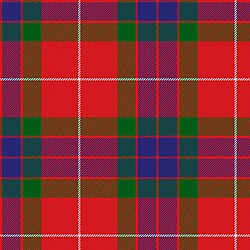
Key Facts
- Region: Scottish Lowlands.
- Chief: Katherine Fraser, The Rt. Hon. The Lady Saltoun.
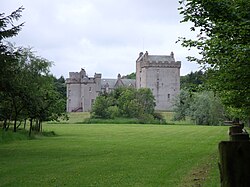
- Seat: Philorth Castle (also known as Cairnbulg Castle).
- Motto: "All my hope is in God."
- Plant Badge: Yew.
- Crest: A flourish of strawberries leaved and fructed Proper on a mount.
Origins and Etymology
The precise origins of the name "Fraser" remain a subject of historical debate. It is widely believed that the family migrated from the County of Anjou in France during the 11th century, with potential points of origin being Fréteval or La Frezelière.
Linguistic theories vary regarding the name's root. Some suggest it is a variation of the French patronymic Fresel, meaning "ribbon" or "braid" in Old French, likely a nickname for merchants. Others point to the French word fraise (strawberry), which explains the strawberry imagery in the clan's heraldry. However, the Oxford Dictionary of Family Names suggests the name might actually be a Gaelic origin that was altered by Anglo-French scribes.
Early Records in Scotland
The first Frasers appear in Scottish records during the 12th century:
- Simon Fraser (fl. 1160-1202): Held lands at Keith in East Lothian.
- Gilbert Fraser (fl. 1164-1182): A member of King William The Lion's court.
- Bernard Fraser (fl. 1186-1188): Held lands at Drem.
- Udard Fraser (fl. 1179): Married the sister of the founder of Oliver Castle.
The Wars of Scottish Independence
The clan played a significant role during the struggle for Scottish independence. A Simon Fraser was captured and executed by Edward I of England in 1306 while fighting for Robert the Bruce. During this era, Alexander Fraser of Cowie served as Bruce's chamberlain and married the King's sister, Mary.
Another Sir Simon Fraser from this period became the ancestor of the Clan Fraser of Lovat. Later, in 1375, Sir Alexander Fraser of Cowie and Durris acquired the lands of Philorth and the castle now known as Cairnbulg Castle through his marriage to Joanna, daughter of the Earl of Ross.
The Frasers of Philorth and Fraserburgh
In 1592, Sir Alexander Fraser of Philorth obtained charters from King James VI to establish the fishing village of Faithlie, which evolved into the modern town of Fraserburgh. Although Sir Alexander attempted to found a university there, the project failed due to contemporary religious unrest.
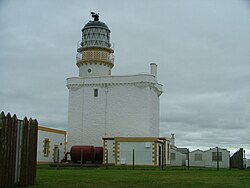
The eighth Laird of Philorth constructed Fraserburgh Castle. However, the cost of this project led to his bankruptcy, and Philorth Castle was lost to the family for over three centuries. It was not until 1934 that the 19th Lord Saltoun successfully repurchased the estate.
The Lords Saltoun
17th and 18th Centuries
The title of Lord Saltoun entered the family when the ninth Laird of Philorth married the heiress of the Abernethy Lords Saltoun. The 11th Lord Saltoun, Alexander Fraser, was notably wounded at the Battle of Worcester in 1651. In 1666, the tenth Lord built Philorth House, which served as the family seat until it was destroyed by fire in 1915.
Other notable figures include Sir Alexander Fraser of Durris, who served as the personal physician to King Charles II and was mentioned in the diaries of Samuel Pepys. Notably, the Lowland Frasers remained neutral during the Jacobite risings, contrasting with their Highland relatives.
19th and 20th Centuries
The clan continued its tradition of public service into the modern era. The sixteenth Lord Saltoun commanded the Light Companies of the First Guards at the Battle of Waterloo in 1815. The nineteenth Lord Saltoun was a prisoner of war in Germany during World War I and later became a member of the House of Lords and a promoter of the Royal National Lifeboat Institution.
Clan Summary Table
| Attribute | Detail |
|---|---|
| Chief | Katherine Fraser, The Rt. Hon. The Lady Saltoun |
| Region | Scottish Lowlands |
| Primary Seat | Philorth Castle (Cairnbulg Castle) |
| Historic Seats | Oliver Castle, Pitsligo Castle, Castle Fraser |
| Key Branches | Lord Saltoun, Philorth, Muchalls, Strichen, Inverallochy |
| Plant Badge | Yew |
Frequently Asked Questions
Is Clan Fraser the same as Clan Fraser of Lovat?
No. While they share a common ancestry, they are separate clans. Clan Fraser is based in the Lowlands, while Clan Fraser of Lovat is a Highland clan. Each has its own officially recognized chief.
Where did the name Fraser originate?
It is believed to have come from France (possibly Anjou) in the 11th century. Theories suggest it derives from the French word for strawberry (fraise) or the patronymic Fresel (meaning ribbon/braid), though some historians suggest a corrupted Gaelic origin.
What is the connection between the clan and Fraserburgh?
Fraserburgh was originally the fishing village of Faithlie, established via charters granted to Sir Alexander Fraser of Philorth by King James VI in 1592.
What happened to Fraserburgh Castle?
Fraserburgh Castle was built by the eighth Laird of Philorth; it later became the site of the Kinnaird Head lighthouse.
Did Clan Fraser support the Jacobite risings?
The Lowland Frasers did not take part in the Jacobite risings, unlike their distant Highland relatives in the Clan Fraser of Lovat who were Jacobites.