Clades and the Evolutionary Tree of Life: Understanding Monophyletic Groups
In the complex web of biological existence, how do scientists organize the millions of living organisms on Earth? The answer lies in cladistics, a modern taxonomic approach that focuses on evolutionary relationships. At the heart of this science is the concept of the clade.
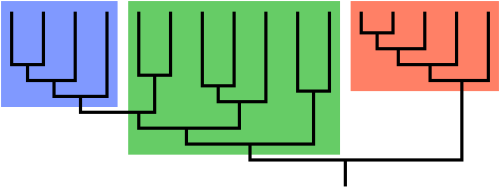
Derived from the Ancient Greek word kládos, meaning "branch," a clade is a group of organisms that includes a single common ancestor and all of its descendants. These groups are also known as monophyletic groups. By identifying clades, biologists can map out the history of life, tracing how populations diverged and evolved independently over millions of years.
Key Facts
- A clade must include a common ancestor and all of its descendants.
- Clades are the fundamental unit of cladistics.
- The term was coined in 1957 by biologist Julian Huxley.
- Clades are nested, meaning smaller clades exist within larger ones.
- Modern molecular biology has revealed that fungi are more closely related to animals than to plants.
The Science of Cladistics
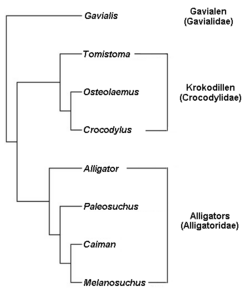
Cladistics is the study used to reconstruct phylogenetic trees—diagrams that represent the evolutionary history of organisms. The resulting tree-shaped diagrams are called cladograms. These diagrams are not absolute certainties but are considered phylogenetic hypotheses based on available data.
The transition from traditional taxonomy to cladistics marked a massive shift in biological thought. Early systems, such as the Linnaean taxonomy used by Carl Linnaeus, relied on physical similarities (morphology). However, physical traits can be misleading due to convergent evolution, where unrelated species develop similar features. Modern cladistics avoids these pitfalls by focusing on shared ancestry rather than just appearance.
The Founder of Modern Cladistics
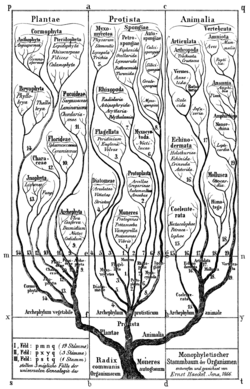
While the concept of evolutionary branching grew after Darwin's work, the German biologist Emil Hans Willi Hennig is credited as the founder of cladistics. He moved away from the old "ladder" model of life—which incorrectly placed "advanced" organisms at the top—and replaced it with a system representing repeated branching events.
Understanding Clade Relationships
To navigate a phylogenetic tree, scientists use specific terminology to describe how different groups relate to one another:
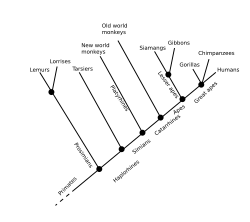
- Nested: A clade located within another clade (e.g., apes are nested within primates).
- Sister Clades: Two clades that share an immediate common ancestor.
- Basal: A clade that branches off the lineage leading to another group earlier in the evolutionary timeline.
Measuring the Age of a Clade
Because we cannot observe evolution in real-time, the age of a clade is inferred using fossil records (stratigraphy) or molecular clock estimates. There are two ways to describe this age:
- Crown Age: The age of the most recent common ancestor of all species currently in the clade.
- Stem Age: The time when the ancestral lineage of the clade first diverged from its sister clade.
Clades in the Real World: From Mammals to Viruses
Clades are not just theoretical constructs; they describe well-known groups like rodents and insects. For example, the rodent clade (Order Rodentia) consists of a common ancestor and all its descendants, and it is nested within the larger mammal clade.
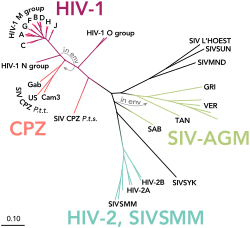
The concept is also vital in medicine, particularly when studying viruses. RNA viruses, such as HIV, form clades known as subtypes. Tracking these clades helps scientists understand how infections spread geographically. For instance, HIV subtype B is common in Europe and the Americas, while subtype A is more prevalent in East Africa.
Summary of Evolutionary Concepts
| Term | Definition | Includes All Descendants? |
|---|---|---|
| Monophyletic (Clade) | A common ancestor and all its descendants. | Yes |
| Paraphyletic | A group that includes an ancestor but excludes some descendants. | No |
| Polyphyletic | A group of organisms that does not include their most recent common ancestor. | No |
Frequently Asked Questions
What is the difference between a clade and a paraphyletic group?
A clade is monophyletic, meaning it includes the common ancestor and every single descendant. A paraphyletic group includes the common ancestor but leaves out one or more descendant branches.
How do scientists determine the age of a clade?
Since clade ages cannot be observed directly, scientists infer them using the fossil record (stratigraphy) or by using molecular clock estimates based on genetic mutations.
Why is the term "basal" used carefully in biology?
Scientists avoid saying a group is the "most basal" because it can imply a hierarchy of value. Instead, they use terms like "sister group" to describe equivalent evolutionary positions and avoid unintended implications of being "less evolved."
Can a clade consist of extinct organisms?
Yes. A clade is defined by its evolutionary lineage, which can include species that are currently extant (living) or those that are extinct.
What is a cladogram?
A cladogram is a tree-shaped diagram that represents a phylogenetic hypothesis, showing the hypothesized evolutionary relationships and branching patterns between different groups of organisms.