Chimor Kingdom: The Great Coastal Empire of Ancient Peru
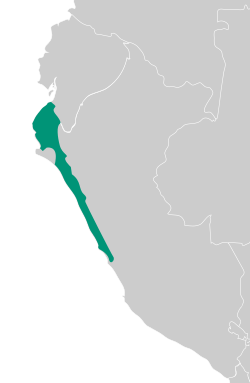
Long before the Spanish arrived on the shores of South America, the north coast of Peru was dominated by a sophisticated and expansive political entity known as Chimor (or the Chimú Empire). Emerging around 900 CE, this culture succeeded the Moche and grew to become the largest kingdom of the Late Intermediate Period, controlling approximately 1,000 kilometers of the Peruvian coastline.
From its magnificent capital of Chan Chan, the Chimú established a rigid social hierarchy and a powerhouse economy based on maritime resources and expert craftsmanship. Though it was eventually absorbed by the Inca Empire, the legacy of Chimor remains etched in the adobe walls of its citadels and the intricate gold work of its artisans.
Key Facts
- Capital: Chan Chan, a massive adobe city.
- Timeline: Approximately 900 CE to 1470 CE.
- Extent: Controlled 1,000 km of the modern Peruvian coast.
- Languages: Quingnam (official) and Mochica (common).
- End of Empire: Conquered by the Inca emperor Topa Inca Yupanqui around 1470.
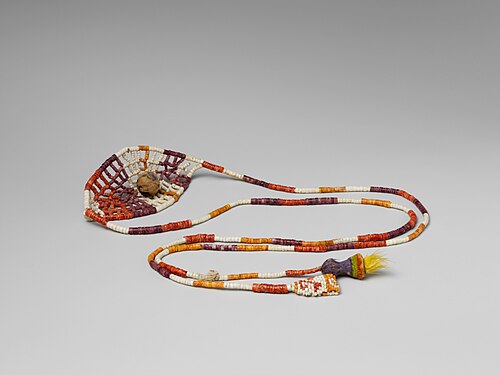
- Specialization: Renowned for metallurgy, Spondylus shell working, and complex textiles.
The Rise and Expansion of Chimor
The roots of the Chimú culture lie in the earlier Moche (or Mochica) civilization, often referred to as the Early Chimú. This foundational period, which ended around 700 CE, was centered in the Viru, Moche, and Chicama Valleys and is characterized by the construction of large rectangular adobe pyramids.
The later Kingdom of Chimor expanded through a mixture of voluntary alliances and military conquest. While some early valleys joined willingly, the Sican culture was acquired through force. The empire was also heavily influenced by the Wari and Cajamarca cultures. According to legend, the capital city of Chan Chan was founded by Taycanamo.
Imperial Rule and Succession
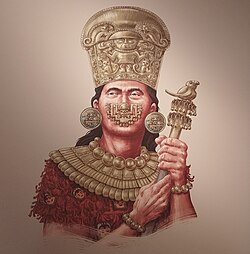
The kingdom was a monarchy led by the Chimor Cápac. Notable rulers included Taycanamo (c. 1340), Wakri Kaur (c. 1375), and Ñancempinco, who is believed to have pushed the imperial frontiers toward Santa and Jequetepeque. The final emperor, Minchançaman, ruled during the period of the Inca invasion between 1462 and 1470.
Life in the Empire: Society and Economy
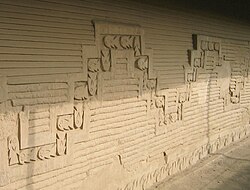
Chimor was a highly consolidated state with a strict social hierarchy. The capital, Chan Chan, housed an estimated 30,000 people. The city was organized into ciudadelas (palatial fortresses) that served as administrative centers and royal residences. These structures were designed to reinforce social status, with the elite enjoying exclusive access to bureaucracy and rituals.
The Artisan Class
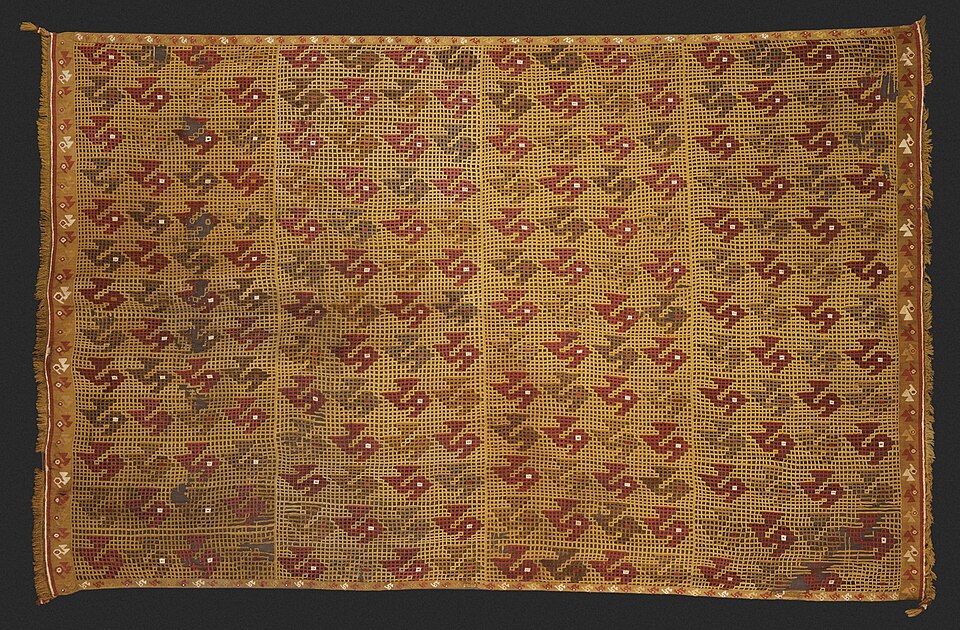
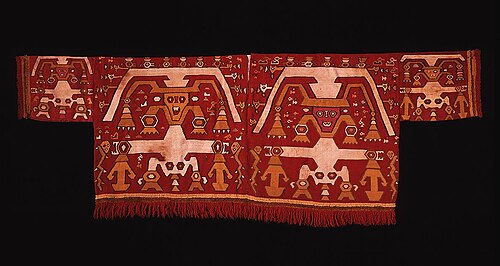
The economy was driven by a specialized workforce. In Chan Chan alone, roughly 12,000 artisans lived and worked. These craftsmen were forbidden from changing their professions and were grouped by specialization. Both men and women participated in production, creating high-value goods from cotton, llama wool, alpaca, and vicuña.
Maritime and Agricultural Subsistence
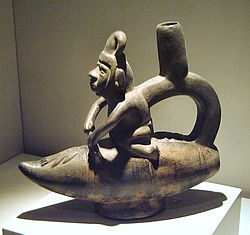
The Chimú leveraged their coastal location through advanced fishing and agriculture. They utilized caballitos de totora (traditional reed watercraft) for fishing and hunting, ensuring a steady food supply that was redistributed by the state to maintain order.
Artistry and Technology
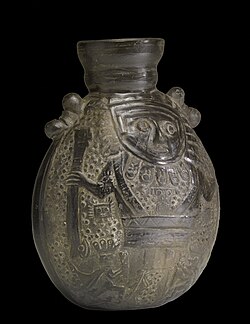
The Chimú are celebrated for their mastery of materials, particularly in metallurgy and shell working.
Metallurgy and Ceramics
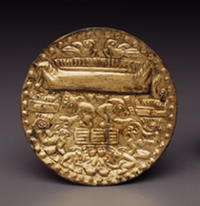
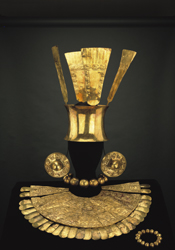
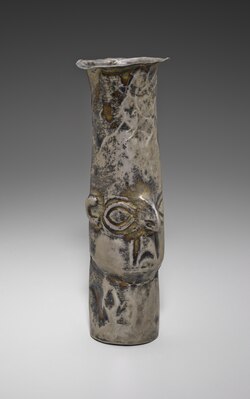
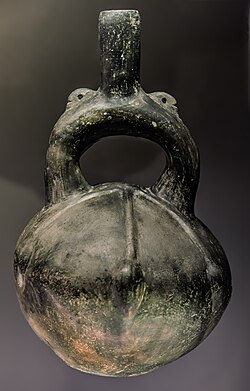
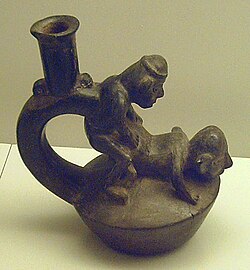
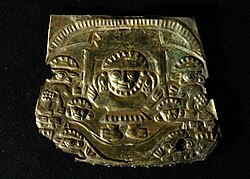
Chimú smiths worked with gold, silver, and copper alloys to create ornate jewelry, plaques, and ceremonial vessels. Their ceramics often featured realistic representations of daily life and nature, including depictions of chili peppers (aji).
The Significance of Spondylus
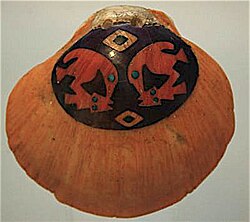
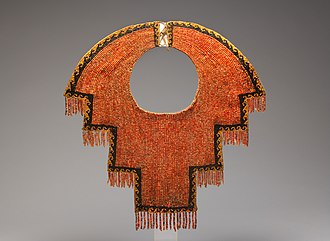
The Spondylus (thorny oyster) shell was highly prized for its symbolic and economic value. Evidence from workshops, such as the one found at Túcume (dating 1390–1480), shows that the Chimú produced uniform Spondylus beads using specialized stone tools. These shells were used in pendants and collars, often combined with turquoise.
Religion and Ritual Sacrifice
The Chimú practiced a polytheist religion with a deep connection to the sea. The god Ni, the sea god, was a central figure in their spiritual life. Archaeological evidence suggests that the Chimú performed mass sacrifices to appease their deities or express gratitude.
In 1997, approximately 200 blindfolded and bound skeletal remains of fishermen were found at Punta Lobos, likely sacrificed after the conquest of a fertile valley in 1350 CE. More strikingly, excavations in Huanchaco revealed the remains of 227 children (aged 4 to 14) with slashes to the sternum, suggesting heart removal. Anthropologists believe these sacrifices, dated between 1400 and 1450, may have been attempts to stop the devastating flooding caused by El Niño.
The Fall of Chimor
Despite being the last Andean kingdom capable of resisting the Inca, Chimor fell in the 1470s. The Inca emperor Topa Inca Yupanqui defeated Minchançaman, bringing the empire under Inca control. The final Chimú emperor was taken to Cusco, and the empire's vast reserves of gold and silver were redirected to adorn the Qurikancha (the Inca Temple of the Sun). By 1493, under Huayna Capac, the conquest was nearly complete.
| Feature | Details |
|---|---|
| Period | c. 900 – 1470 CE |
| Capital | Chan Chan |
| Government | Monarchy (Chimor Cápac) |
| Primary Materials | Adobe, Gold, Silver, Spondylus Shell, Cotton |
| Key Rulers | Taycanamo, Ñancempinco, Minchançaman |
| Fate | Conquered by the Inca Empire |
Frequently Asked Questions
What was the capital of the Chimú Empire?
The capital was Chan Chan, a massive adobe city that served as the political and administrative heart of the kingdom, housing an estimated 30,000 residents.
How did the Chimú Empire end?
The empire was conquered by the Inca Empire in the 1470s, led by Topa Inca Yupanqui, who defeated the final Chimú emperor, Minchançaman.
What is Spondylus and why was it important?
Spondylus is a type of thorny oyster shell. It was highly valued for its beauty and symbolic meaning, used by the Chimú to create beads and jewelry through specialized domestic workshops.
What evidence exists for child sacrifice in Chimú culture?
Archaeologists in Huanchaco discovered the remains of 227 children aged 4 to 14 with chest injuries indicating heart removal, possibly as a response to El Niño-induced flooding.
What were 'caballitos de totora'?
These were traditional reed watercraft used by the Chimú for fishing and hunting along the Peruvian coast.