Diaguita People: History, Culture, and Heritage of the Andes
The Diaguita are a South American Indigenous people whose ancestral lands span the semi-arid landscapes of the Chilean Norte Chico and the Argentine Northwest. Historically characterized by their sophisticated pottery and organized chiefdoms, the Diaguita have maintained a resilient presence in the Andean region despite centuries of conquest and cultural shift.
In Chile, the Diaguita primarily inhabited the Transverse Valleys—deep incisions in the mountains that provided fertile ground for agriculture. In Argentina, their presence was concentrated in the provinces of La Rioja and Catamarca, as well as parts of Salta, San Juan, and Tucumán. The term "Diaguita" was formally applied to these archaeological cultures and peoples by Ricardo E. Latcham in the early 20th century.
Key Facts
- Total Population: Approximately 244,025 people.
- Distribution: 153,231 in Chile (2024) and 90,794 in Argentina (2022).
- Languages: Historically Cacán; currently Spanish and Quechua.
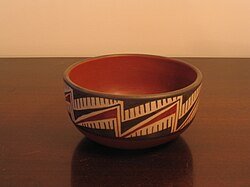
- Cultural Legacy: Renowned for advanced irrigation and black, white, and red painted pottery.
- Legal Status: Recognized as an Indigenous people by the Chilean state since 2006.
Cultural and Linguistic Identity
The ancient Diaguita were not a single, unified entity but were politically fragmented into various chiefdoms. This fragmentation extended to their speech; early Spanish accounts and Jesuit reports suggest a variety of languages were spoken across different valleys. However, some scholars, such as Herman Carvajal Lazo, argue these were likely different dialects of a single language, differing primarily in lexicon (vocabulary).
A central point of academic debate is Cacán, a language proposed by Rodolfo Schuller and Ricardo E. Latcham as the primary tongue of the Diaguita. While accepted by scholars like Sergio Villalobos, others remain skeptical. Interestingly, in areas like the Elqui Valley, most Indigenous place names (toponymy) are attributed to Quechua or Mapuche rather than Diaguita origins.
Historical Evolution and Archaeology
The Diaguita culture evolved through several distinct archaeological phases in Chile. It began with the El Molle complex (300–700 CE), which was later succeeded by the Las Ánimas complex (800–1000 CE). By 1000 CE, the classical Diaguita culture emerged, marked by the development of advanced irrigation systems and iconic polychrome pottery.
The relationship between the Diaguita and other groups was complex. Mapuche communities are believed to have established a presence in southern Diaguita lands (such as Choapa and Petorca) centuries before the Spanish arrived. Some researchers, including Grete Mostny, have even postulated a link between the Mapuche and the early El Molle culture.
The Inca Influence
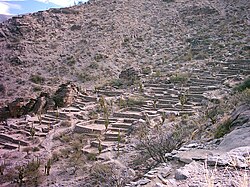
The expansion of the Inca Empire into Diaguita territories is a subject of ongoing historical dispute. Some suggest the Incas were drawn by mineral wealth, while others believe they sought labor from the populated Eastern Diaguita valleys to support mining in Chile. It is generally accepted that the incorporation into the Inca Empire occurred through warfare, leading to significant depopulation in the Transverse Valleys. Despite the conflict, the Diaguita adopted several Inca innovations, including metalworking techniques, agricultural methods, and pottery designs from Cuzco.
Spanish Conquest and Resistance
The Spanish conquest occurred in two primary waves. In Chile, the first major encounter took place in April 1536 when Diego de Almagro's expedition arrived in the Copiapó valley. At the time, an estimated 20,000 Diaguitas lived in the Chilean territory.
In Argentina, the Eastern Diaguita offered fierce resistance during the Calchaquí Wars. The Spanish were initially unable to control the fertile interior valleys, eventually surrounding them by founding cities like Salta, Tucumán, and La Rioja. The city of Londres was established in 1607 specifically to dominate the heart of Diaguita territory. The Calchaquí rebels fought until the mid-17th century, only fully submitting to Spanish rule after 1665.
Archaeological Chronology in Chile
The transition of Diaguita society can be categorized by the following archaeological periods:
| Period | Culture | Pottery Characteristics |
|---|---|---|
| Early (300 BCE – 700 CE) | El Molle culture | El Molle ceramics |
| Middle (700 CE – 1000 CE) | Las Ánimas culture | Las Ánimas ceramics (I, II, and III) |
| Late (1000 CE – 1550 CE) | Diaguita culture | Diaguita I, II, III and Inca styles |
| Post-1550 CE | Hispanic | Diaguita, Inca, and Colonial blends |
Frequently Asked Questions
Where do the Diaguita people live today?
The Diaguita population is primarily distributed between Chile (Norte Chico region) and Argentina (Northwest provinces including La Rioja, Catamarca, Salta, San Juan, and Tucumán).
What is Cacán?
Cacán is the language proposed by some scholars to be the original tongue of the Diaguita people, though its status as a single unified language is debated by other historians.
How did the Inca Empire affect the Diaguita?
The Incas incorporated the Diaguita through warfare, which caused depopulation in some areas. However, the Diaguita adopted Inca advancements in agriculture, metalworking, and pottery design.
What were the Calchaquí Wars?
The Calchaquí Wars were a series of conflicts in which the Eastern Diaguita resisted Spanish colonization of their fertile valleys, with some rebels fighting until 1665.
What is the current population of the Diaguita?
As of recent data, there are approximately 244,025 people who identify as Diaguita, with 153,231 in Chile (2024) and 90,794 in Argentina (2022).