Chicham Peoples: Culture, Spirituality, and History of the Jivaroan Groups
The Chicham peoples are indigenous groups inhabiting the headwaters of the Marañon River and its tributaries, spanning northern Peru and eastern Ecuador. Known for their fierce independence and deep spiritual connection to the Amazon rainforest, these tribes speak the Chicham languages and have historically maintained a way of life centered on gardening, hunting, and complex ritual practices.
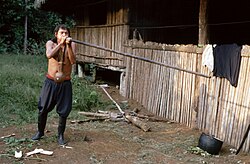
Traditionally, the Chicham rely on gardening and hunting using blowguns with darts poisoned by curare (a plant-derived toxin). Their society is characterized by a unique blend of horticultural skill and a warrior culture that includes headhunting raids and the use of sacred brews in spiritual ceremonies.
Key Facts
- Location: Headwaters of the Marañon River in northern Peru and eastern Ecuador.
- Principal Groups: Shuar, Achuar, Humabisa, and Aguaruna.
- Core Beliefs: Polytheistic religion centered on souls (arutam) and nature deities.
- Key Rituals: Ayahuasca ceremonies for healing and divination, and ritualistic gardening.
- Historical Legacy: Successfully resisted the expansion of the Inca Empire and Spanish conquistadors.
Etymology and Identity
The term Jivaro is believed to be a corruption of xivar, which means "people" in the Shuar Chicham language. Over time, the word took on different meanings depending on the region. In Ecuador, it is often highly pejorative, signifying "savage." However, in other Spanish-speaking regions like Mexico and Puerto Rico, it has evolved to describe traditional countryside farmers.
Identifying these groups is often complex because speakers typically identify themselves by their word for "person" (shuar) or by the river they live near. This has led to historical records listing either a single name for all or a vast number of small, river-based tribal names.
Social Organization and Resistance
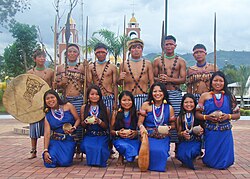
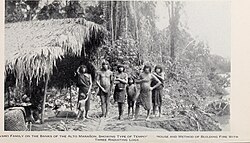
Historically, Jivaroan social structure was based on the polygynous matrilocal household—a family unit where the husband lives with the wife's family. These households were politically and economically autonomous, leading to a fragmented social landscape where small groups were often at war with one another despite sharing a common language and culture.
This decentralized structure contributed to their success in resisting foreign invaders. In the 16th century, Jivaroan warriors halted the Inca Empire's expansion into the Amazon basin and destroyed the settlements of Spanish conquistadors who arrived in search of placer gold. It was not until the mid-19th century that these tribes had significant contact with regional authorities.
Spirituality and Worldview
The Jivaroan worldview posits that both animate and inanimate objects possess invisible souls containing power, known as karáram. A central concept is the arutam soul, which is not present at birth but must be acquired through traditional means.
The Pursuit of Power
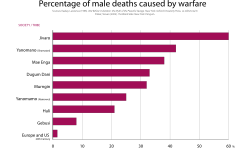
The acquisition of an arutam soul is considered vital for an adult male's survival. According to anthropologist Michael Harner, these souls must be periodically replaced because they tend to wander the forest at night after four or five years, making them susceptible to being "stolen" by others. This belief system encourages participation in killing expeditions to accumulate new power and gain immunity from death.
Deities and Nature
The religion is polytheistic and deeply tied to the natural world. Key deities include:
- Tsungi: The god of shamanism.
- Nungüi: The goddess of mother earth, depicted as a short, heavy-set woman in a black dress who ensures garden productivity.
Animals such as the pangi (anaconda) and wampang (giant butterfly) are believed to assist shamans in healing or bewitching others. Sickness is often attributed to attacks on the spirit by malevolent shamans.
Rituals and Sacred Practices
Ritualistic Gardening
While hunting is culturally significant, gardening is the primary focus of Jivaroan life due to the unpredictability of hunting in the Amazon. Gardening is treated as a spiritual act; practitioners sing magical songs, perform rituals during planting, and observe strict taboos to appease the spirits residing in the plants.
The garden is viewed as a sanctuary, providing a rare space of privacy and spiritual significance within the community.
Ayahuasca Ceremonies
Ayahuasca (or Natem) ceremonies are central to healing and divination. During these rituals, a shaman and patient consume the brew to communicate with spirits. The shaman works to remove harmful spirits from the patient's body or may be hired to locate distant relatives and friends by "seeing" them through the influence of the brew.
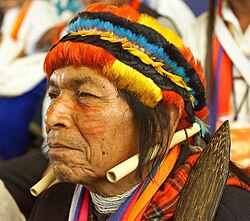
In Shuar belief, the first being, Tensak, uses spiritual darts to either heal or curse. To enhance their visions, shamans may consume Banisteriopsis caapi, tobacco, and alcohol.
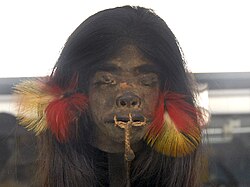
Summary of Jivaroan Groups
| Group Name | Primary Region/Association | Modern Political Federation |
|---|---|---|
| Shuar | Ecuador/Peru | Federación Interprovincial de Centros Shuar |
| Achuar | Ecuador/Peru | Nacionalidad Achuar de Ecuador |
| Aguaruna | Peru | Organización Central de Comunidades Aguarunas del Alto Marañon |
| Humabisa | Peru | Consejo Aguaruna y Huambisa |
Frequently Asked Questions
What is the significance of the arutam soul?
The arutam soul is a source of power and protection that must be acquired by adult males. Because these souls are believed to wander and can be stolen after several years, individuals are encouraged to participate in killing expeditions to obtain new souls, which are thought to grant immunity from death.
How did the Chicham peoples resist colonization?
Their decentralized social organization and fierce warrior culture allowed them to successfully repel the Inca Empire and destroy Spanish settlements. They maintained limited contact with regional authorities until the mid-19th century.
What role does Nungüi play in their culture?
Nungüi is the goddess of mother earth. She is believed to emerge from underground at night to dance in women's gardens, making the land productive. Women sing to her and weed their gardens daily to ensure her favor and a successful harvest.
What is the purpose of Ayahuasca ceremonies?
These ceremonies are primarily used for healing, where shamans remove malevolent spirits from patients. They are also used for divination, allowing shamans to perceive distant people or locations.
Why is gardening considered a spiritual activity?
Because hunting is unpredictable, the Jivaroan peoples place immense importance on horticulture. They believe spirits reside in plants, requiring the use of magical songs, chants, and taboos to ensure the crops grow.