Chep Morrison: The Dynamic Mayor and Diplomat of New Orleans
deLesseps Story "Chep" Morrison Sr. (1912–1964) was a towering figure in mid-century Louisiana politics, serving as the 54th Mayor of New Orleans and later as a United States Ambassador. Known for his charisma and image as a progressive reformer, Morrison led New Orleans through a period of significant population growth and structural governmental change, though his legacy remains complex due to his navigation of the Civil Rights Movement.
Key Facts
- Mayoral Tenure: Served as Mayor of New Orleans from 1946 to 1961.
- Diplomatic Role: Appointed by President John F. Kennedy as U.S. Ambassador to the Organization of American States (1961–1963).
- Military Rank: Attained the rank of Major General in the U.S. Army Reserve.
- City Growth: New Orleans population peaked during his term, reaching 627,525 in 1960.
- Political Legacy: Established the "strong mayor" system via the 1954 city charter.
Early Life and Education
Born on January 18, 1912, in New Roads, Louisiana, Morrison was the son of Jacob Haight Morrison II, a district attorney, and Anita Olivier, a New Orleans socialite. He was named after a respected relative, Judge deLesseps Story, and was fluent in French. Morrison pursued his higher education at Louisiana State University, earning a Bachelor of Arts in 1932 and a law degree (LLB) from the LSU Law Center in 1934.
Military Service and Early Politics
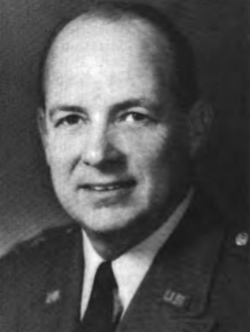
Morrison's career was marked by a dual commitment to public service and the military. He was commissioned as a Second Lieutenant in the Army Reserve in 1933. During World War II, he served on active duty from 1941 to 1946, rising to the rank of colonel and serving as the chief of staff for occupation forces in Bremen, Germany. His service in England, France, and Belgium earned him the Bronze Star, the Legion of Merit, the Legion of Honour, and the Belgian Order of Leopold.
Despite his active military service, his political ascent began early. He served in the Louisiana House of Representatives from 1940 to 1946, notably being re-elected in absentia in 1944 while serving overseas.
The Rise to Mayoral Power
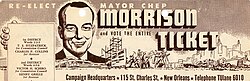
In 1946, Morrison ran for mayor of New Orleans on a platform of cleaning up corruption associated with the incumbent, Robert Maestri, and the "Old Regulars" political machine. His campaign gained significant momentum through the support of women, specifically the International Women's Organization (IWO). A famous "March of Brooms" campaign, themed "A Clean Sweep with Morrison," helped propel him to a surprise victory.
Governance and Reform
As mayor, Morrison cultivated a national image as a progressive leader. In 1949, he served as president of the National League of Cities. One of his most lasting contributions was the 1954 city charter, which replaced the council commission system with a "strong mayor" system and a legislative city council. While the charter limited future mayors to two consecutive terms, a grandfather clause allowed Morrison to remain in office longer.
However, critics note that while he campaigned against the Old Regulars, Morrison established his own political machine, the Crescent City Democratic Association (CCDA), which distributed municipal jobs and contracts to supporters.
Challenges: Crime and Civil Rights
Morrison's administration faced ongoing struggles with vice and corruption within the New Orleans Police Department (NOPD). Despite appointing Adair Watters to clean up the force, political interference led to Watters' resignation in 1949. Throughout the 1950s, the Metropolitan Crime Commission and federal investigators highlighted persistent graft and vice within the city's police force.
Race Relations and the Integration Crisis
Morrison's approach to race was contradictory. He invested in infrastructure for black neighborhoods, supported the creation of Pontchartrain Park, and hired the first black policeman since the Jim Crow era in 1950. Despite these steps, he remained committed to segregation and often used racial slurs in private.
This tension peaked during the 1960 school desegregation crisis. While Morrison did not actively try to shut down schools to prevent integration, he failed to protect black students from violent white mobs. His attempt to balance the needs of black supporters with the demands of segregationists left him criticized by both sides and weakened his political standing.
Diplomatic Career and Final Years
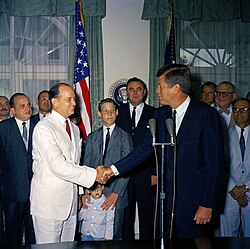
By the early 1960s, Morrison's local political influence had waned. After failing in his attempts to secure a third mayoral term and unsuccessful runs for governor, he accepted an appointment from President John F. Kennedy. From July 17, 1961, to July 1963, he served as the U.S. Ambassador to the Organization of American States (OAS).
Morrison's life came to a tragic end on May 22, 1964. He and his seven-year-old son, Randy, were killed in a plane crash in Ciudad Victoria, Mexico, shortly after another unsuccessful bid for the governorship.
Summary of Career Milestones
| Period | Role/Position | Key Achievement/Event |
|---|---|---|
| 1940–1946 | Louisiana House of Representatives | Elected in absentia in 1944 during WWII |
| 1946–1961 | 54th Mayor of New Orleans | Implemented 1954 "strong mayor" city charter |
| 1949 | President, National League of Cities | National leadership in urban governance |
| 1961–1963 | U.S. Ambassador to the OAS | Appointed by President John F. Kennedy |
| 1933–1964 | U.S. Army / Army Reserve | Attained rank of Major General |
Frequently Asked Questions
What was the "March of Brooms"?
The "March of Brooms" was a campaign event organized by the International Women's Organization (IWO) during the 1946 mayoral election. With the theme "A Clean Sweep with Morrison," it symbolized the effort to remove corruption from the city government.
How did Chep Morrison change the government of New Orleans?
Morrison pushed for a new city charter in 1954, which established the "strong mayor" system. This shifted the city from an at-large council commission to a legislative city council consisting of five district-based and two at-large members.
What was Morrison's role during the 1960 school integration crisis?
Morrison took a middle-ground approach that satisfied few. He did not join the governor's effort to close schools, but he also did not take active measures to protect integrating students from segregationist mobs, leading to criticism from both civil rights activists and hard-line segregationists.
Who was deLesseps Story Morrison Jr.?
Known as "Toni," he was the eldest son of Chep Morrison. Following in his father's footsteps, he served as a Louisiana state representative from 1974 to 1980 and ran for mayor of New Orleans in 1977.
How did Chep Morrison die?
Chep Morrison died at the age of 52 on May 22, 1964, in a plane crash in Ciudad Victoria, Mexico. His son, Randy, also perished in the accident.