Chartwell: The Beloved Country Home of Winston Churchill
Nestled in the rolling landscapes of Westerham, Kent, Chartwell stands as more than just a country house; it was the sanctuary and creative retreat of Sir Winston Churchill. From its early origins as a 14th-century estate to its current status as a cherished National Trust property, Chartwell reflects the personal tastes, struggles, and triumphs of one of history's most influential figures.
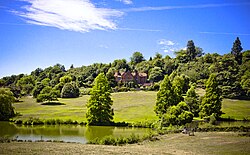
For Churchill, the decision to purchase the estate was driven by the breathtaking views over the Weald of Kent, which he described as the most beautiful and charming he had ever seen. It became his bolthole during times of political crisis and a place of recovery during his later years.
Key Facts
- Location: Westerham, Kent, England.
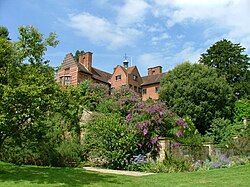
- Architectural Style: Vernacular, rebuilt between 1922 and 1924 by Philip Tilden.
- Status: Grade I listed building and National Register of Historic Parks and Gardens.
- Ownership: Managed by the National Trust since 1946.
- Significance: Served as Churchill's private refuge and a site for his painting and bricklaying hobbies.
The History of the Estate
Early Origins and Victorian Era
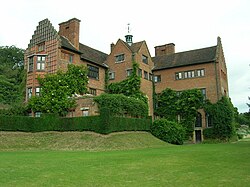
The property's history dates back to 1382, when it was known as Well-street and owned by William-at-Well. By 1836, it had become a substantial brick-built manor. In 1848, it was acquired by John Campbell Colquhoun. The Colquhoun family, Scottish landowners and politicians, expanded the house and added stepped gables—a nod to their Scottish heritage.
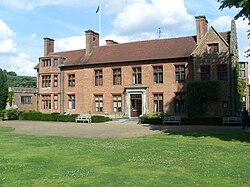
By the early 20th century, however, the house had become a ponderous example of Victorian architecture. It was this "drabness" that the later architect Philip Tilden sought to remedy when Churchill took ownership.
Churchill's Acquisition and Transformation
Churchill first visited Chartwell in July 1921. Despite initial hesitation from his wife, Clementine, Churchill was captivated. In September 1922, following a failed auction, he purchased the home for £5,000 from Captain Archibald John Campbell Colquhoun, a former schoolmate from Harrow.
The purchase came during a period of immense personal loss for Churchill, following the deaths of his mother and his youngest child, Marigold, as well as the loss of his parliamentary seat in Dundee.
Between 1922 and 1924, Churchill employed the society architect Philip Tilden to modernize and extend the house in a vernacular style (architecture based on local needs and materials). Tilden transformed the red-brick structure into the home known today, though some historians note that the 18th-century doorcase added to the entrance front was somewhat out of place.
Life at Chartwell
A Sanctuary for Work and Leisure
Chartwell served as a strategic base and a place of respite. During the Second World War, the house was largely unused, but it remained a critical refuge. In 1953, while serving as Prime Minister, Churchill returned to Chartwell to recover from a debilitating stroke.
Beyond politics, Churchill found solace in manual labor and art. He developed a passion for bricklaying, constructing various walls and a summerhouse on the estate. In 1928, he even joined the Amalgamated Union of Building Trade Workers, a move that sparked contemporary controversy.
The Gardens and Artistic Pursuits
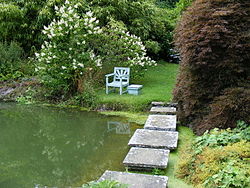
The grounds of Chartwell are as significant as the house itself. The estate features a croquet lawn and a Victorian kitchen garden. A highlight is the golden rose walk, featuring thirty-two varieties of golden roses gifted by his children for his golden wedding anniversary in 1958.
Churchill also established a painting studio in the 1930s, which now houses a significant collection of his artwork. He spent many hours by the lower lake, feeding his golden orfe (a type of ornamental fish).
Transition to a Public Museum
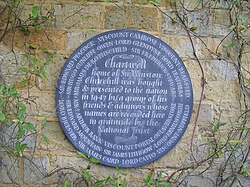
In 1946, facing financial difficulties, Churchill considered selling the estate. To prevent its loss, a consortium of friends led by Lord Camrose raised funds for the National Trust to acquire the property, allowing the Churchills to retain a life-tenancy.
After Churchill's death on January 24, 1965, Lady Churchill surrendered her rights to the home. The National Trust opened Chartwell to the public in 1966. The house is preserved as it appeared in the 1920s and 30s, filled with original furniture, books, and the medals and honors Churchill received throughout his career.
Estate Summary
| Feature | Details |
|---|---|
| Architect | Philip Tilden (1920s rebuild) |
| Listing Status | Grade I Listed Building |
| Purchase Price (1922) | £5,000 |
| Public Opening | 1966 |
| Annual Visitors (2016) | 232,000 |
Frequently Asked Questions
Why is Chartwell a Grade I listed building?
Chartwell is designated as Grade I primarily for its immense historical significance as the home of Sir Winston Churchill, rather than for its specific architectural merit.
What hobbies did Churchill pursue at Chartwell?
Churchill was an avid painter and a passionate amateur bricklayer, constructing several walls and buildings on the estate himself.
How did the National Trust acquire the property?
The house was purchased by the National Trust in 1946 using funds raised by a consortium of Churchill's friends, ensuring the home was preserved for the public while allowing the Churchills to live there for the rest of their lives.
What happened to the Graham Sutherland portrait of Churchill?
The portrait, a gift from Parliament, was loathed by both Winston and Clementine Churchill. It was stored in the cellars of Chartwell and eventually burnt in secret by Lady Churchill's secretary, Grace Hamblin.
Did Churchill make money from farming at Chartwell?
No. While he expanded his land-holdings to approximately 500 acres and raised cattle and pigs, the farming ventures were not profitable, with operating losses exceeding £10,000 a year by 1952.